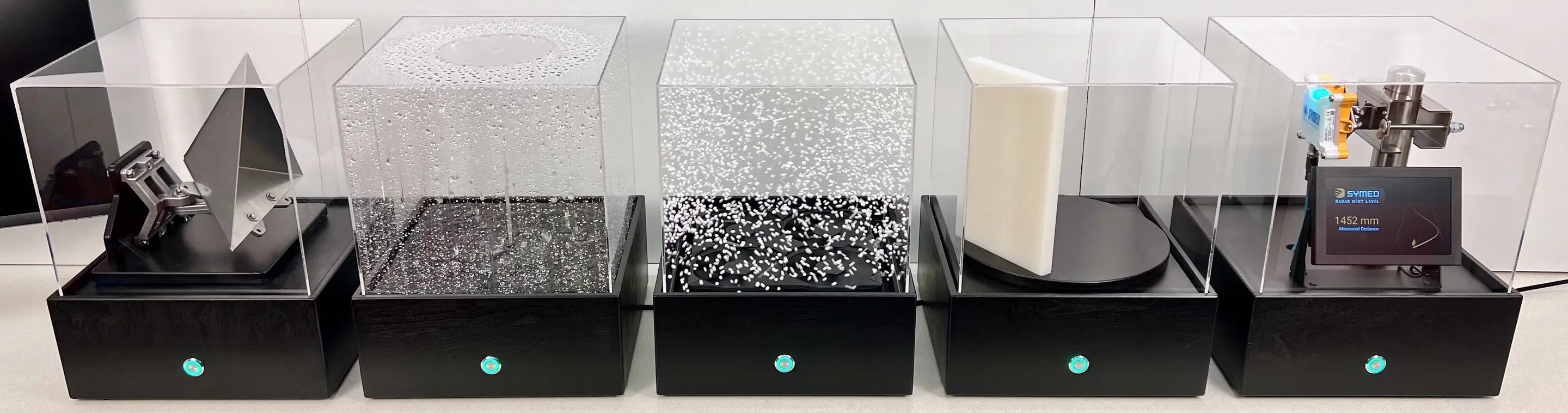
Trade show model
Radar demonstrator
for robust distance measurement
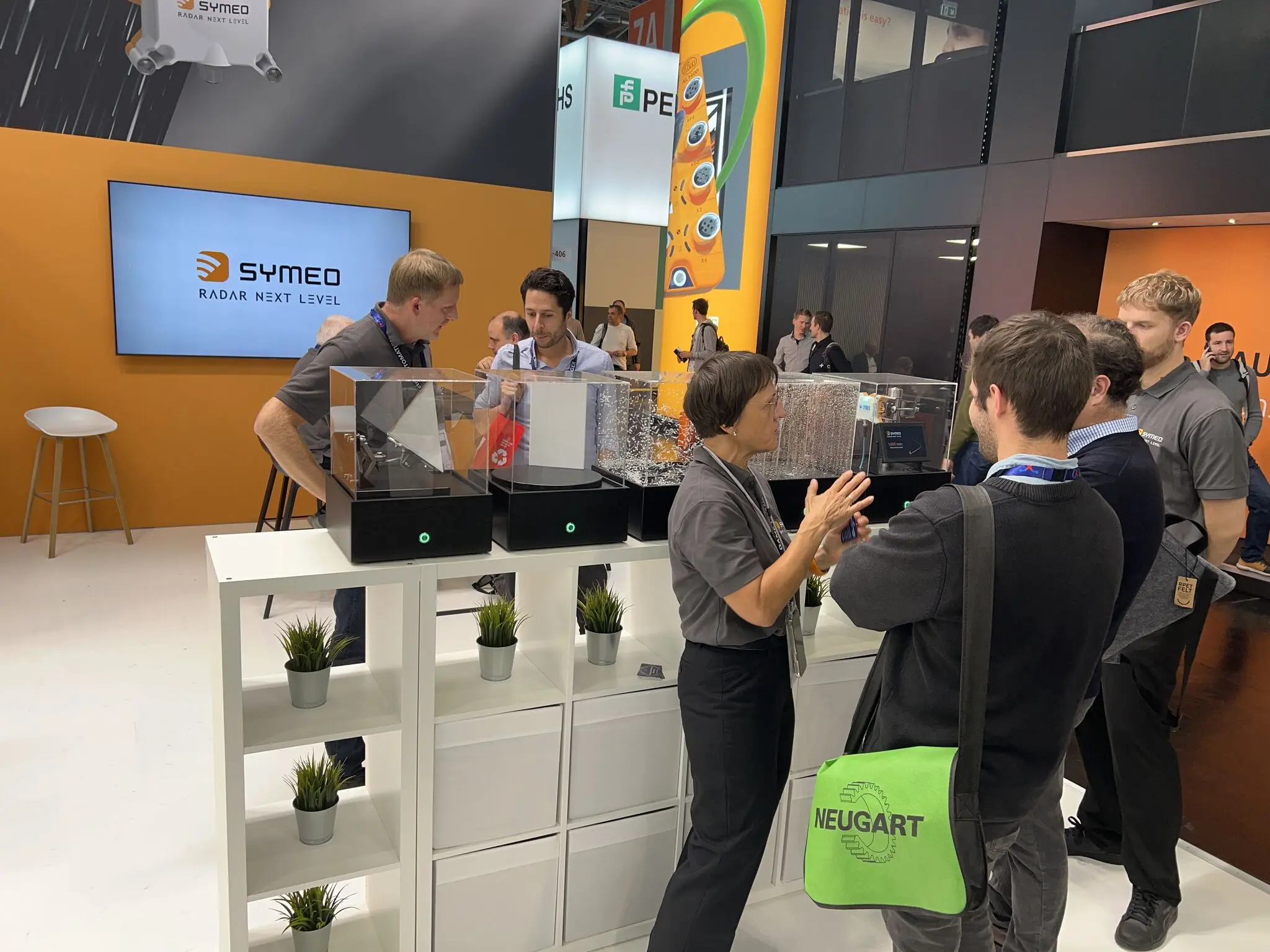
Trade show booth for the SPS trade fair in Nuremberg

Distance measurements in harsh environments
The trade show model illustrates the advantages of radar-based distance measurement. Under the toughest conditions, such as rain and dust, the SYMEO sensor captures precise measurements. The measured distance is displayed to visitors on a screen and impressively visualized using 3D graphics.
Trade show model for radar sensor with display - SPS trade fair Nuremberg - Trade show booth
📡 The demonstrator illustrates the advantages of radar-based distance measurement. Under the toughest conditions, such as rain and dust, the SYMEO sensor captures precise measurements. The measured distance is displayed to visitors on a screen and impressively visualized using 3D graphics.
https://ingenieur-glaser.de/radar-demonstrator/ – Behind the scenes
#TradeShowModel #Exhibit #Demonstrator #TradeShow #SpsTradeShow #ExhibitionStand #Booth
🧲 Ooh, Aah, Wow! - Customer magnets for your exhibition stand.
The engineering office Glaser develops and manufactures **custom trade show exhibits**. As eye-catchers, they draw visitors' attention to your booth with a curious **“Ooh”**. The benefits of your product are made clear and tangible at the demonstration model with an astonished **“Aah”**. With a concluding **“Wow!”** you, your product and your brand will stay in people’s minds.
https://ingenieur-glaser.de/messebau/ – Trade show exhibits
💡️ Development & Manufacturing – Engineering office Glaser
https://ingenieur-glaser.de/ – Electronics・Software・Hardware
🔔 Don’t miss any developments. Subscribe now!
https://ingenieur-glaser.de/Instagram/ – Instagram
https://ingenieur-glaser.de/Facebook/ – Facebook
https://ingenieur-glaser.de/YouTube/ – YouTube
https://ingenieur-glaser.de/LinkedIn/ – LinkedIn
https://ingenieur-glaser.de/TikTok/ – TikTok
https://ingenieur-glaser.de/Xing/ – Xing
🥇 How visions became successes.
https://ingenieur-glaser.de/Projekte/ – References
📞 Has the spark ignited?
https://ingenieur-glaser.de/Kontakt/ – Contact
#TradeShowModel #Exhibit #Demonstrator #TradeShow #SpsTradeShow #ExhibitionStand #Booth
Operating principle of the trade show model
The distance from the sensor to the reflector is determined by the time-of-flight of the radar beam. The speed of the reflector is determined using the Doppler principle.
Reflector
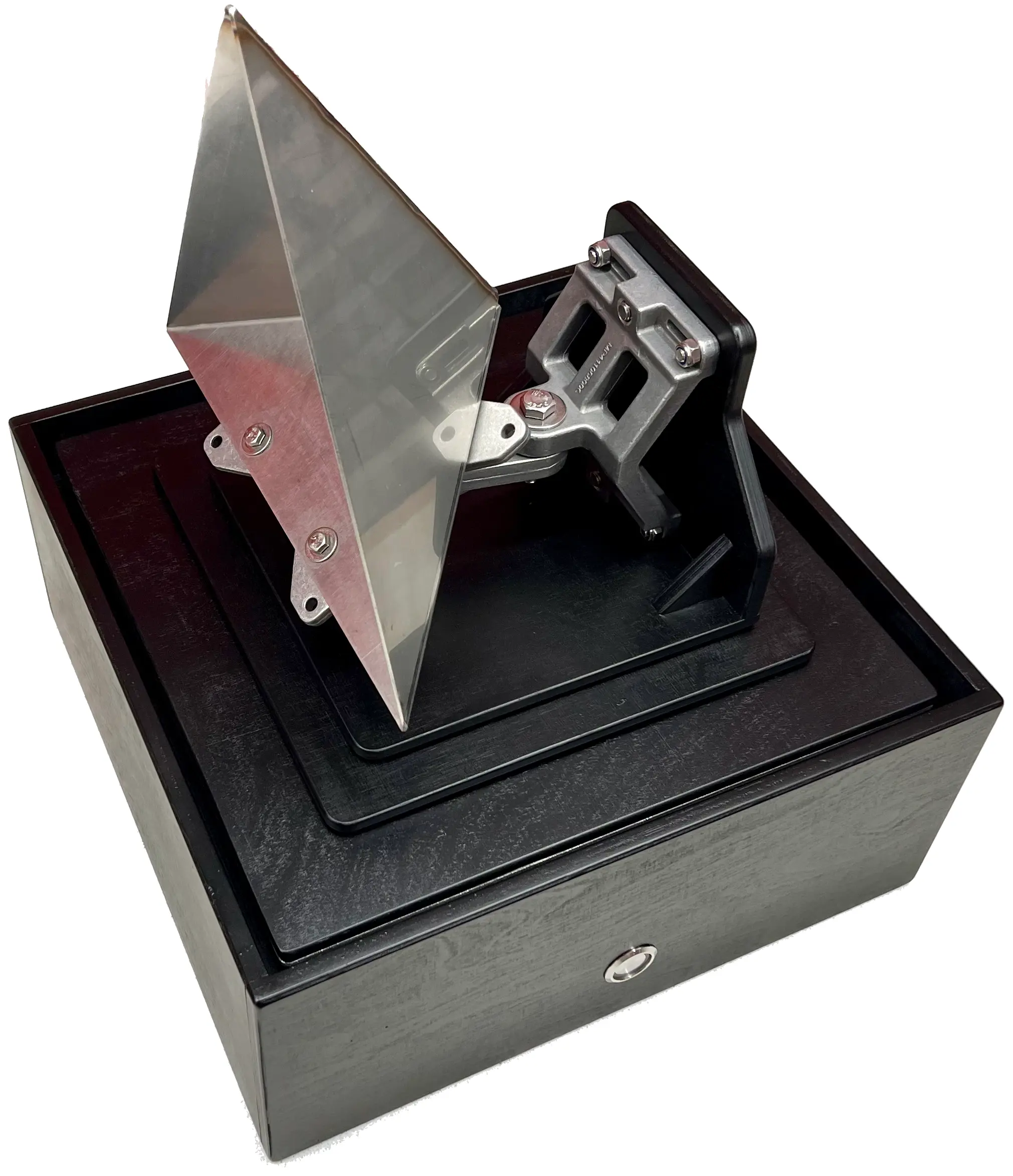
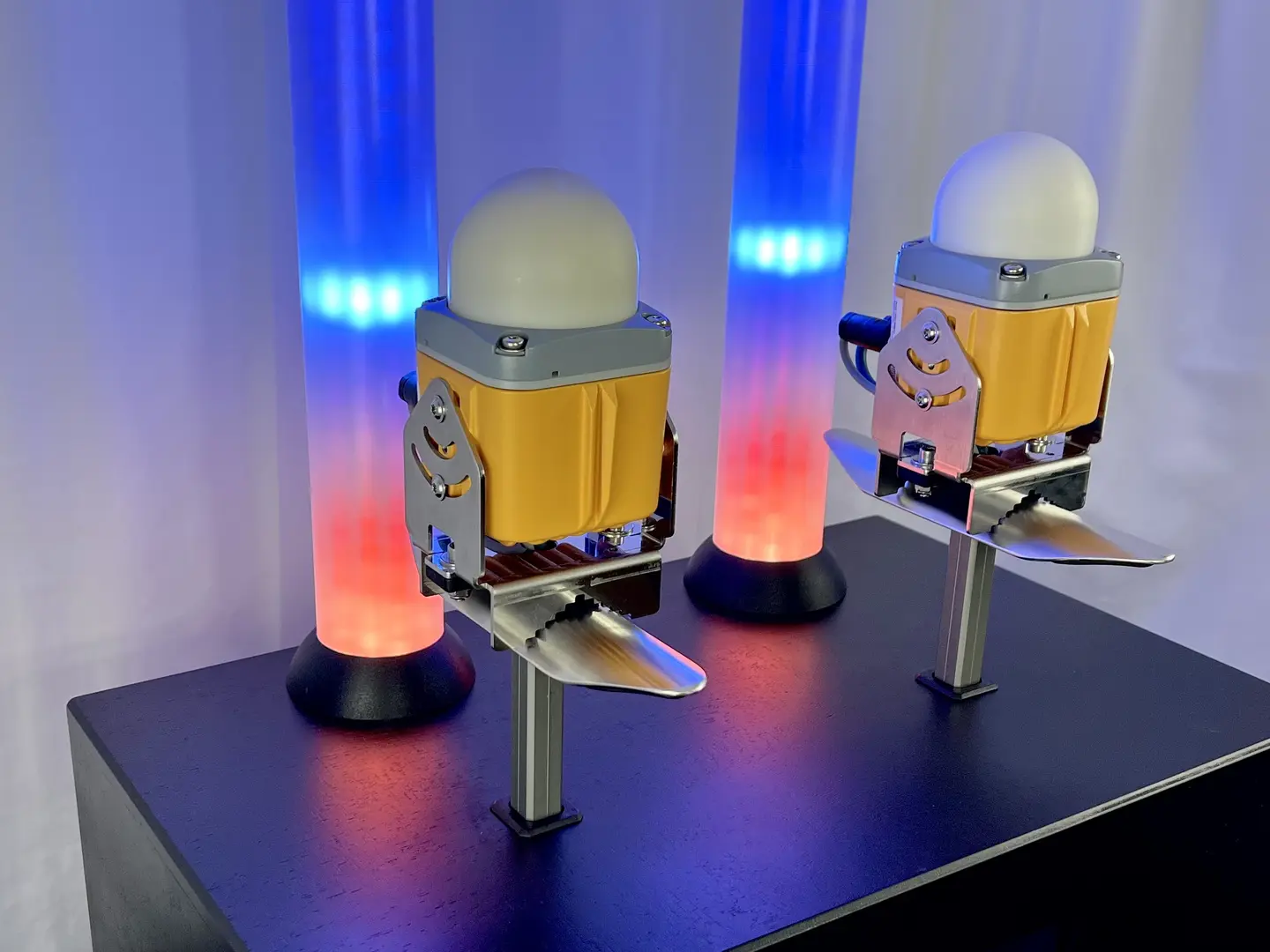
The retroreflector moves linearly left and right in a sinusoidal motion profile. Due to the metal surfaces arranged orthogonally to each other, it reflects the radar beam back in exactly the opposite direction even when tilted.
Sensor
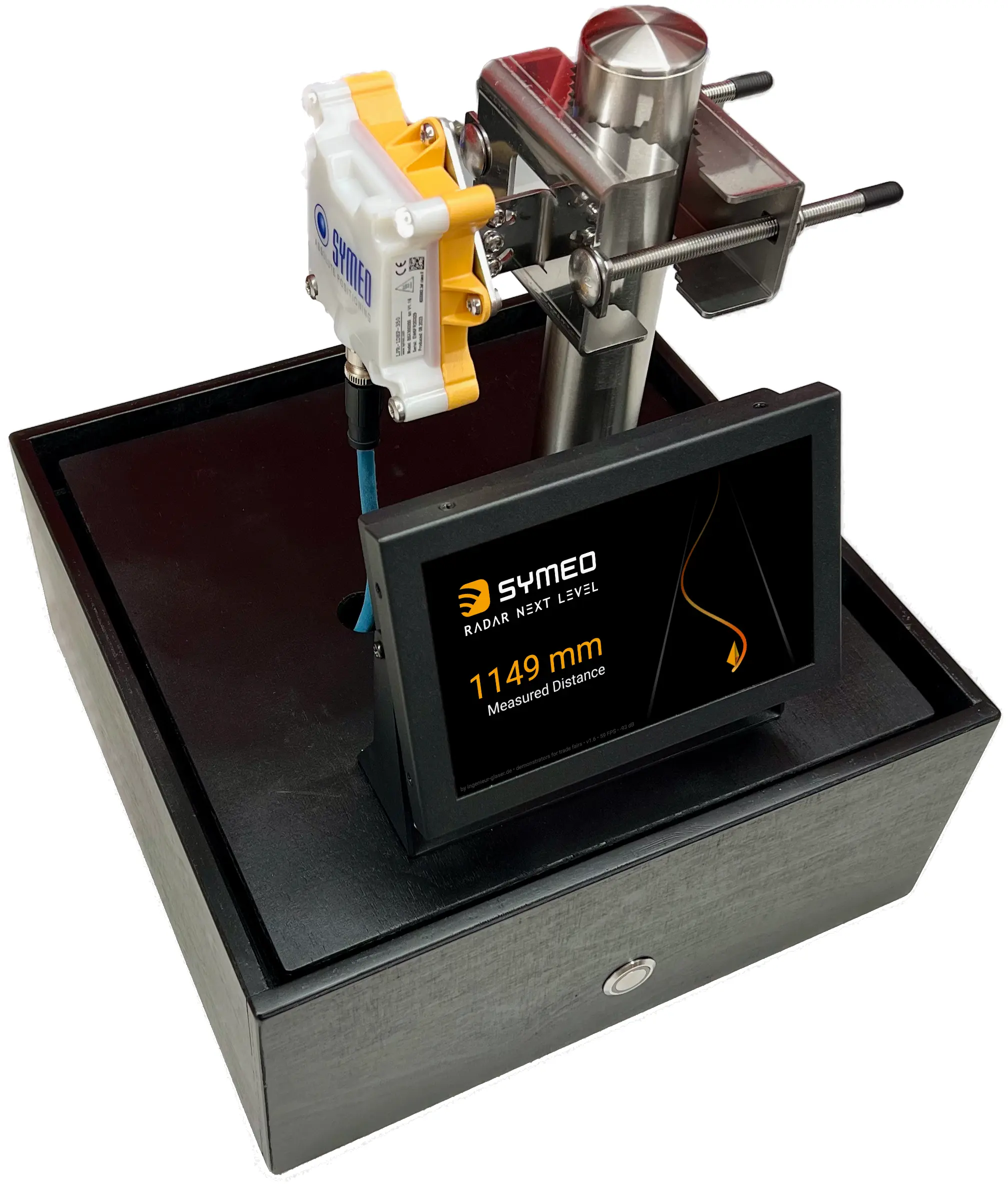
The radar sensor transmits electromagnetic 122.5 GHz waves toward the reflector at the speed of light. The distance determined via time-of-flight is displayed on a screen. The accompanying graph shows the sinusoidal movement of the reflector.
Visualization of the measured values
The pushbutton on the radar module of the trade show model switches the display between two views.
Graph
The temporal progression of the measured distance is displayed on the screen in a 3D graph.
Raw data
In a detailed table view, all raw data including the sensor's signal strength are displayed in real time.
Wireless HDMI adapter
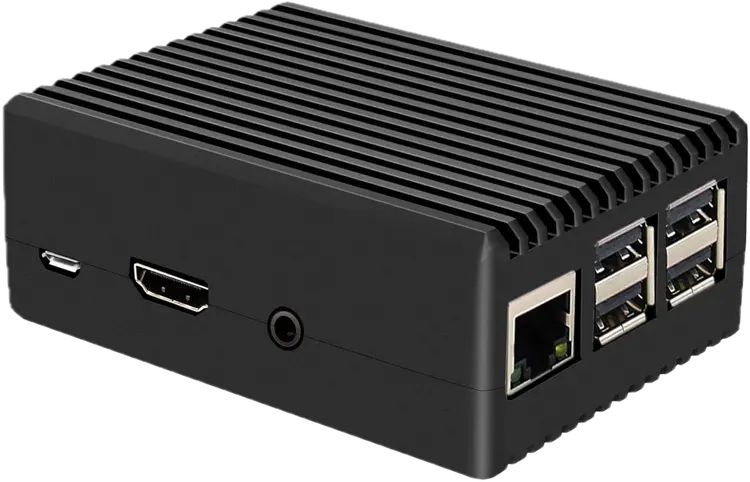
To transmit the display content to a large monitor at the booth, a Raspberry Pi connects via Wi‑Fi to the radar module and opens its web interface.
Modular trade show model
The modular design of the model enables a freely scalable exhibition stand and space-saving transport.

Power supply

All modules are connected to each other using IEC power extension cords. The cables and connectors are concealed under the modules.
Transport

The bases of the modules are stackable. This makes it possible to transport tables, bases and acrylic covers on a single Euro pallet.
Enclosure and electronics

To enable efficient production of the enclosures, the construction of all modules of the exhibition model was made identical. The illustration shows the cross-section of all modules in a consolidated representation.
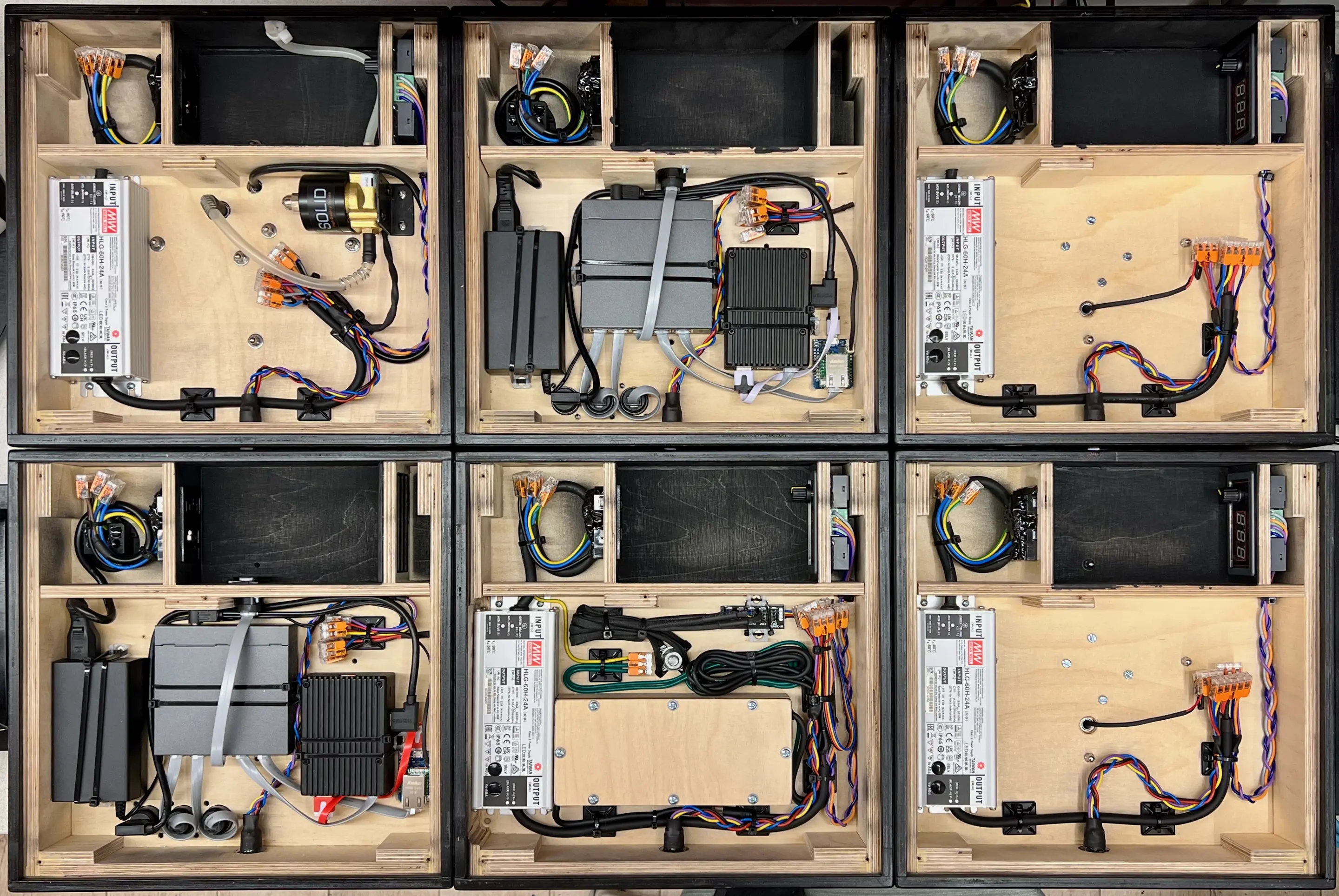
Technical implementation of the modules
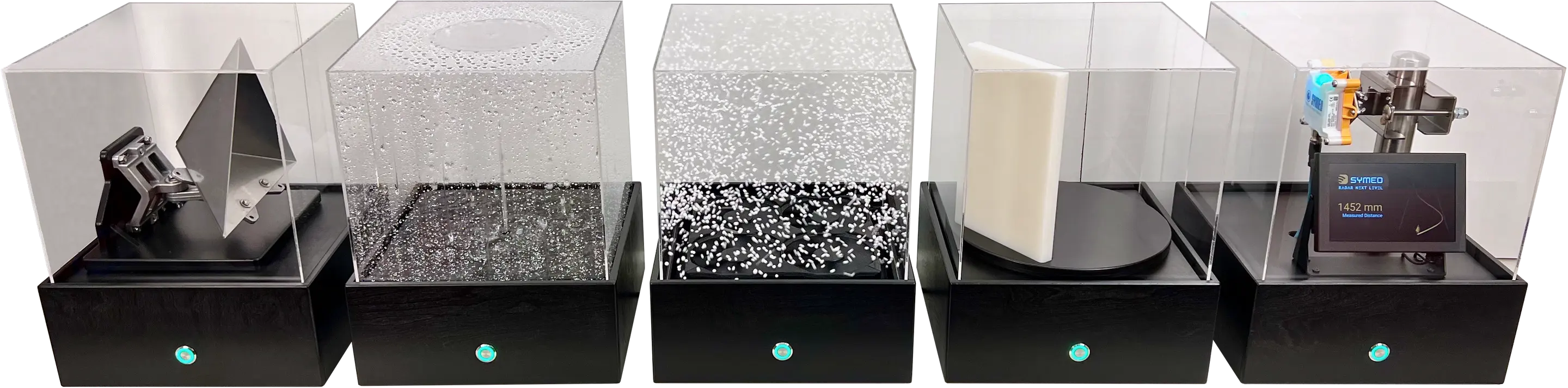
Exhibition model "Radar"
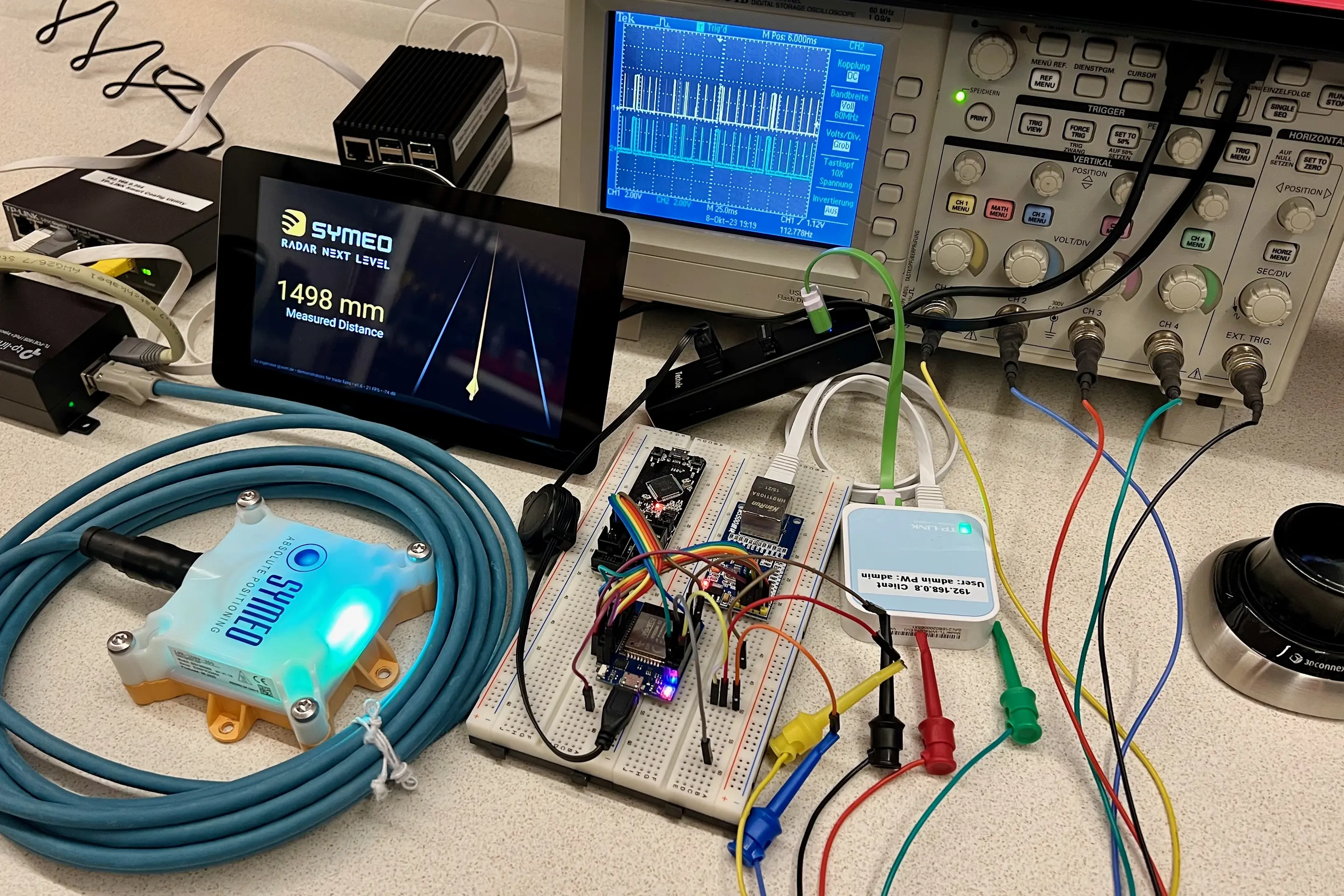
The radar module contains an LPR®-1DHP-350 radar sensor and a 7-inch monitor. The ESP32 provides the web interface for visualization via LAN. The webserver was written in C++.
For display on the monitor, a Raspberry Pi 3+ loads the page in so-called kiosk mode and outputs it full-screen via HDMI.
Additional monitors can be connected wirelessly via Wi‑Fi or wired via an RJ45 socket using PoE LAN.
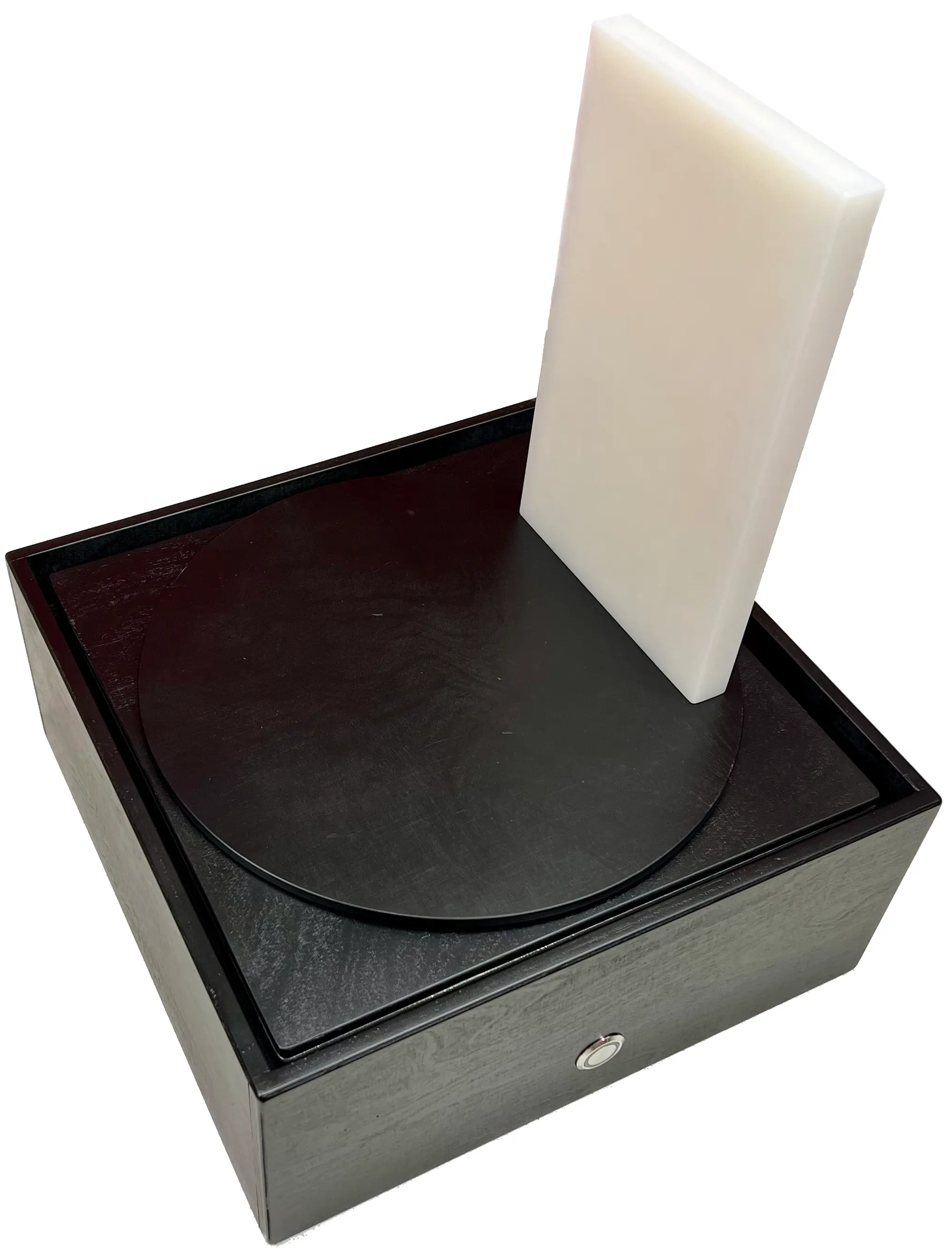
Exhibition model "Solidwall"
To demonstrate the permeability of radar waves in plastics, plates of different thicknesses and materials can be attached to the turntable using magnets. The rotational motion cyclically rotates them into the radar beam.
The mechanical coupling between the motor shaft and the plate is also carried out via magnets. This makes the turntable removable and limits its torque.
The rotational speed of the plate can be adjusted via a potentiometer under the base.
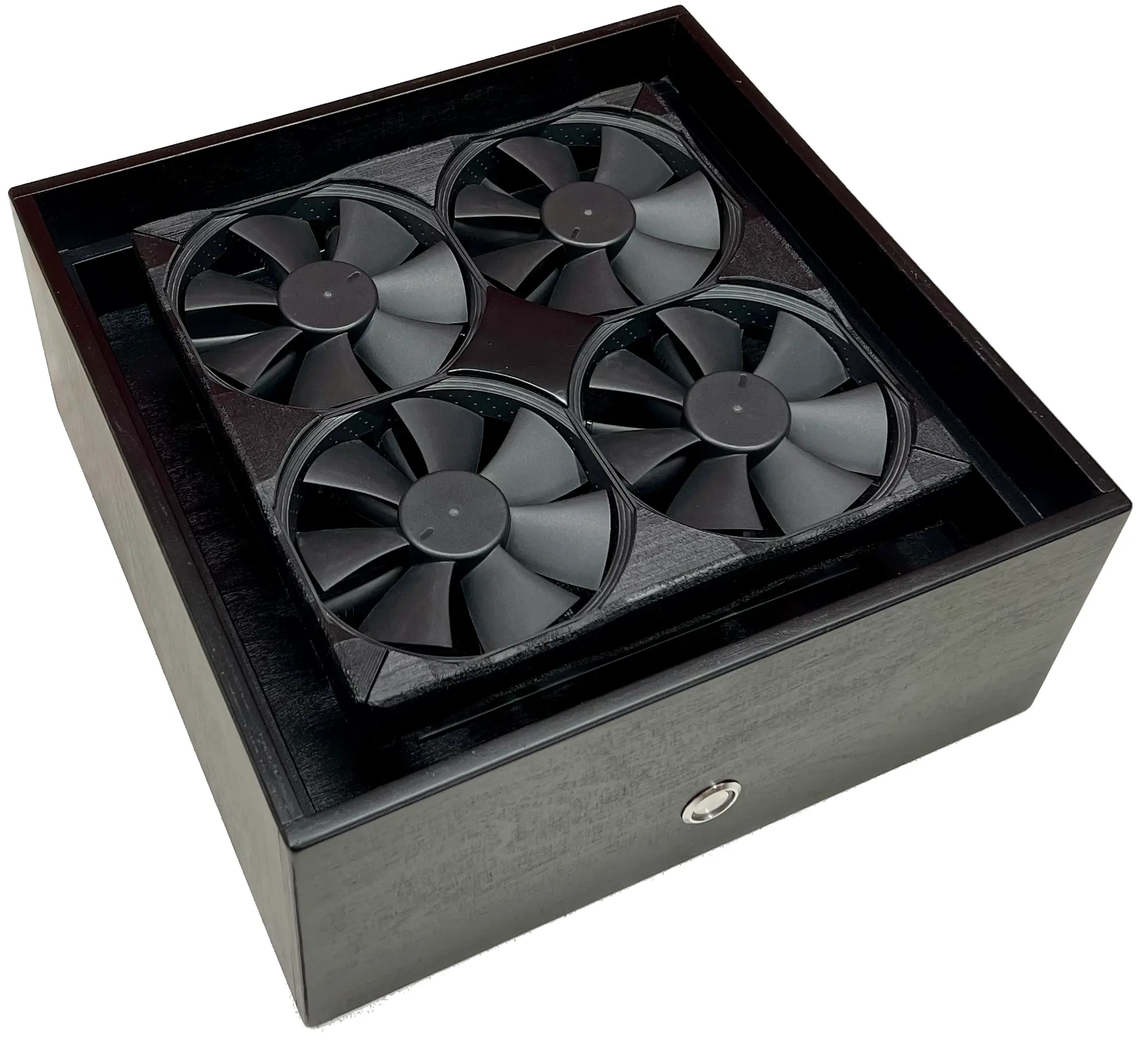
Exhibition model "Tornado"
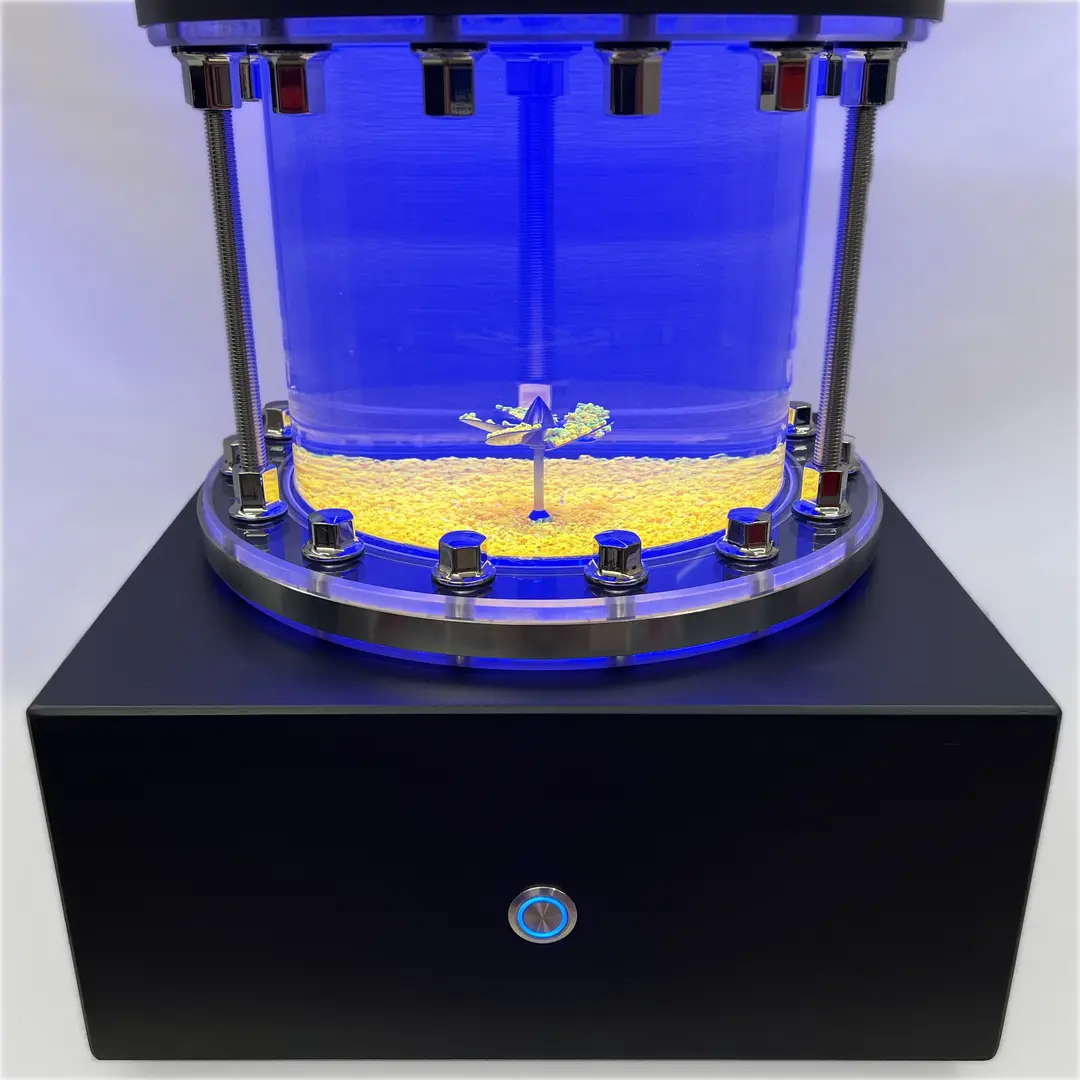
Four dustproof and waterproof IP68 fans generate a swirling airflow that carries white granulate made of EPS beads into the radar beam.
To prevent the polystyrene beads from sticking to the window due to static charge, the airflow is ionized. For this purpose, two ionizers are mounted beneath the fans. Depending on the polarity of the charge, they release positively or negatively charged ions to discharge the statically charged EPS beads.
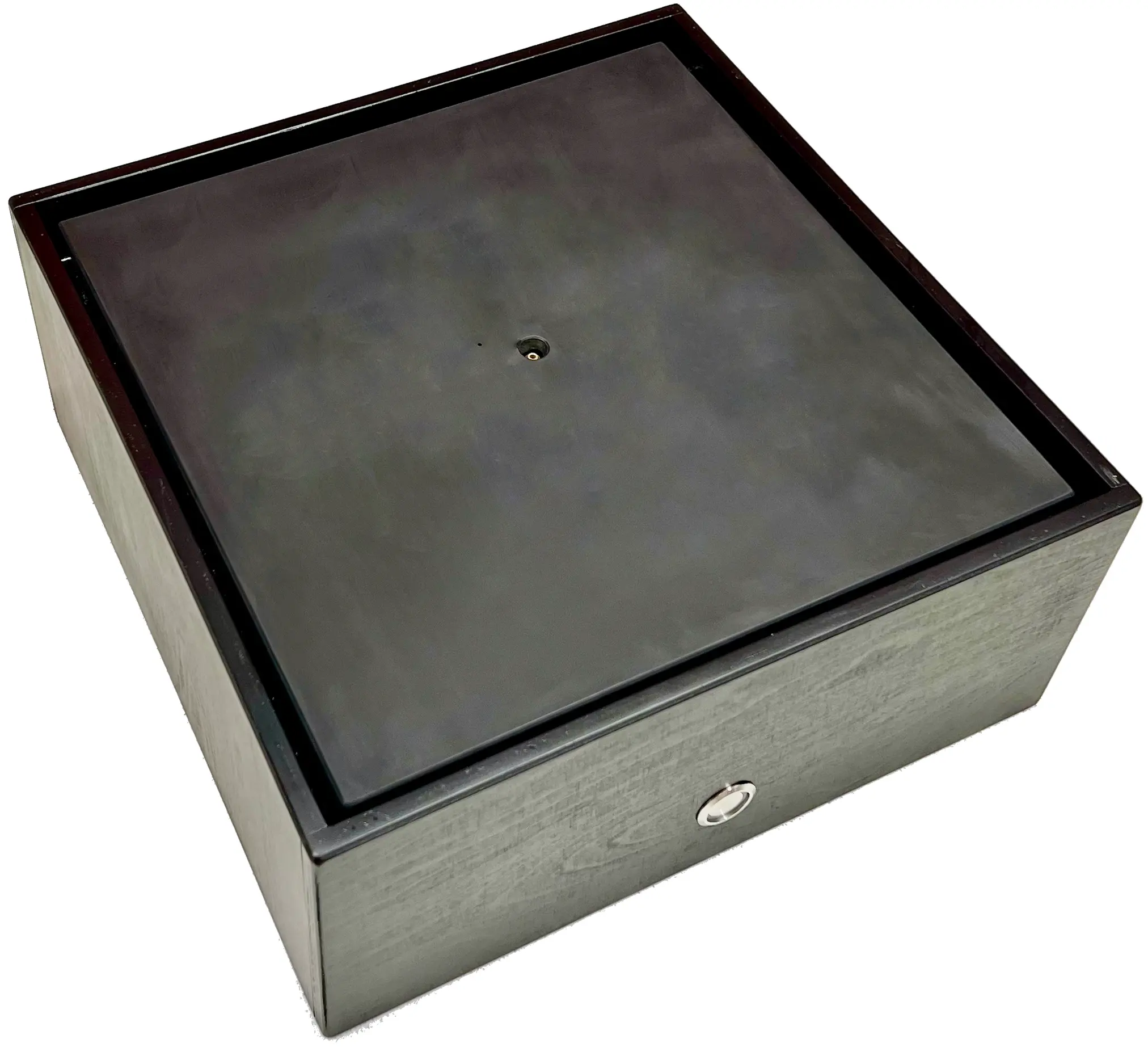
Exhibition model "Waterstorm"
A high-pressure pump forces distilled water through a nozzle. The water jet breaks up at the lid of the acrylic glass hood and falls down as droplets.
Earlier experiments with a rotating nozzle were abandoned due to excessive noise generation and potential susceptibility to malfunctions.
When the acrylic glass hood is submerged into the water basin, a built-in magnetic valve opens for venting.
The pump output can be adjusted using a speed controller on the underside of the base.
Exhibition model "Reflector"
The "Reflector" and "Solidwall" modules feature identical bases in which a powerful neodymium-iron-boron magnet rotates in a circle. The eccentric rotational movement of the magnetic field is converted into a sinusoidal translational movement by a wide magnet integrated into the linear carriage.
The linear carriage is removable. This allows the reflector to be mounted in the opposite orientation as well.

Ooh, Aah, Wow! Customer magnets for your trade show booth.
The Glaser engineering office develops and manufactures custom exhibition exhibits. As eye-catchers they attract visitors' attention at your booth with a curious “Ooh”. The benefits of your product become clear and tangible on the demonstration model with an amazed “Aah”. With a final “Wow!” you, your product and your brand remain memorable.

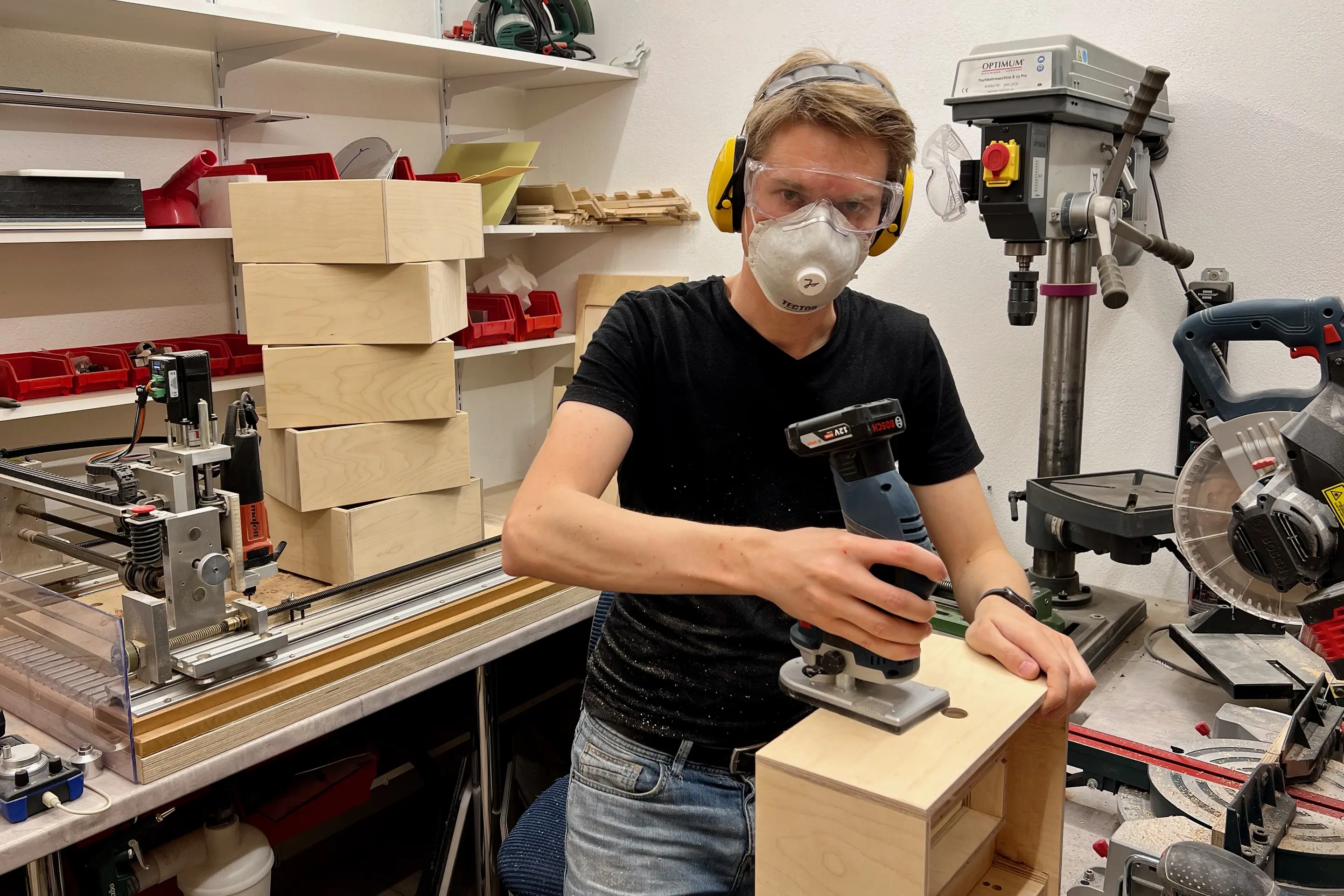
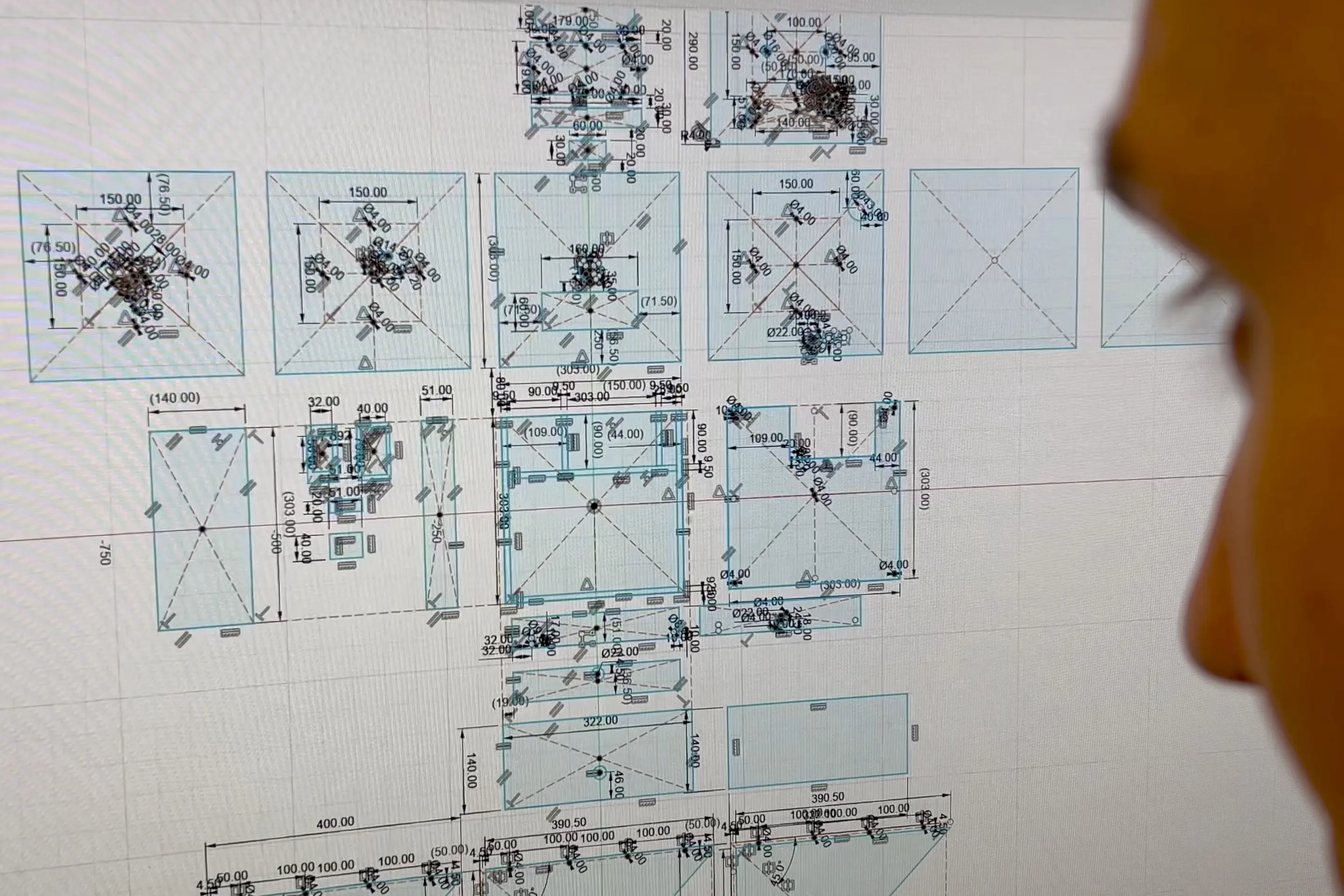
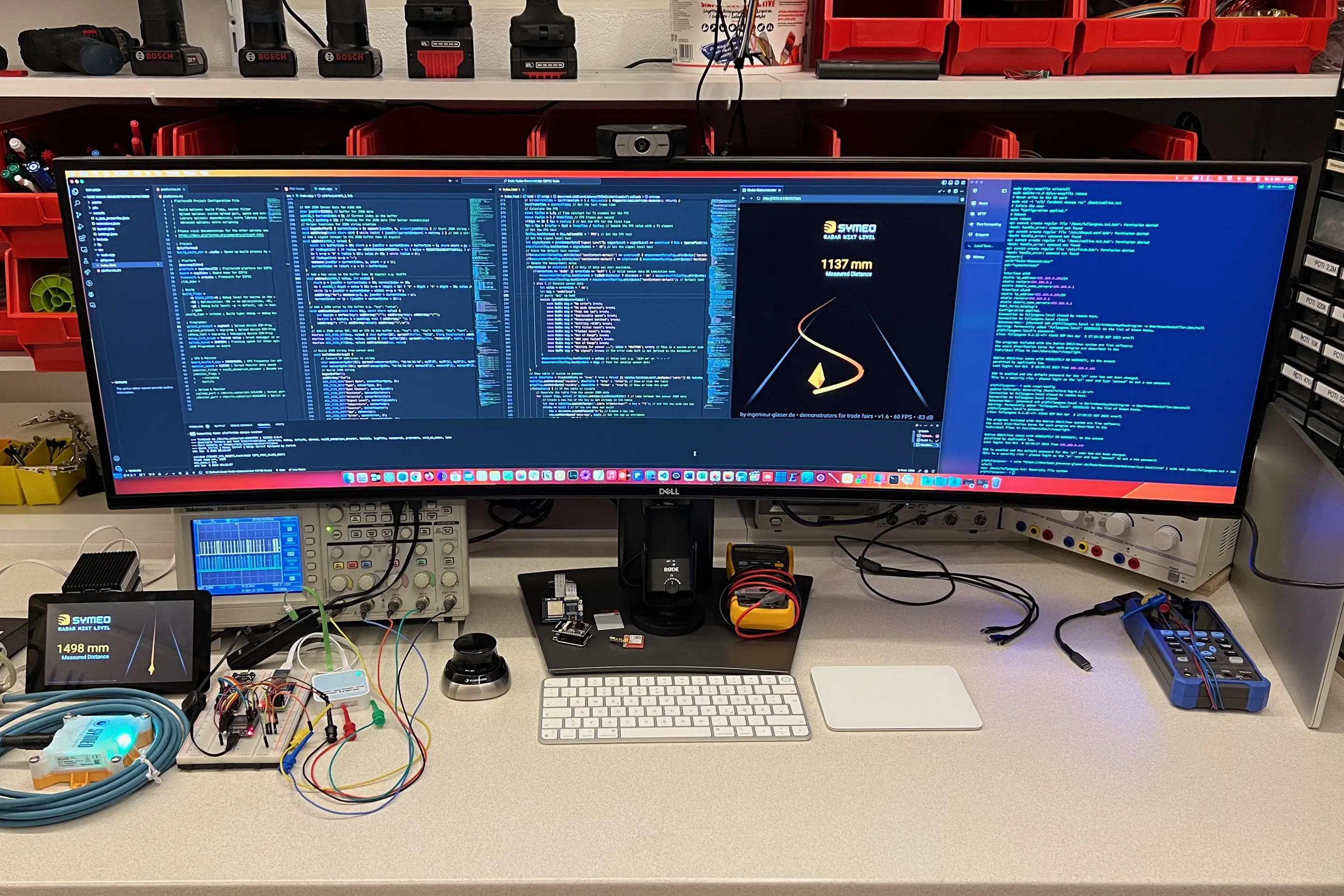
Behind the scenes
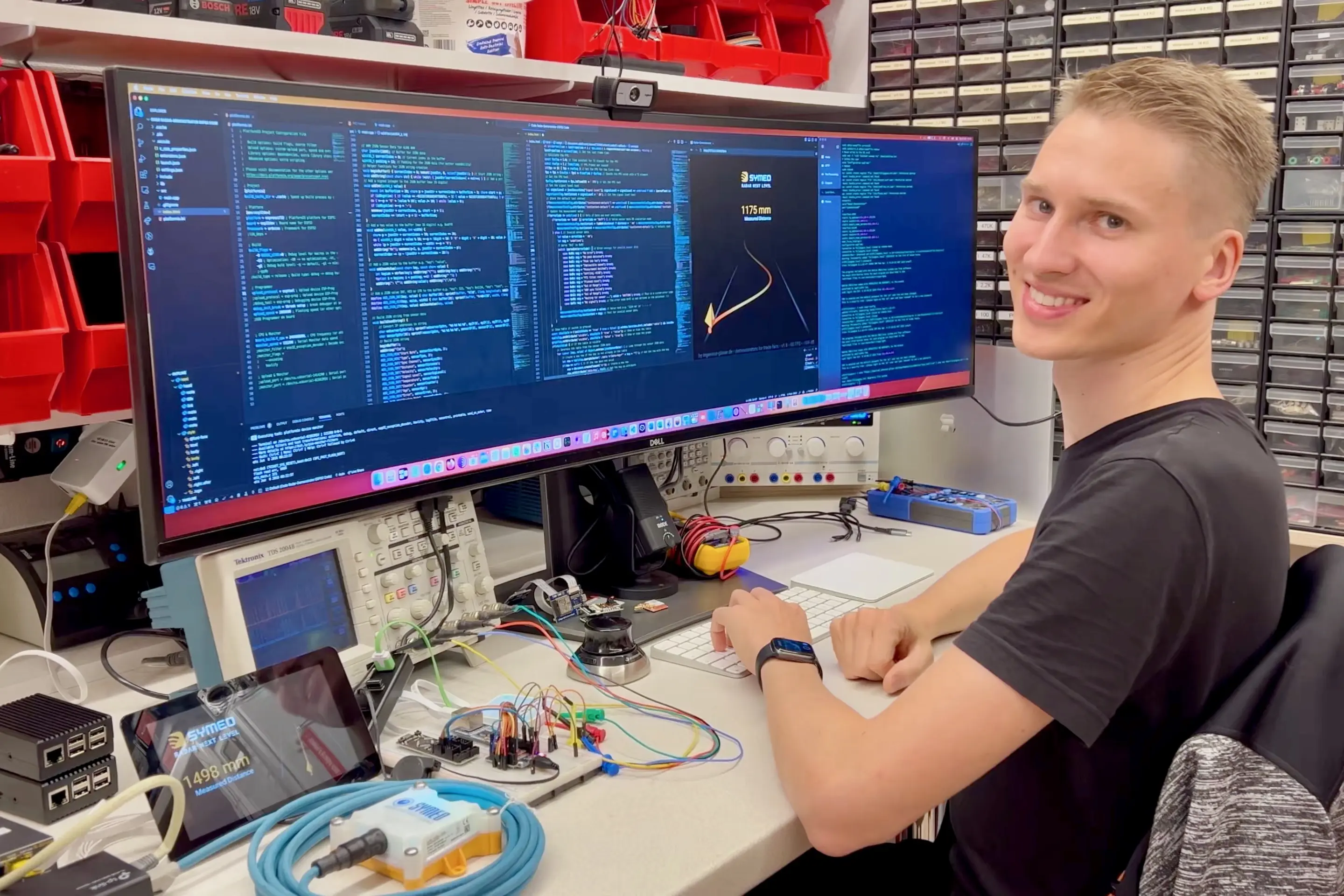
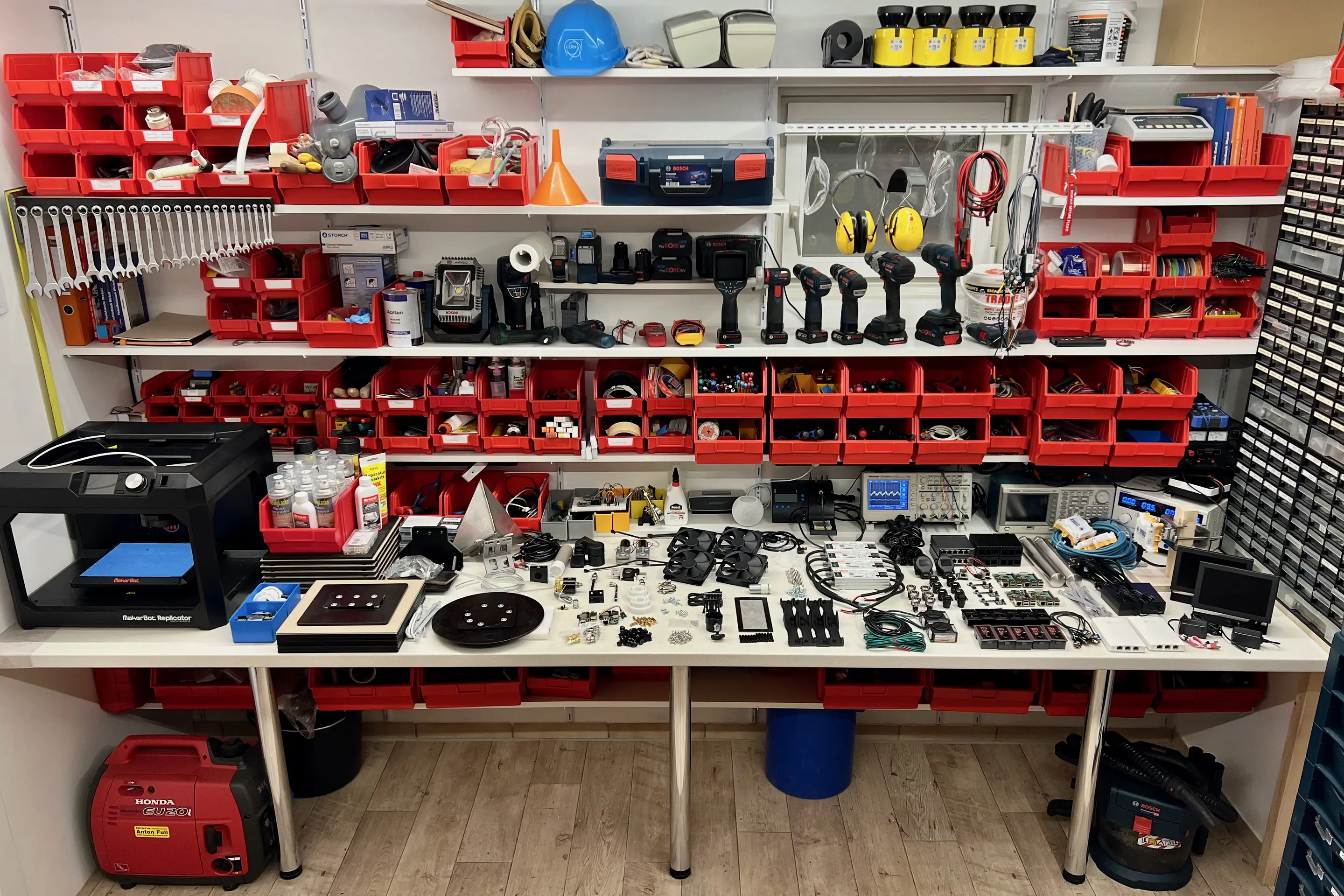
THANK YOU!
The engineering firm Glaser thanks Symeo GmbH in Munich for the extraordinarily good communication, the refreshing meetings, and a successful collaboration.
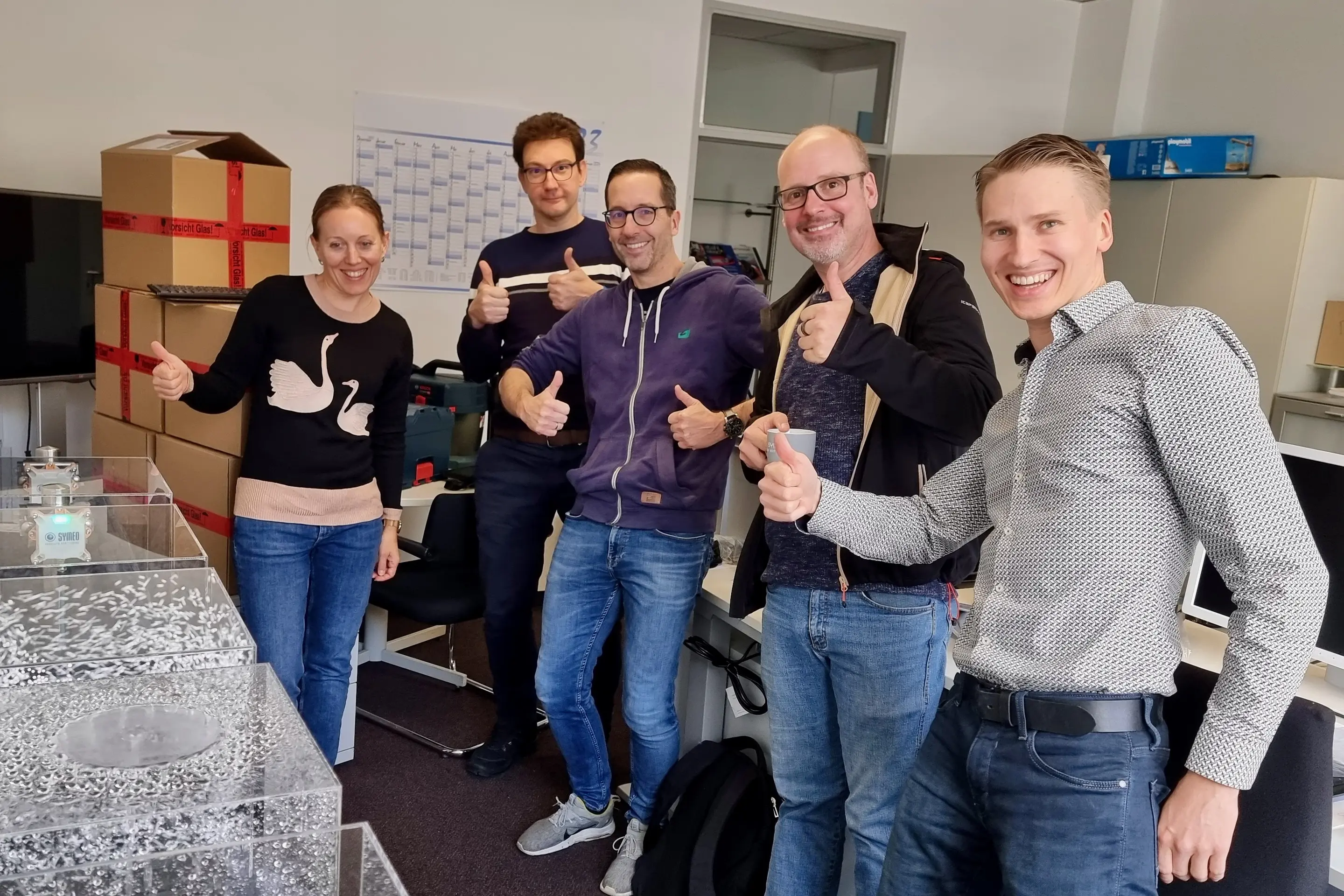
Addendum: Successful presentation of the SYMEO radar demonstrator at the SPS trade fair in Nuremberg
The trade fair model is currently being showcased at the SPS trade fair in Nuremberg, where it impressively demonstrates the advantages of radar technology to visitors. Particularly impressive is that this distance sensor reliably operates even under harsh conditions such as rain and dust.
Developing the radar demonstrator for SYMEO was an enriching experience. Despite the tight timeframe due to the upcoming trade fair date, we managed to complete the trade fair model on time. The key to success was excellent communication and close contact with the SYMEO team. I am proud to have been part of such a forward-looking project and look forward to the further establishment of this innovative sensor technology in the market.


Dipl.-Ing. (FH) Daniel Evers
Head of Product
"Within a very short time a masterpiece was created that far exceeded our expectations of robustness and user-friendliness. I have never encountered such strong commitment, technical ingenuity and universal competence in one person before."