Exhibition exhibit
Hygienic Seal Demonstrator
for hygienic seals by Freudenberg
Exhibition stand for the drinktec trade fair in Munich
When hygiene convinces visibly.
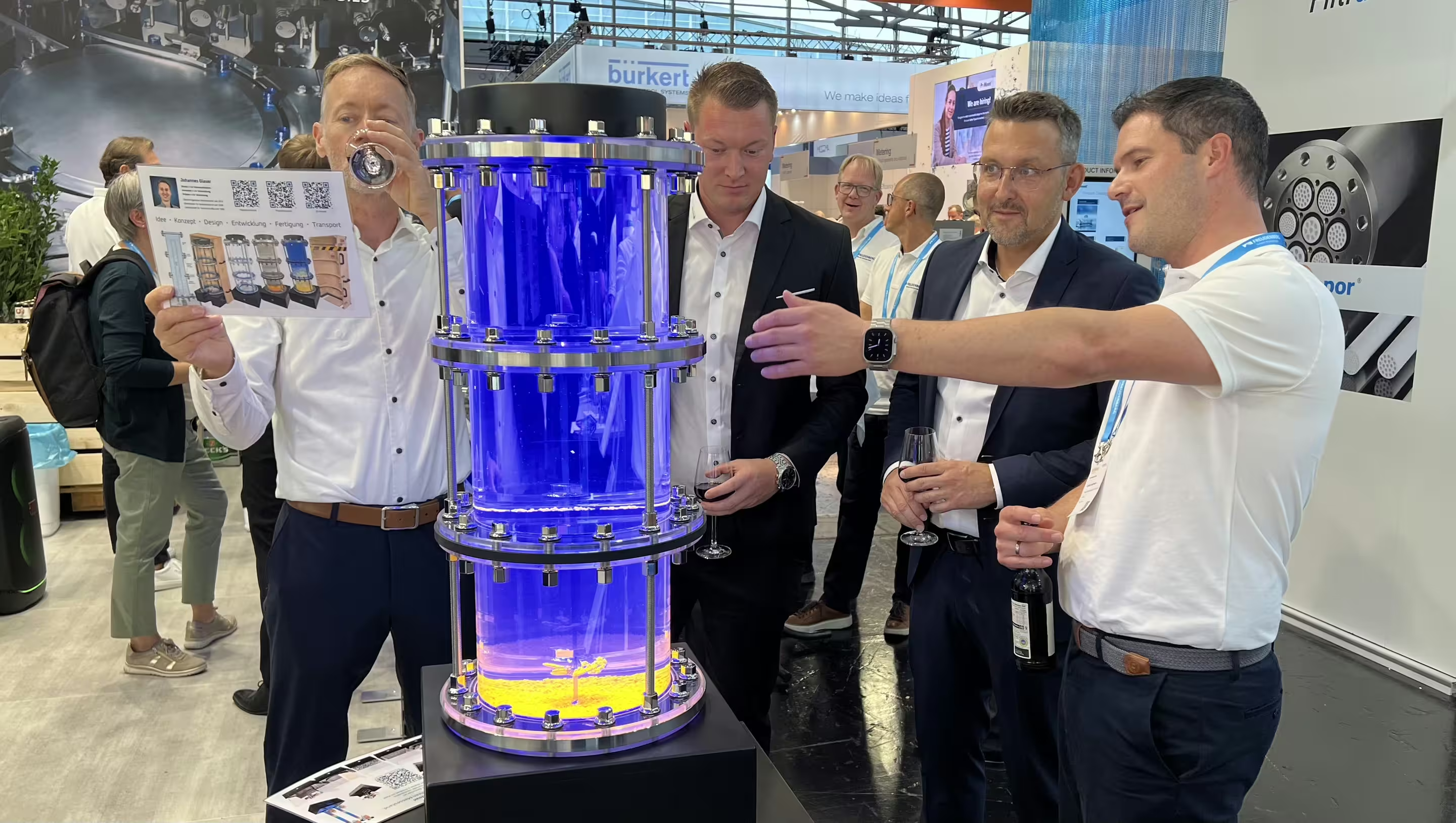
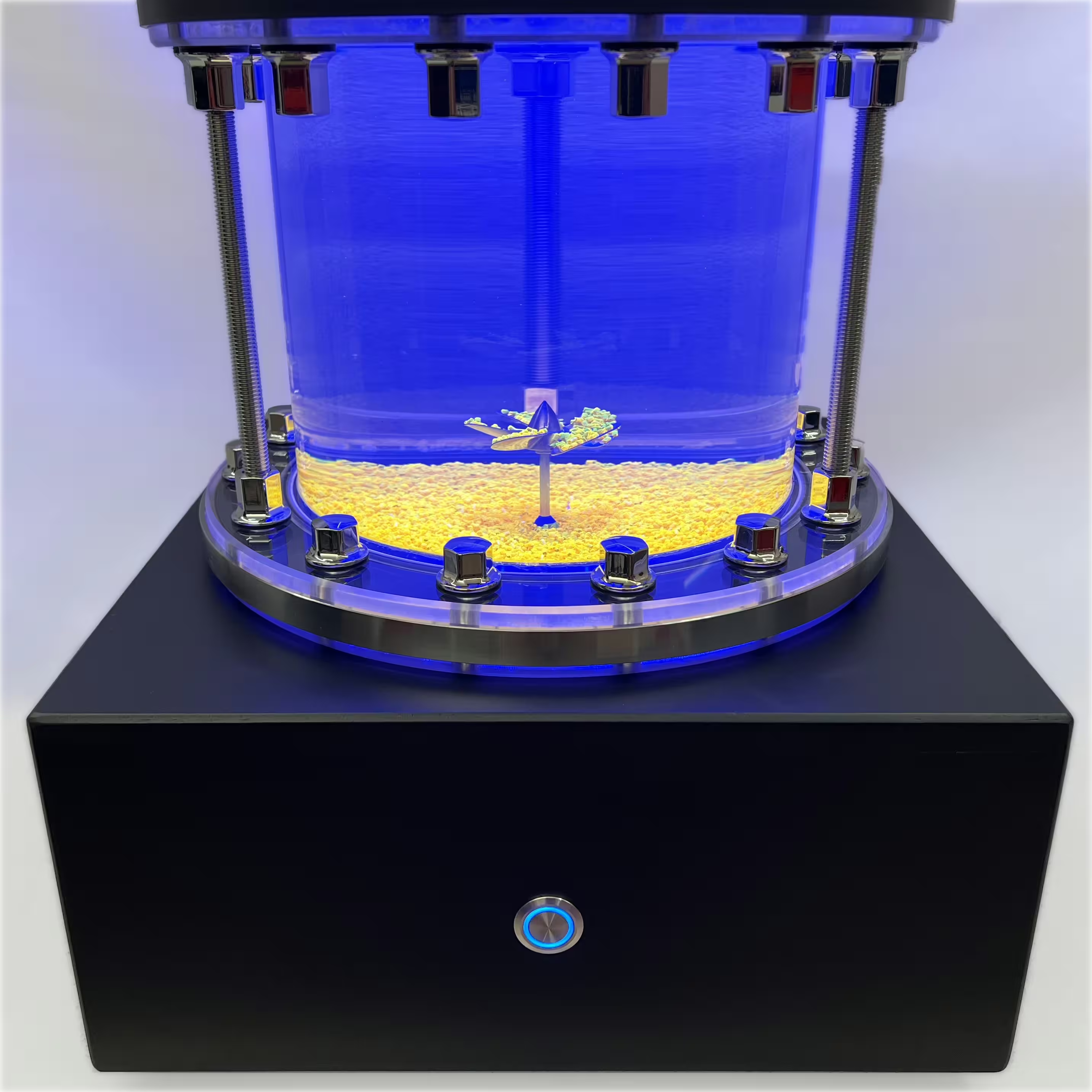
The exhibition exhibit makes at a glance visible how particles accumulate in dead spaces of a standard seal, while the hygienic seal from Freudenberg remains completely residue-free. In the acrylic cylinder filled with water it becomes visible how important the right seal design for hygiene and process safety is.
Exhibition exhibit for hygienic seal with water & UV light - drinktec Freudenberg - exhibition stand
✨ Fascination in the water flow. The Hygienic Seal Demonstrator shows at a glance what matters for hygienic seals. While particles accumulate in the dead spaces of a standard seal, the Freudenberg hygienic seal remains completely residue-free. In the acrylic cylinder filled with water, under UV light it becomes visible how important the correct seal design is for hygiene and process safety.
https://ingenieur-glaser.de/hygienic-seal-demonstrator/ – Behind the scenes
#Drinktec #Freudenberg #TradeFair #ExhibitionStand #Exhibit #ModelExhibit #FunctionalModel #Booth
🧲 Ooh, Aah, Wow! - Customer magnets for your booth.
The engineering firm Glaser develops and manufactures custom exhibition exhibits. As eye-catchers they draw visitors' attention to your booth with a curious „Ooh“. The benefits of your product become clear and tangible on the demonstration model with an astonished „Aah“. With a concluding „Wow!“ you, your product and your brand stay in mind.
https://ingenieur-glaser.de/messebau/ – Exhibition exhibits
💡️ Development & Manufacturing – Engineering firm Glaser
https://ingenieur-glaser.de/ – Electronics・Software・Hardware
🔔 Don't miss any developments. Subscribe now!
https://ingenieur-glaser.de/Instagram/ – Instagram
https://ingenieur-glaser.de/Facebook/ – Facebook
https://ingenieur-glaser.de/YouTube/ – YouTube
https://ingenieur-glaser.de/LinkedIn/ – LinkedIn
https://ingenieur-glaser.de/TikTok/ – TikTok
https://ingenieur-glaser.de/Xing/ – Xing
🥇 How visions became successes.
https://ingenieur-glaser.de/Projekte/ – References
📞 Has the spark ignited?
https://ingenieur-glaser.de/Kontakt/ – Contact
#Drinktec #Freudenberg #TradeFair #ExhibitionStand #Exhibit #ModelExhibit #FunctionalModel #Booth
Operating principle of the exhibit
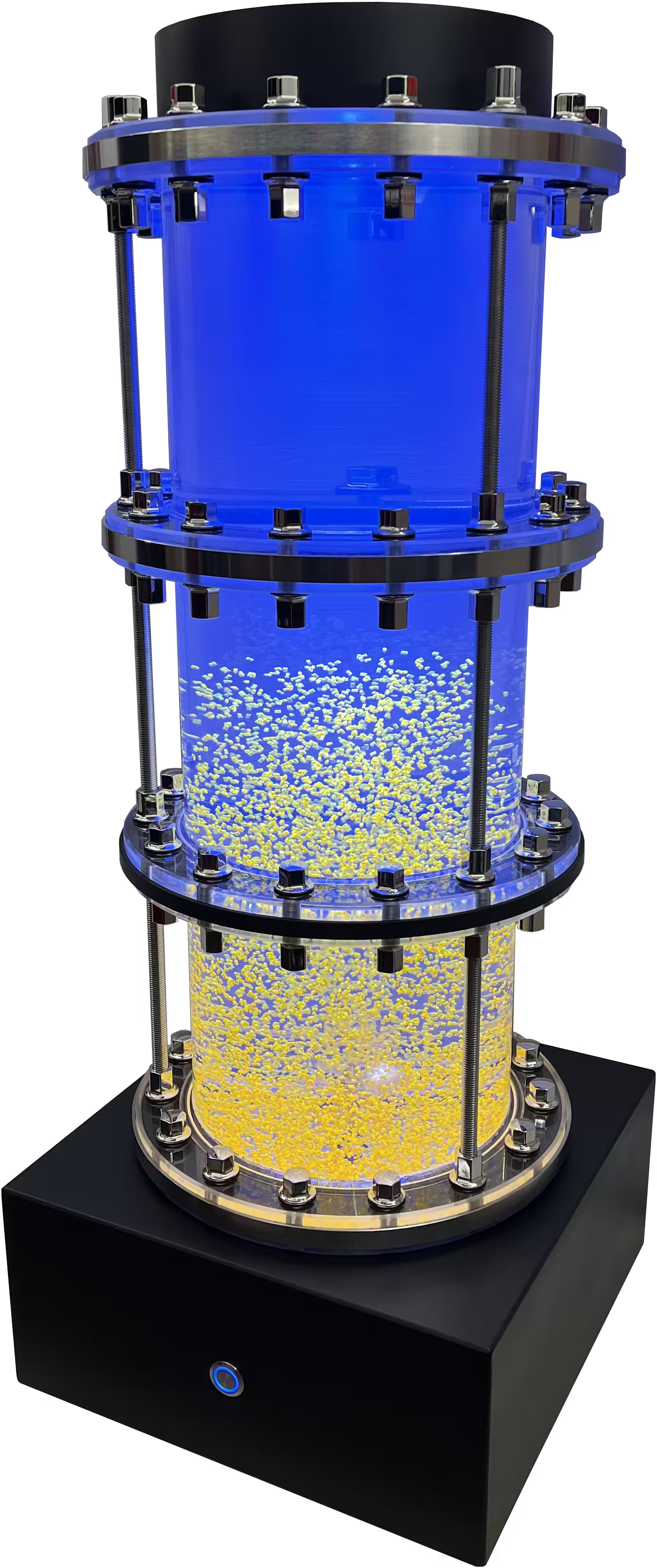
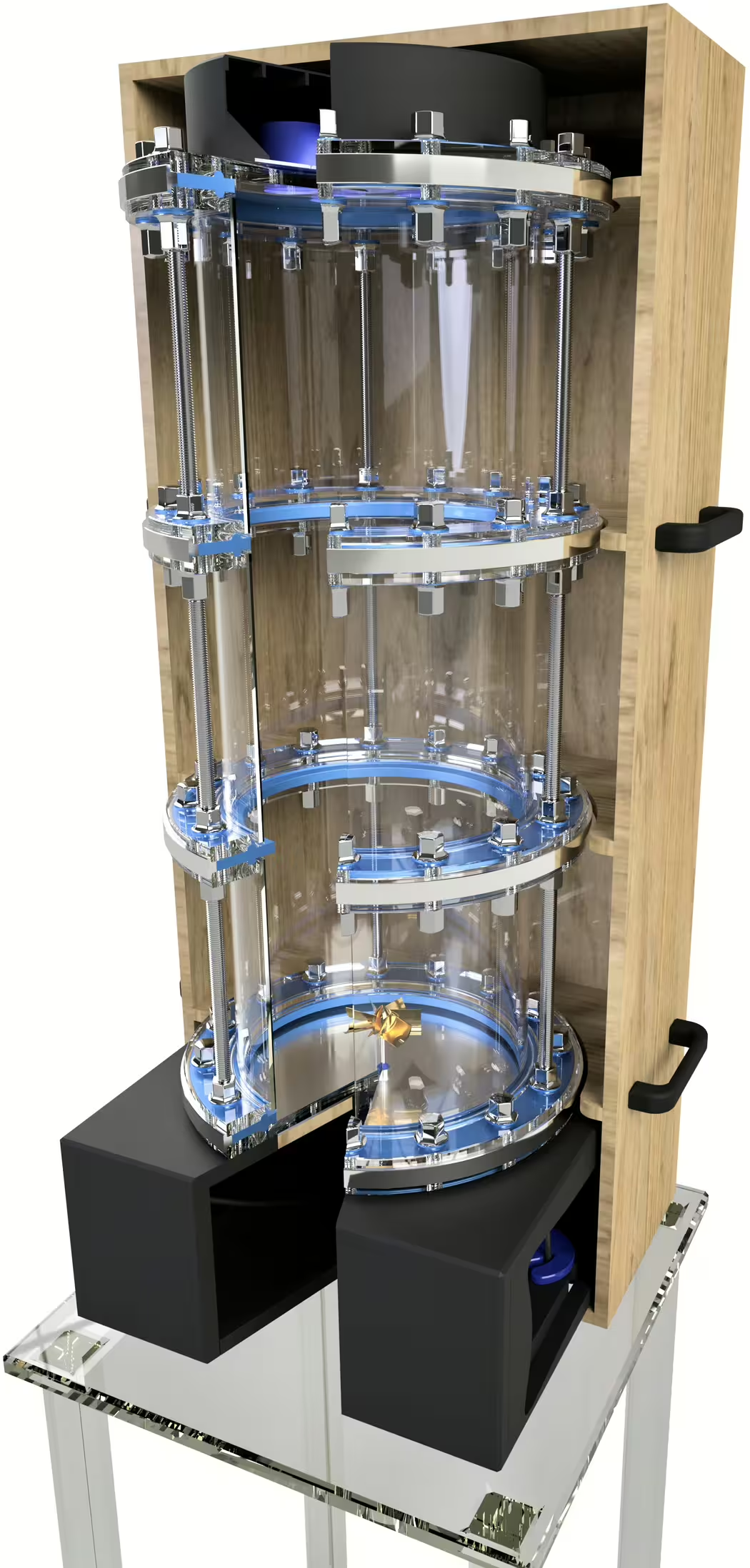
A hydro screw, whose motor is installed in the base, stirs up fluorescent granulate in the water. The granulate glowing under UV light settles on the overhanging standard seal as it sinks, while the hygienic seal remains residue-free.
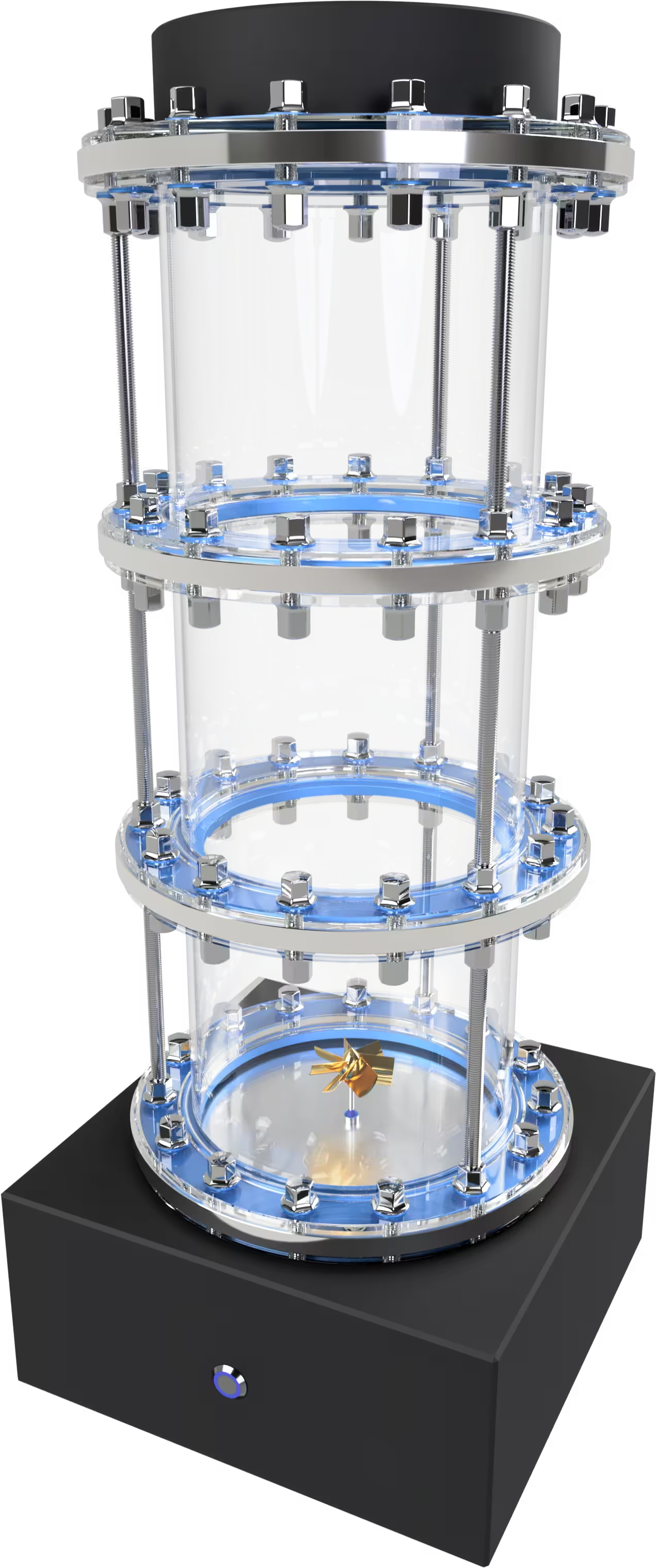
Virtual 3D model
Already in the concept phase the exhibit model was fully constructed in 3D, to optimize proportions, function and design early on.
Real exhibit
From the digital design a precisely manufactured exhibit model was created in the real world from acrylic glass, stainless steel and black painted wood.
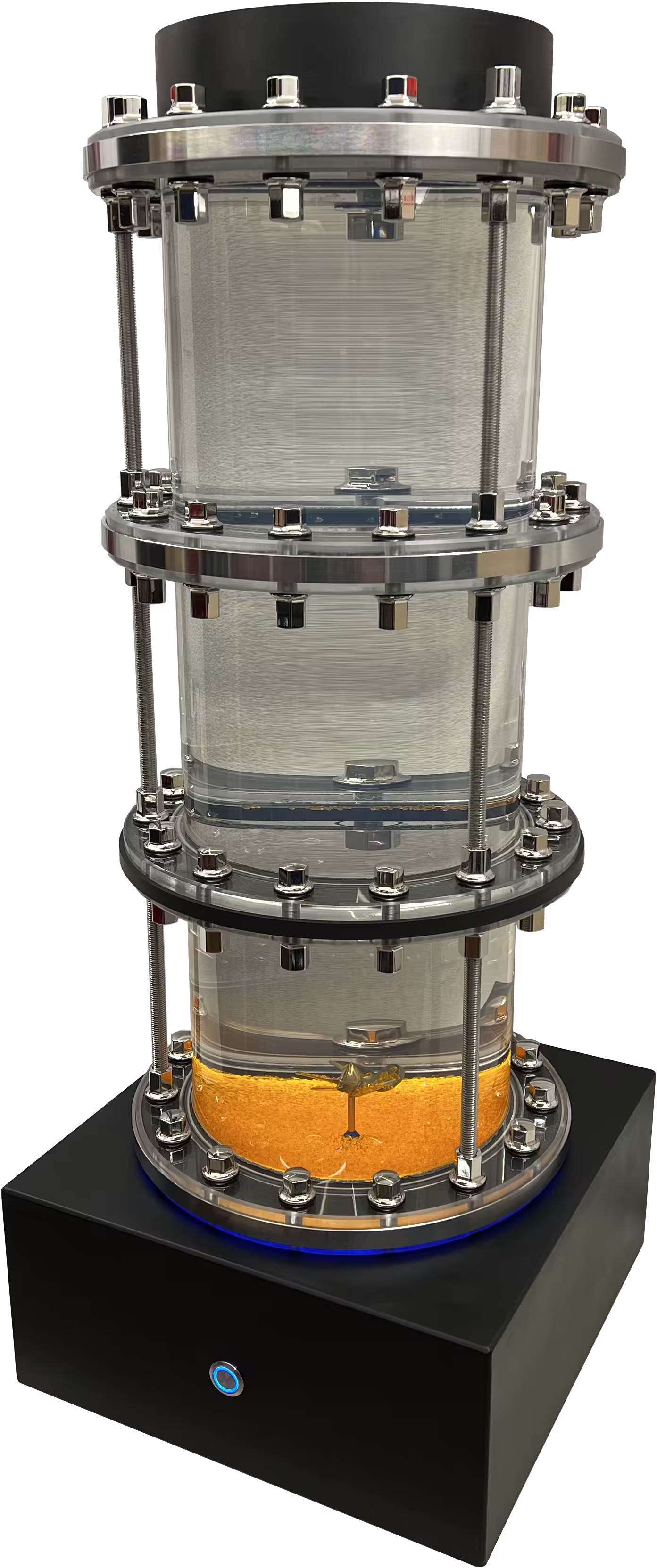
Exhibit in action
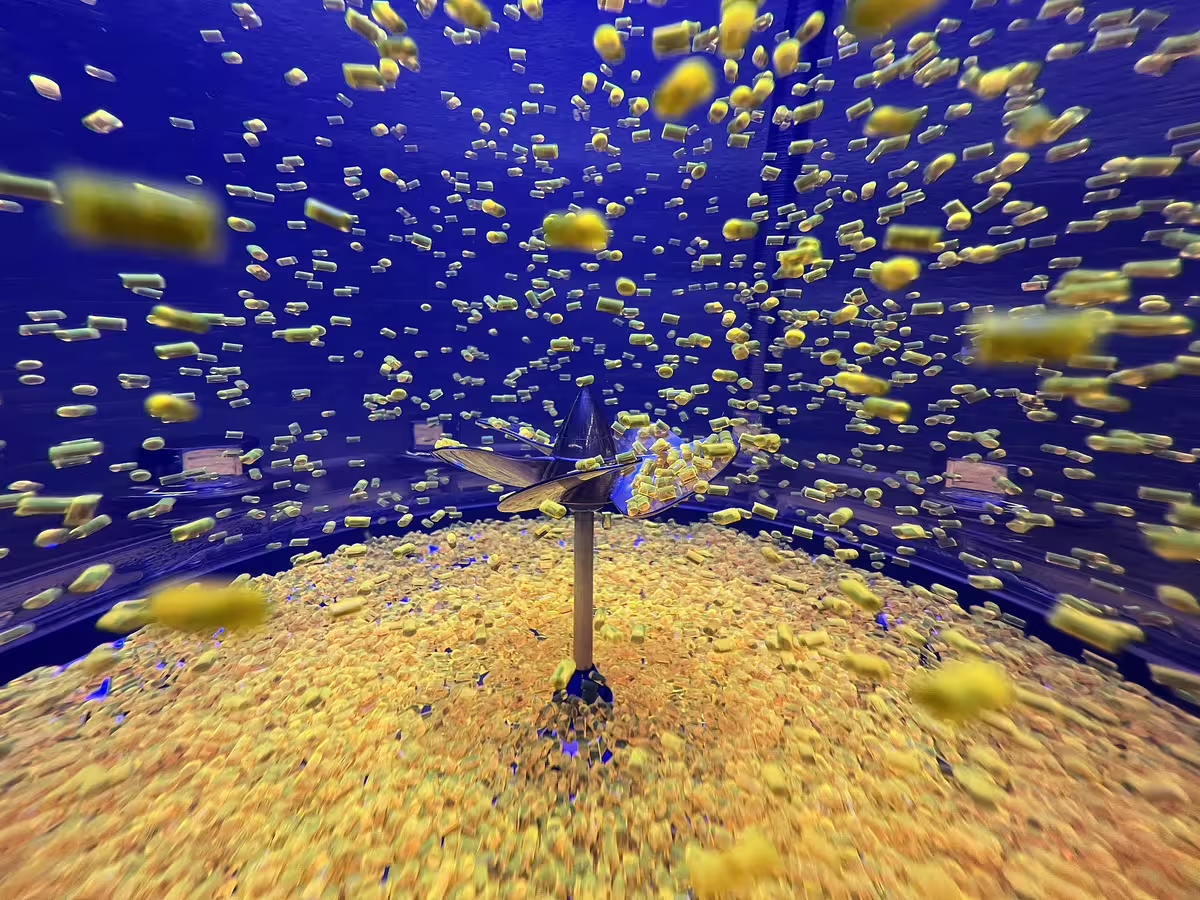
In action the exhibit unfolds its full effect. Flowing granulate and lighting effects create a dynamism that immediately attracts attention.
Uncompromising design - high-quality and pure
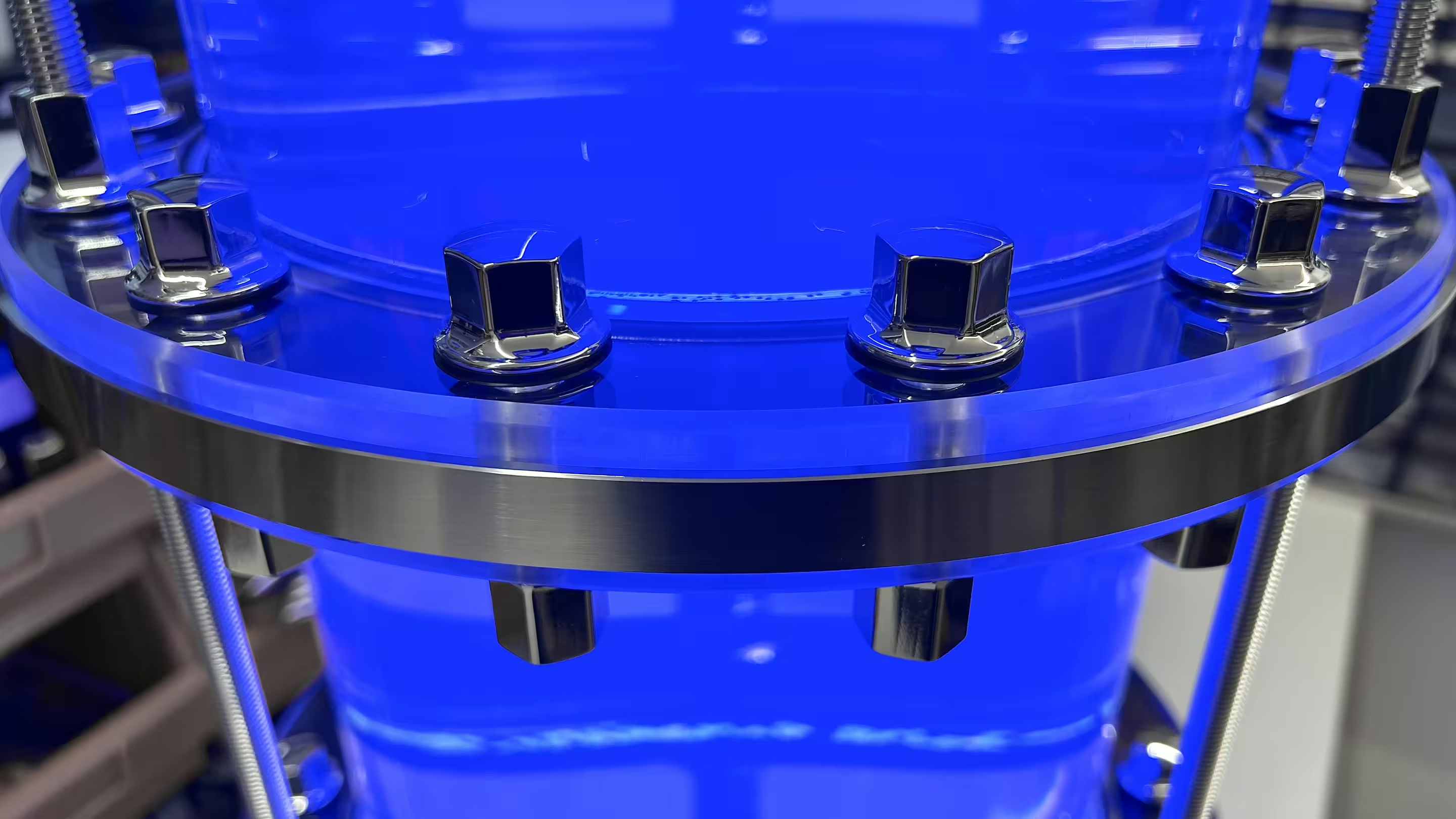
Blue shimmering water and orange glowing granulate pick up Freudenberg's corporate design. A deep black base, high-gloss polished stainless steel screws and clear acrylic glass emphasize purity and precision. The black light provides a modern, almost futuristic look and reinforces the impression of innovation and high quality.
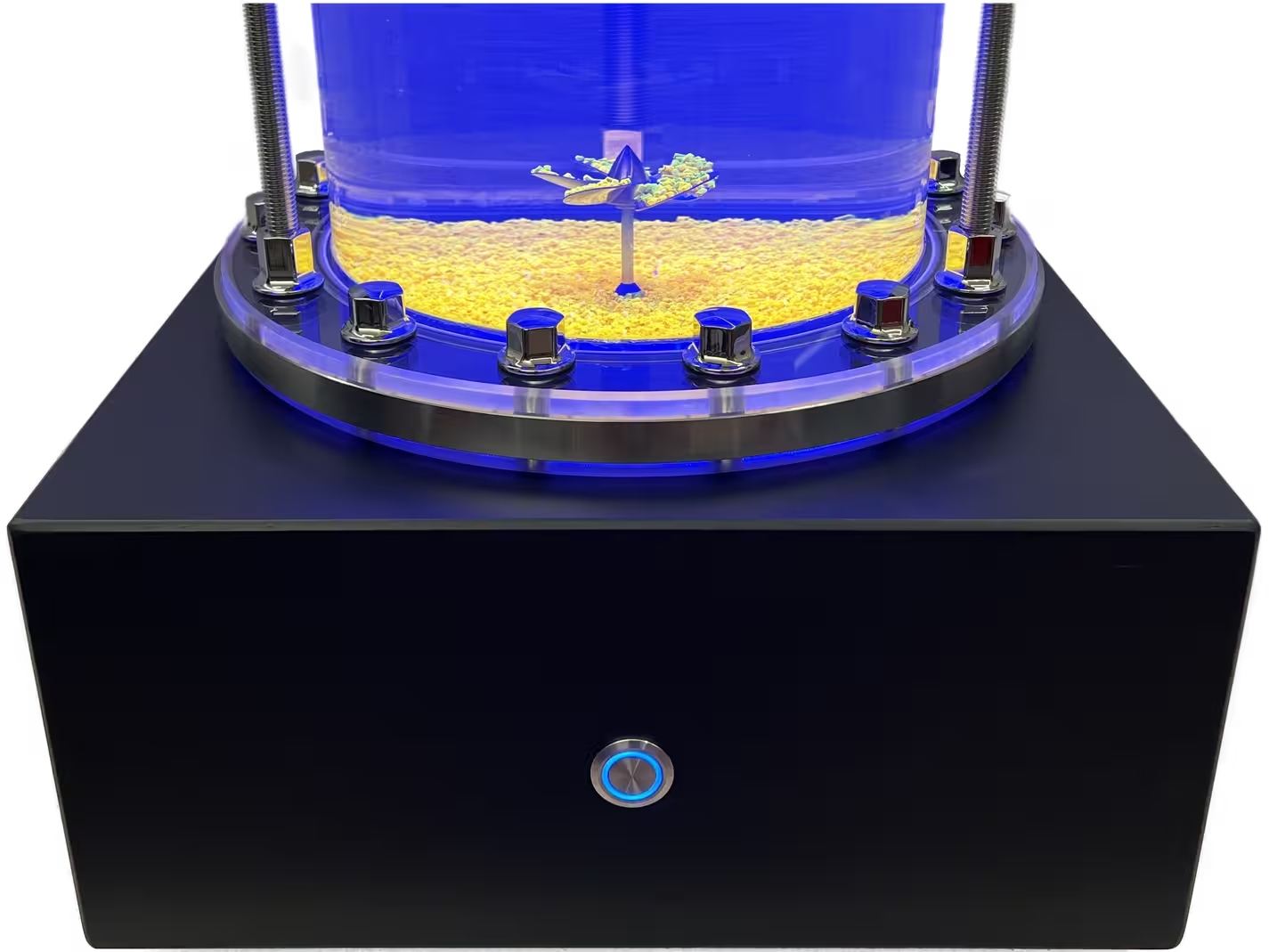
Eyecatcher - Fascination in the Water Stream
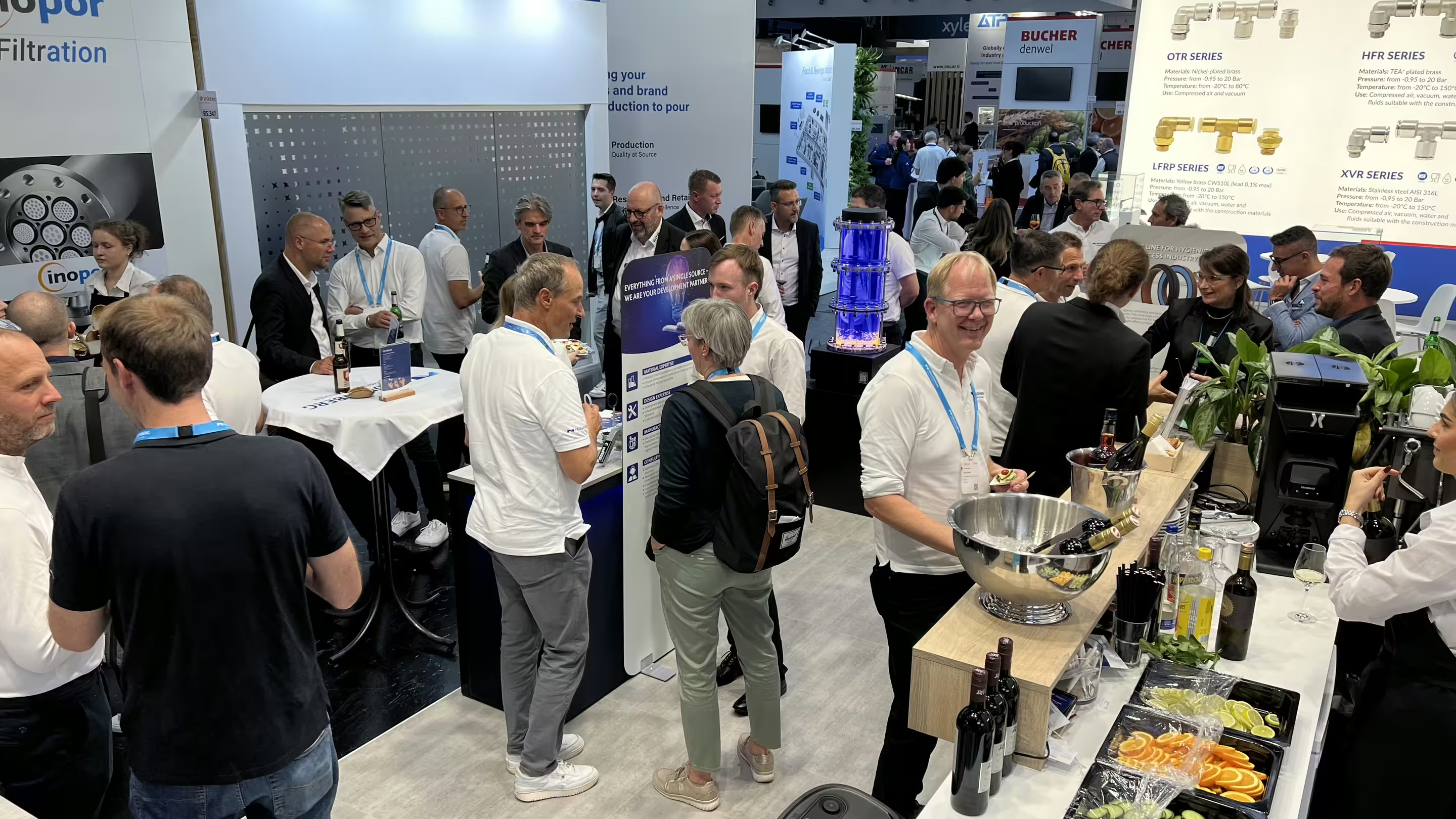
Even from afar the demonstrator draws the attention of trade fair visitors. Glowing granule clouds swirl in the water. A dynamic spectacle that immediately arouses curiosity. Technically exciting and visually impressive, the demonstrator is the eye-catcher at the booth.
Focus - The decisive difference
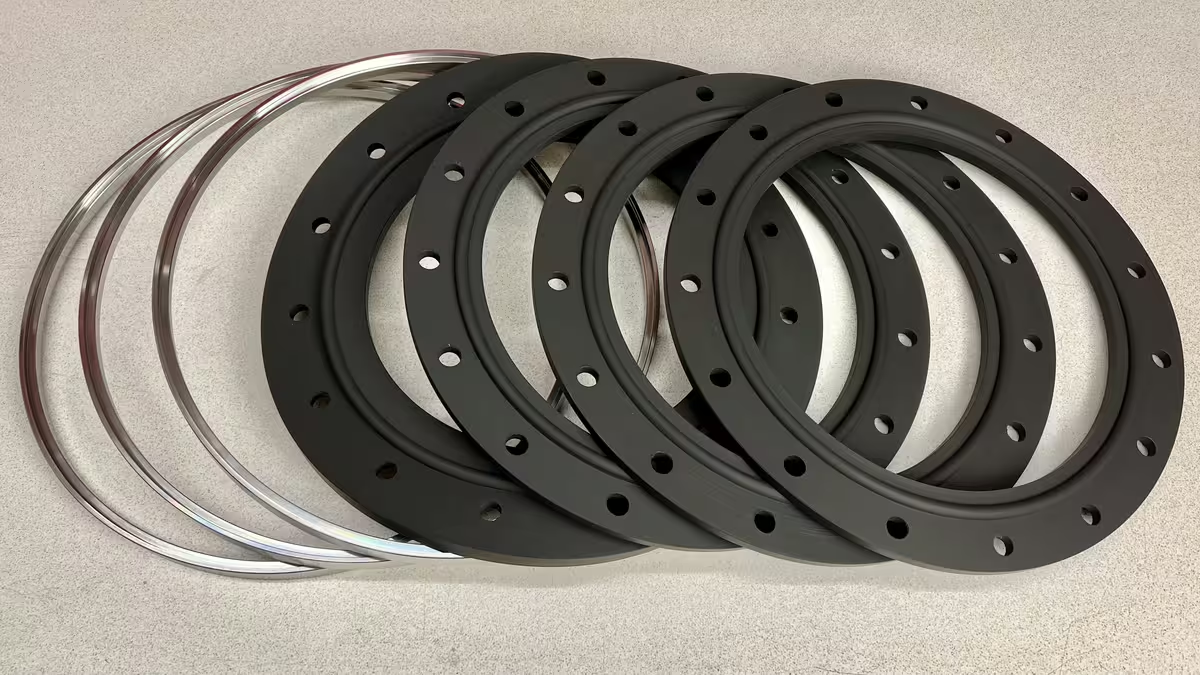
At first glance the hygienic seal hardly differs from a standard seal. Once installed, however, the extent of the difference for hygiene becomes visible. Standard seals create dead spaces where residues accumulate and hygienic risks arise. The hygienic seal from Freudenberg relies on precise geometries and smooth surfaces that allow complete cleaning and significantly reduce the risk of contamination.
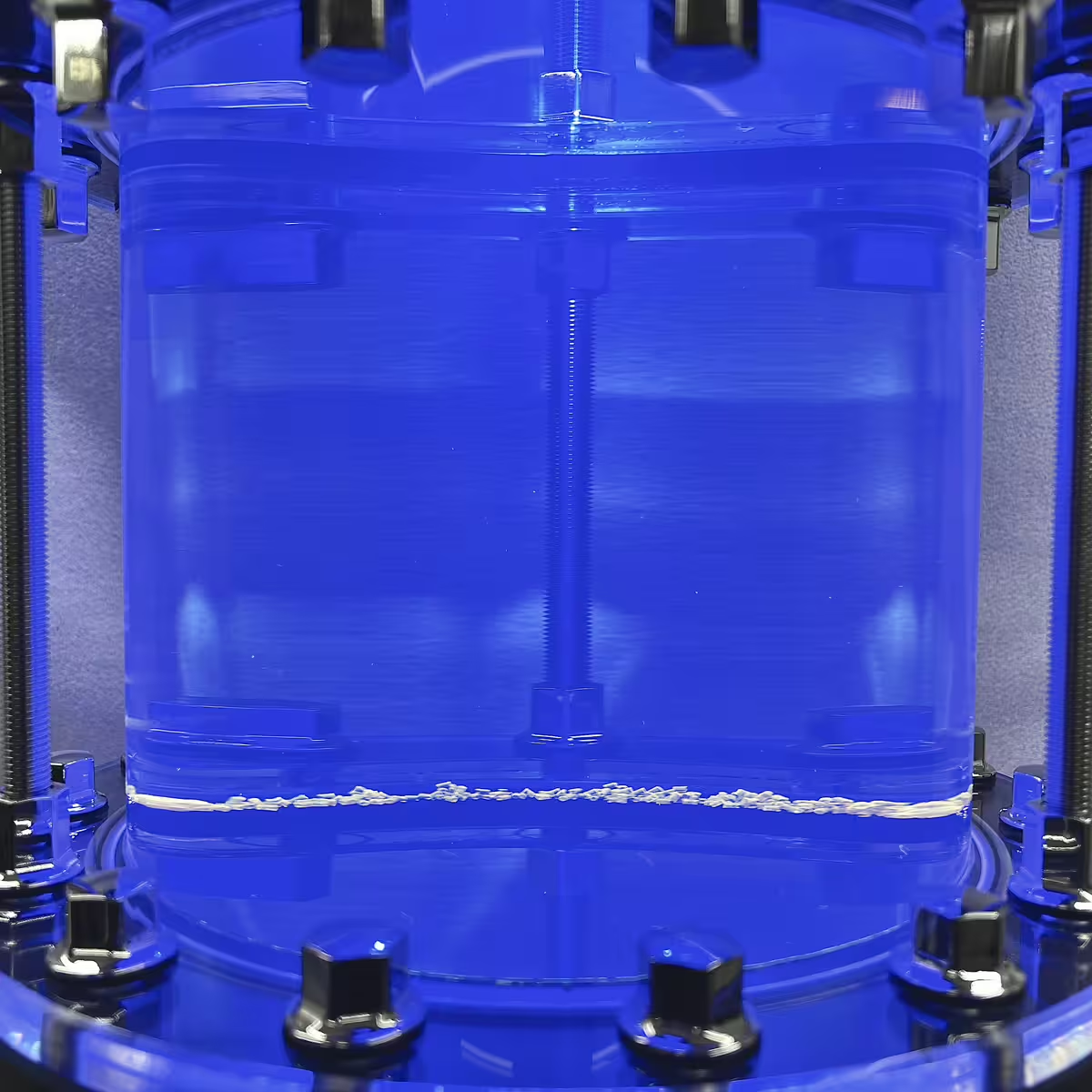
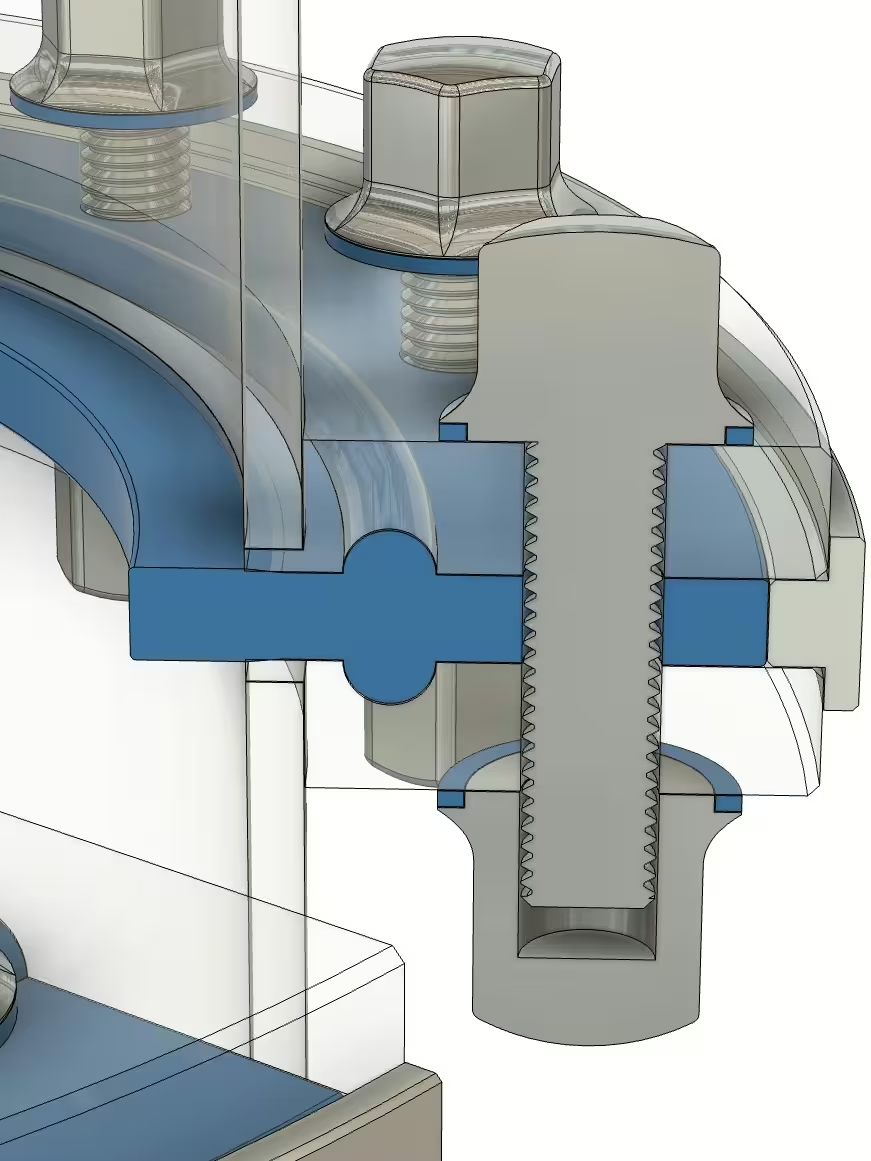
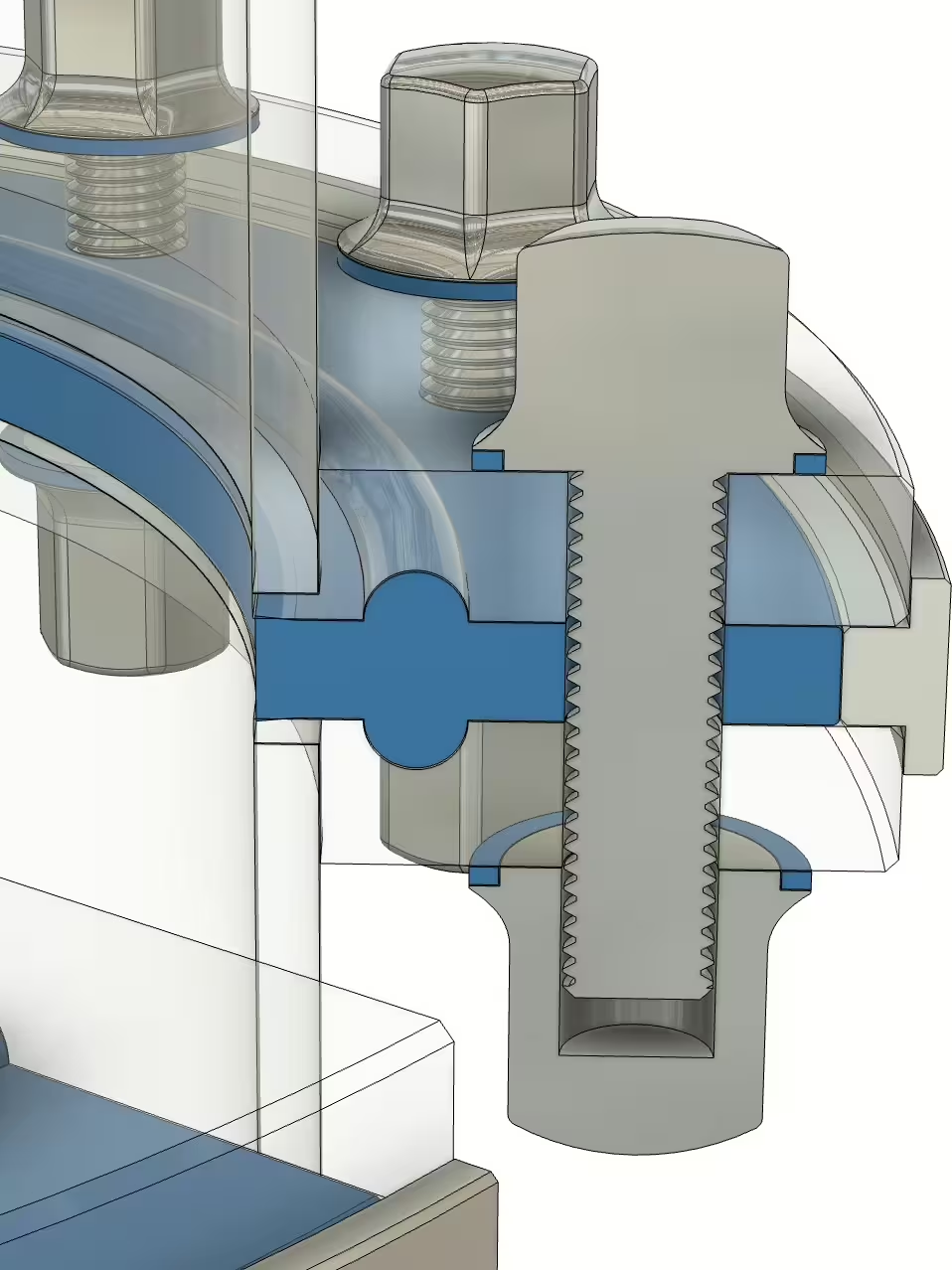
In the following image the standard seal on which the fluorescent acrylic granulate settles can be seen below. The hygienic seal above, on the other hand, remains residue-free.
The transparent flanges of the exhibit direct the view specifically to the seals. The protrusion of the standard seal and the flush fit of the hygienic seal are clearly visible from every perspective. The curved acrylic glass acts like a magnifying glass and enlarges the residues on the standard seal. This clearly shows the advantage of the hygienic variant.
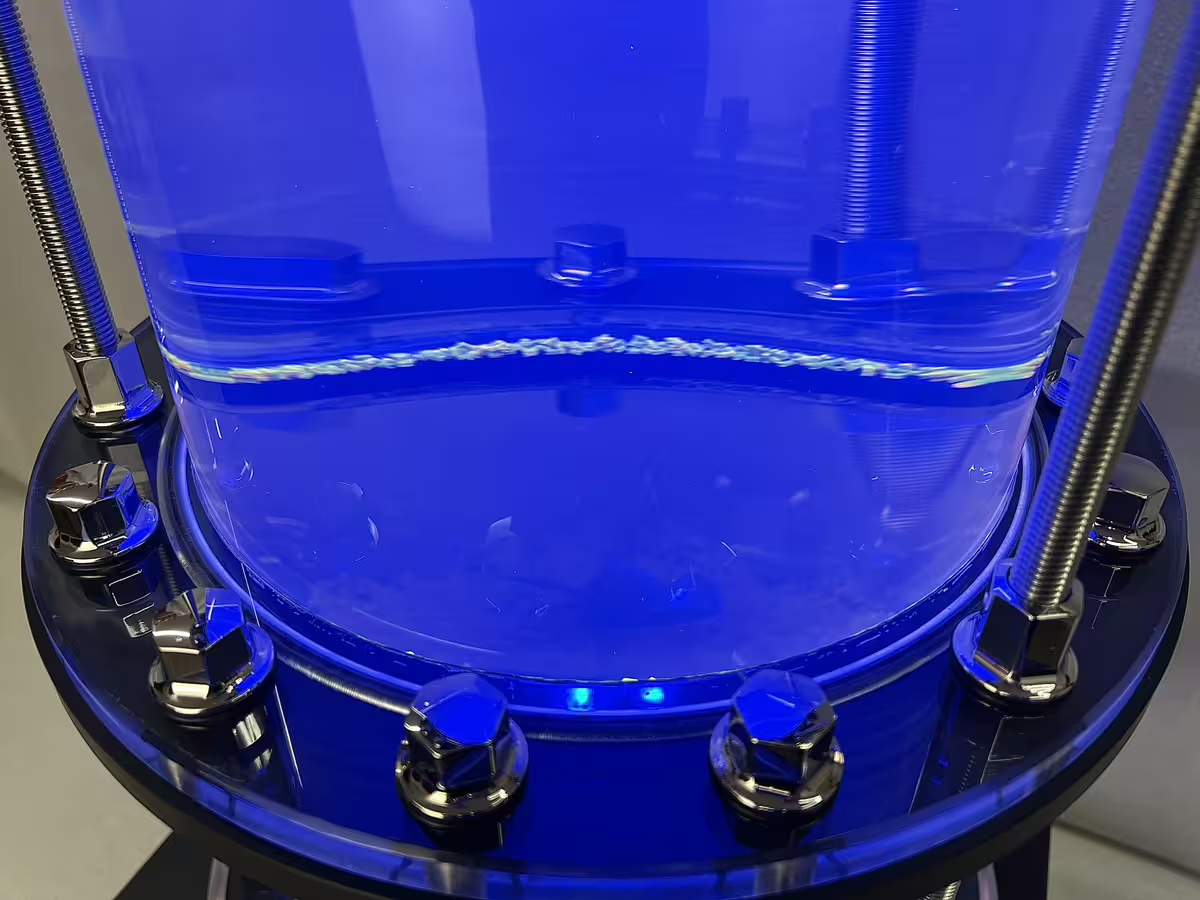
In the exhibit the protrusion of the standard seal was deliberately made a bit more pronounced so that the microscopic problem can be staged with coarse granulate.
Standard seal
The protrusion creates dead spaces
Hygienic seal
The precise geometry prevents dead spaces
Noble stainless steel screws highly polished and certified
The high quality standard of Freudenberg should be reflected in the trade fair appearance down to the last screw. Therefore EHEDG-certified fastenings made of polished stainless steel from the company Kipp were used.
A set of M12 fasteners consisting of a screw, a nut and a washer with gasket costs around 50 euros net.
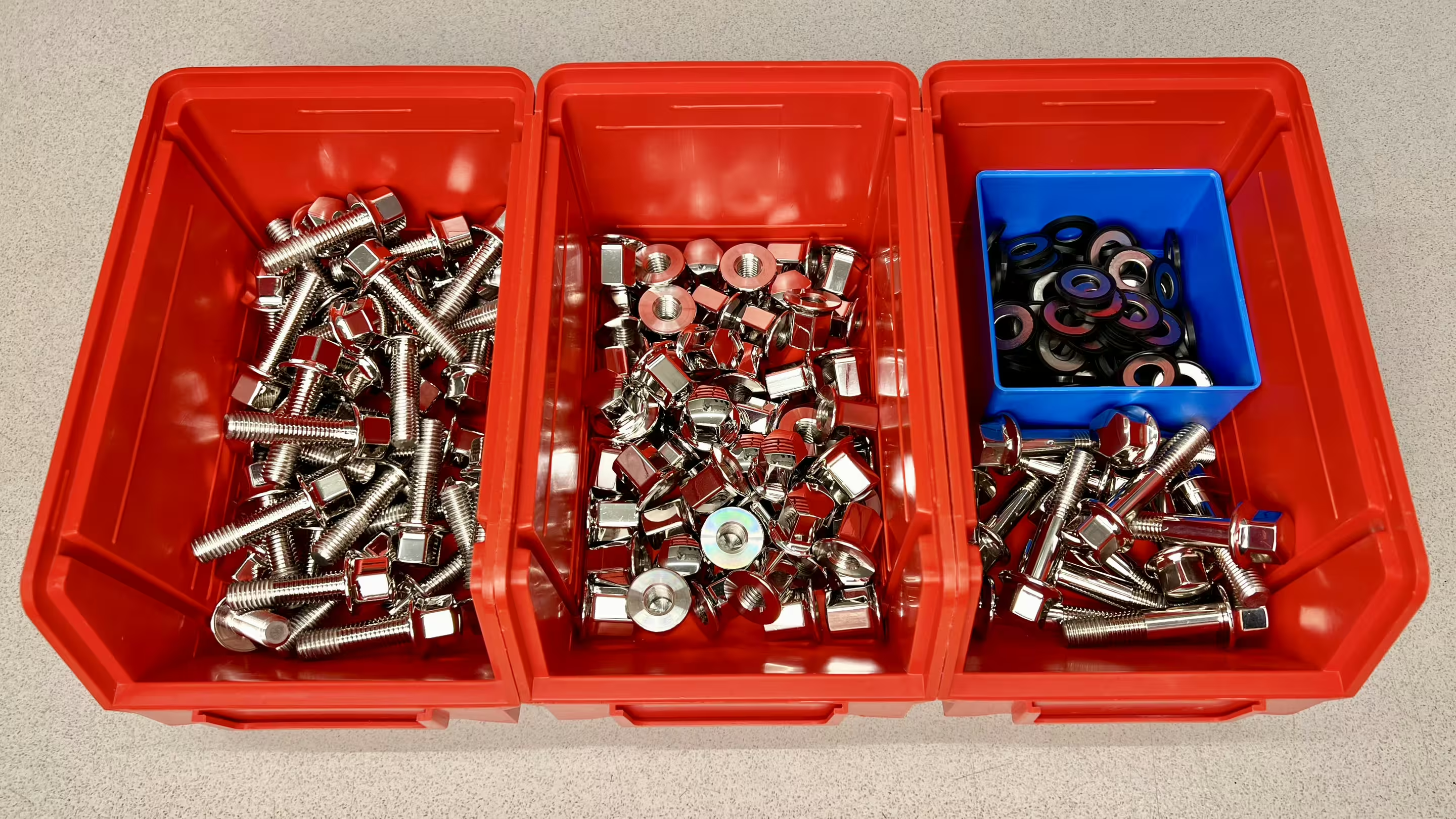
The image above shows a considerable total value of around 3,000 euros net and the following image the noble result from polished stainless steel combined with acrylic glass.
Development and design of the trade fair exhibit
Before production the exhibit was fully designed digitally. This made it possible to precisely coordinate function, design and proportions and to make the drafts visually accessible to Freudenberg's Hygienic Seal Team. The result was a reliable basis for an exhibit that could be implemented on time and successfully.
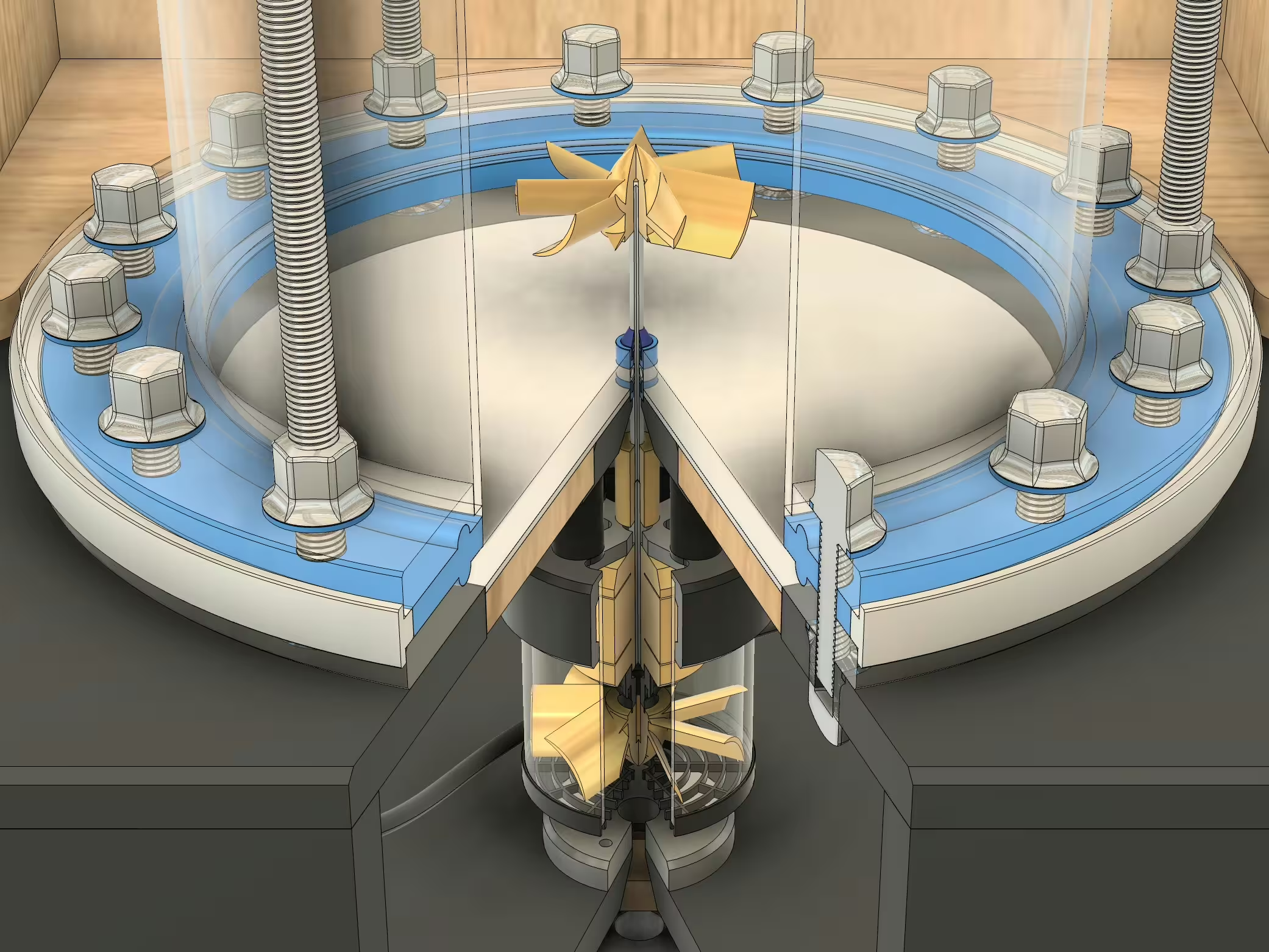
Drive unit with Freudenberg oil seal
The water screw is positioned inside the cylinder and is driven by a brushless electric motor in the model's base. Two consecutively arranged Freudenberg oil seals are used as radial shaft seals to seal the shaft feedthrough. Between them runs a full-ceramic ball bearing, which guides the shaft precisely. The entire feedthrough is visible from the outside through the transparent acrylic glass base and is mirrored by the aluminum plate beneath it.
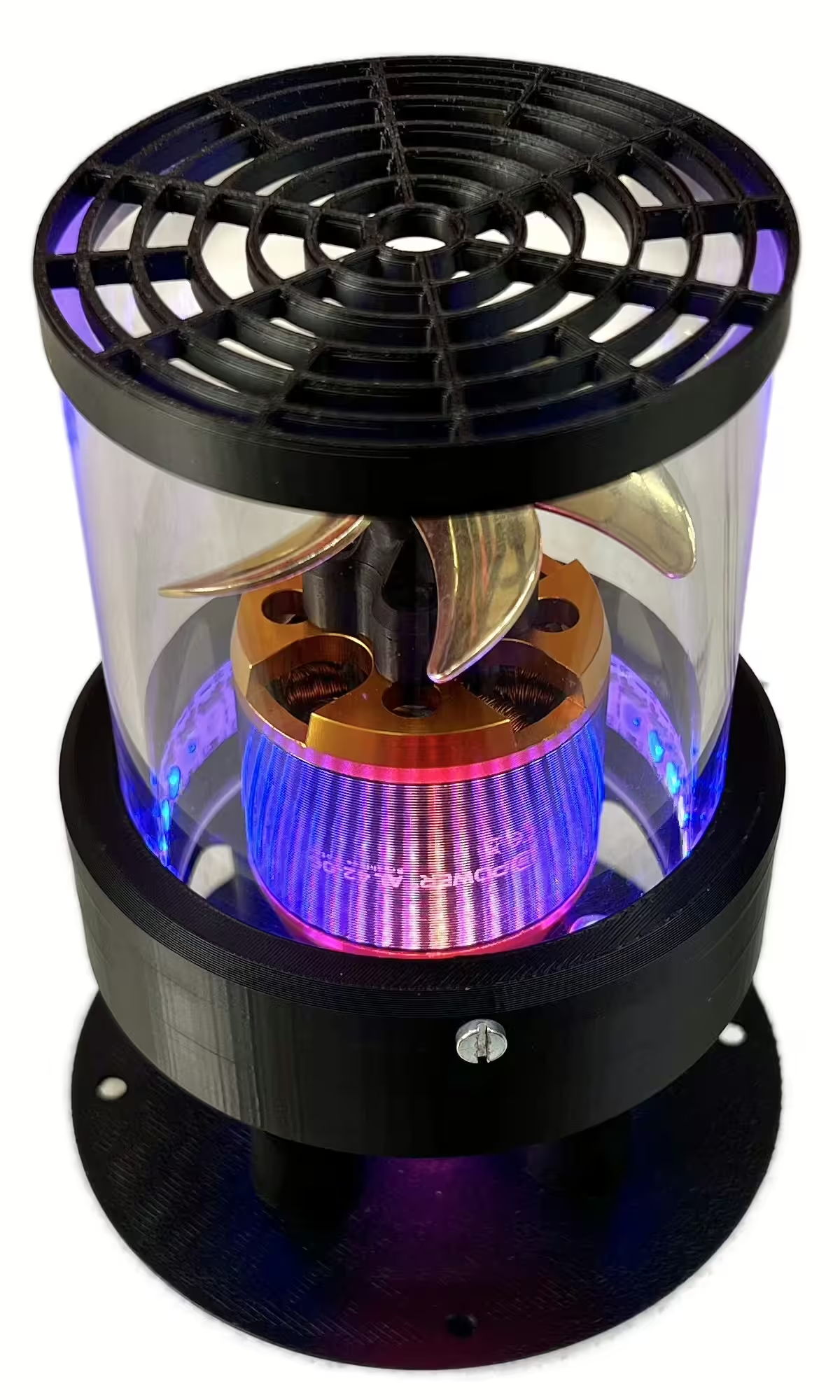
Brushless electric motor for the hydro screw
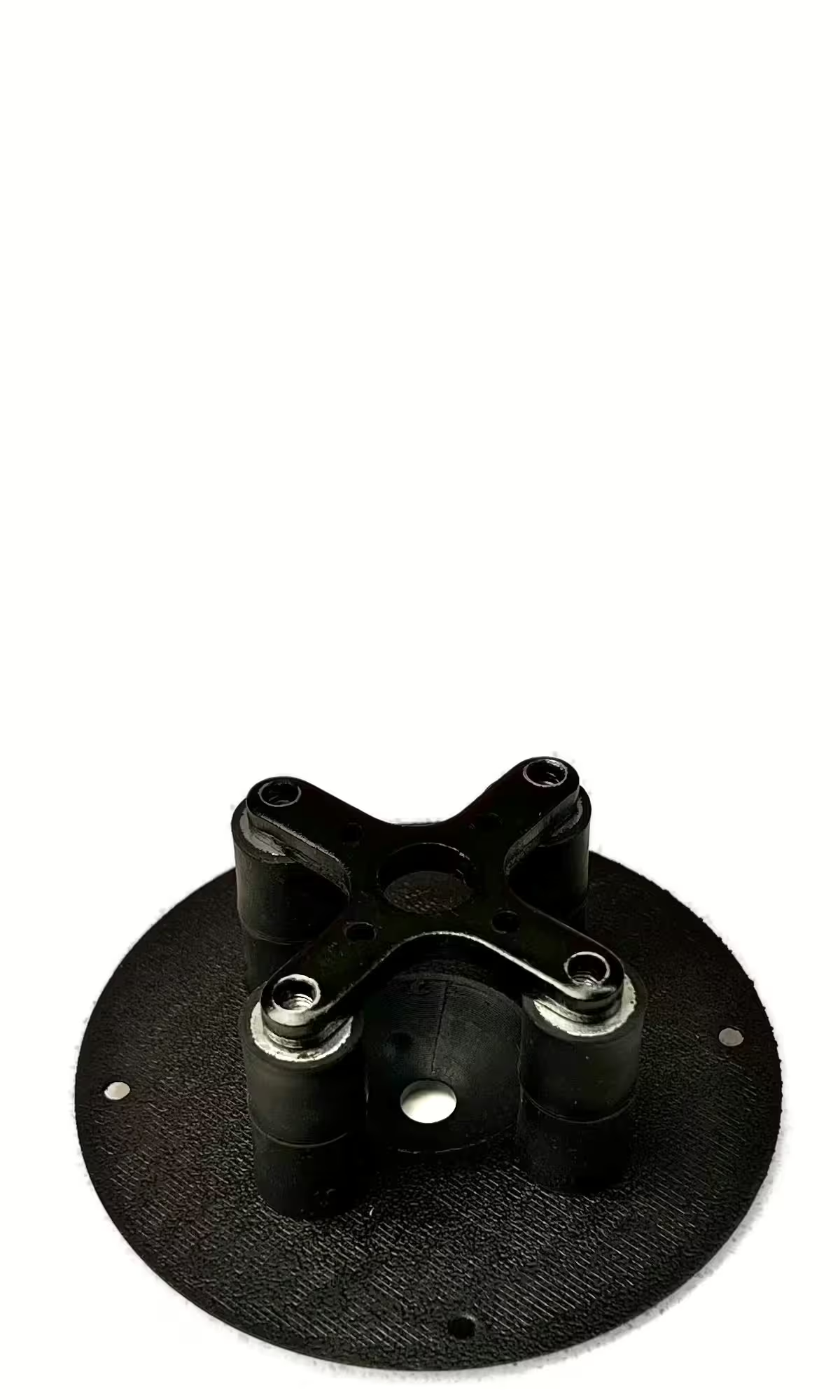
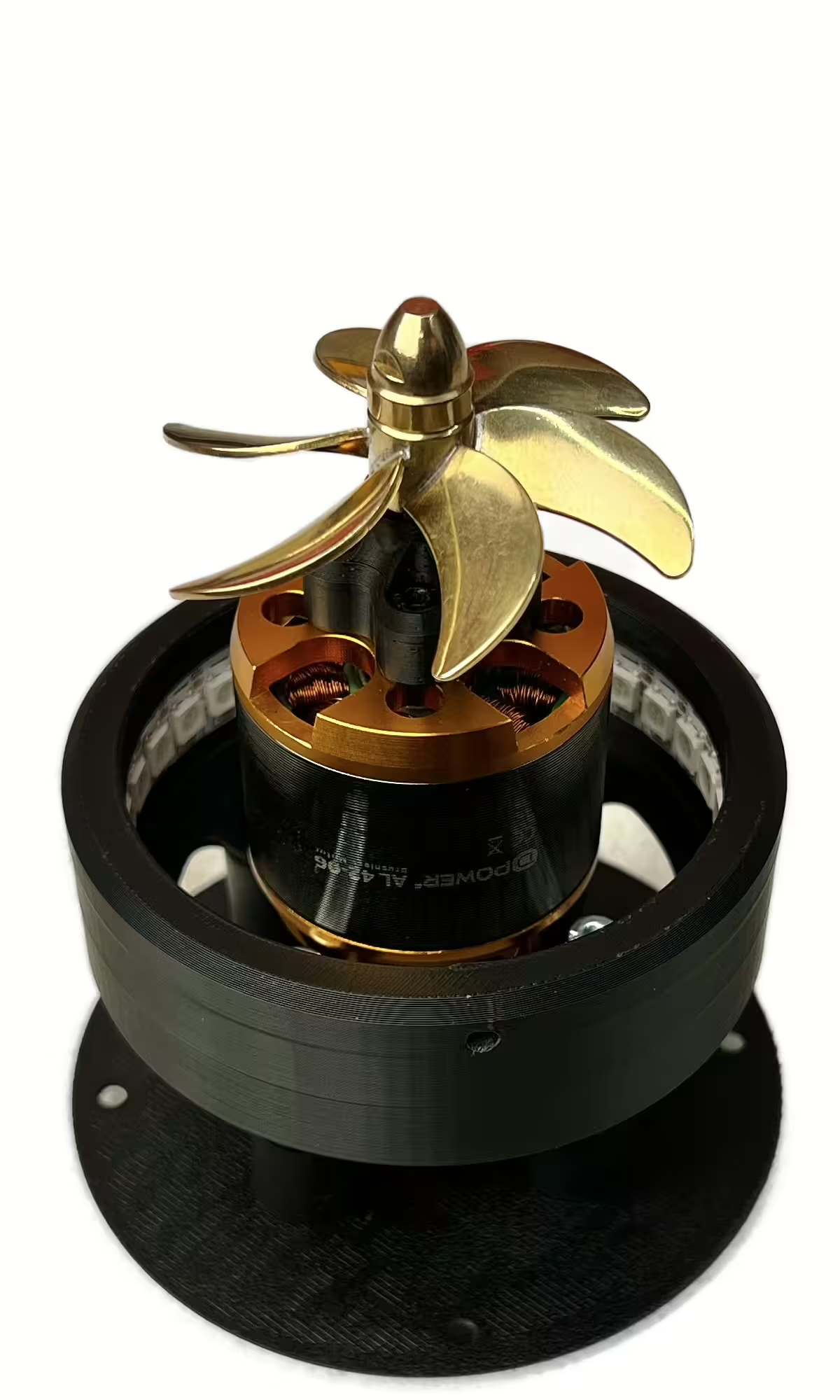
The water screw of the trade fair exhibit is driven by a maintenance-free outrunner motor that generates high torque at low speeds and reaches peak outputs of up to 540 watts. The motor is mechanically decoupled via elastic rubber spacer bolts, effectively reducing vibrations and structure-borne noise. An additional propeller supports cooling of the drive unit.
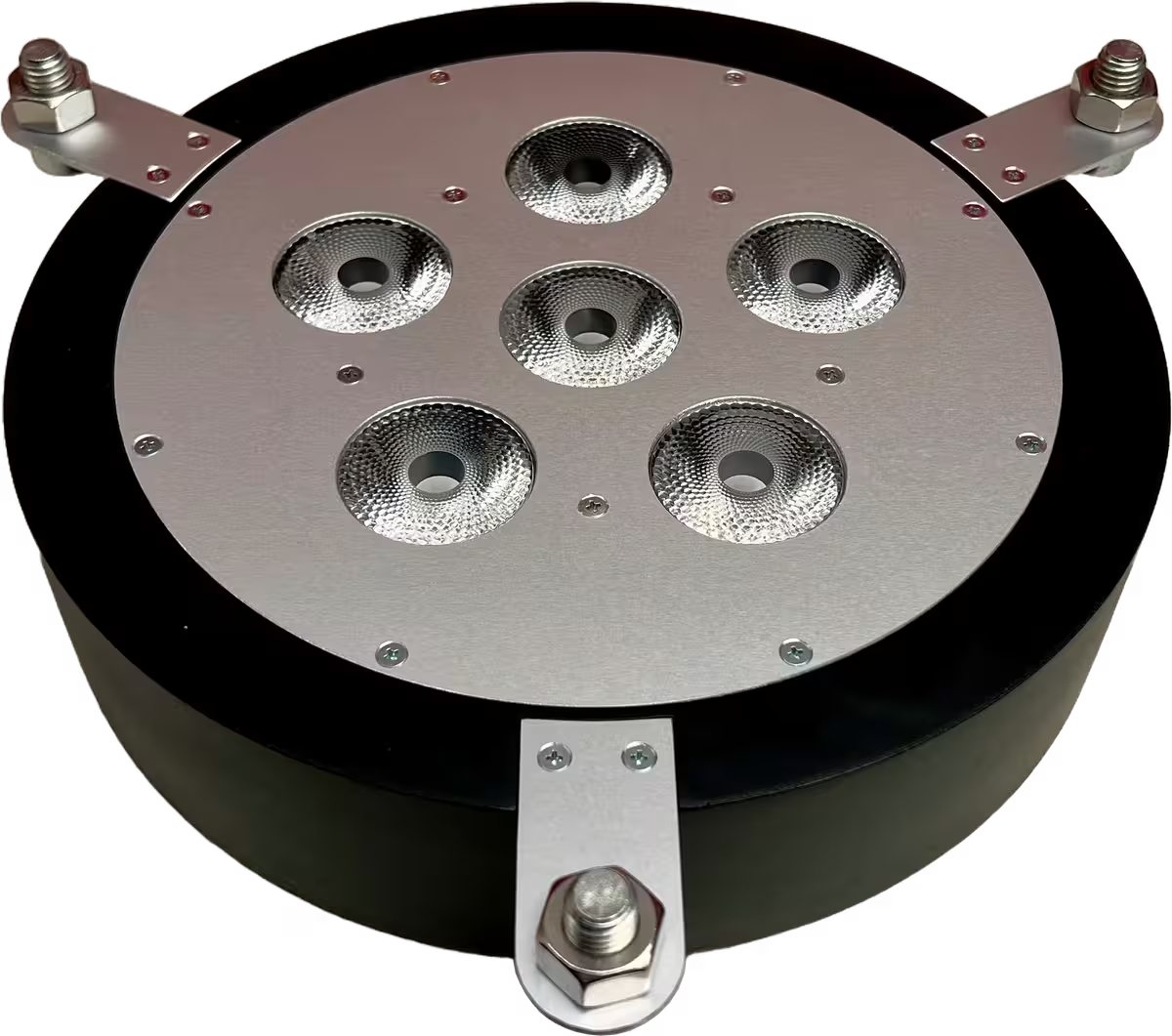
Impressive lighting effects with blacklight via RGBAW+UV LEDs
Six RGBAW+UV LEDs with a total output of 72 watts enable flexible lighting effects and reproduce not only red, green and blue but also amber, white and UV with high color fidelity. The blacklight makes the fluorescent granulate glow impressively. The unit is housed in a black-painted, 3D-printed enclosure with a CNC-milled aluminum bezel. The power supply is provided via two threaded rods, while a third transmits the DMX signal for precise control.
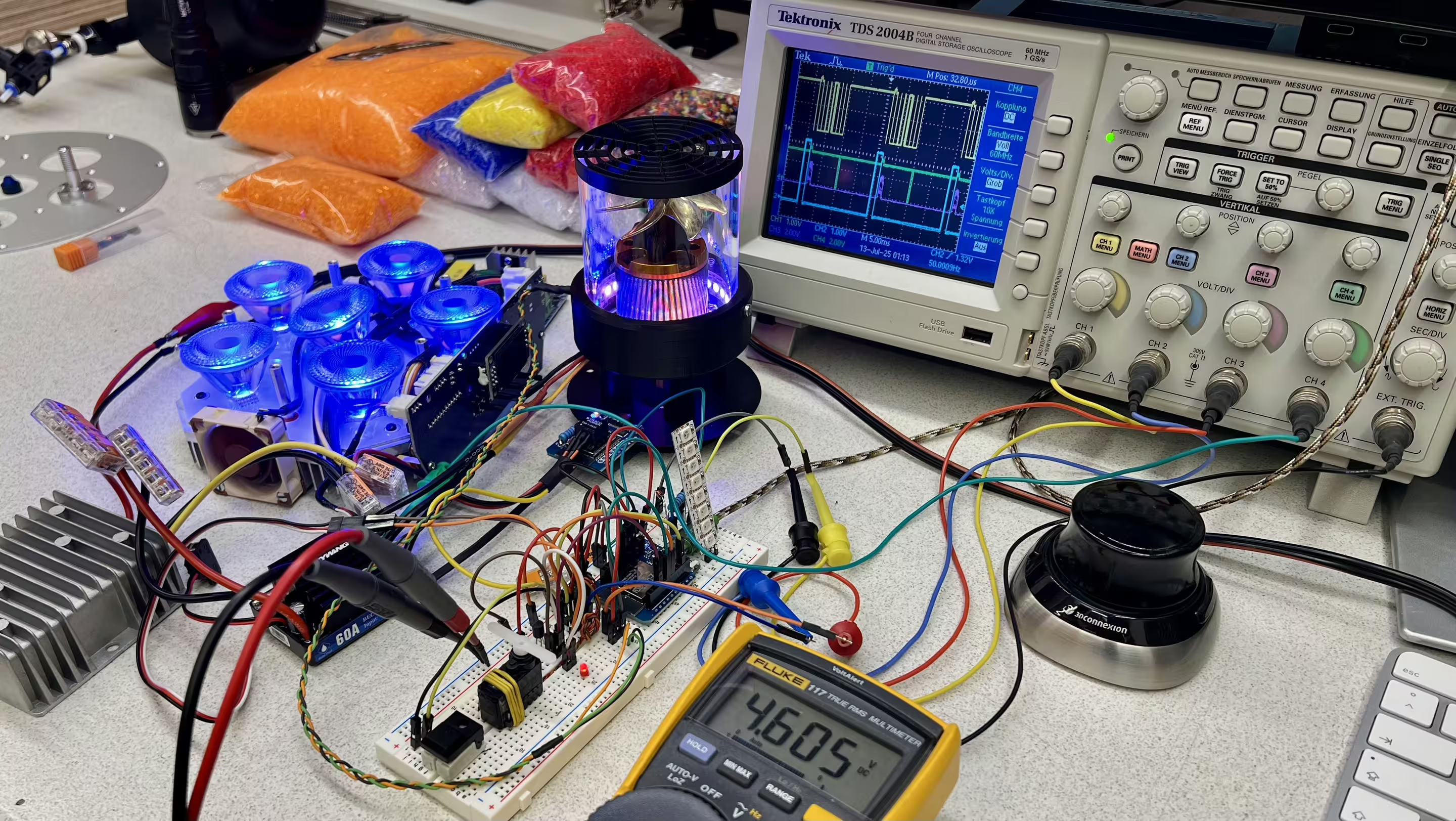
Microelectronics and control of the trade fair exhibit
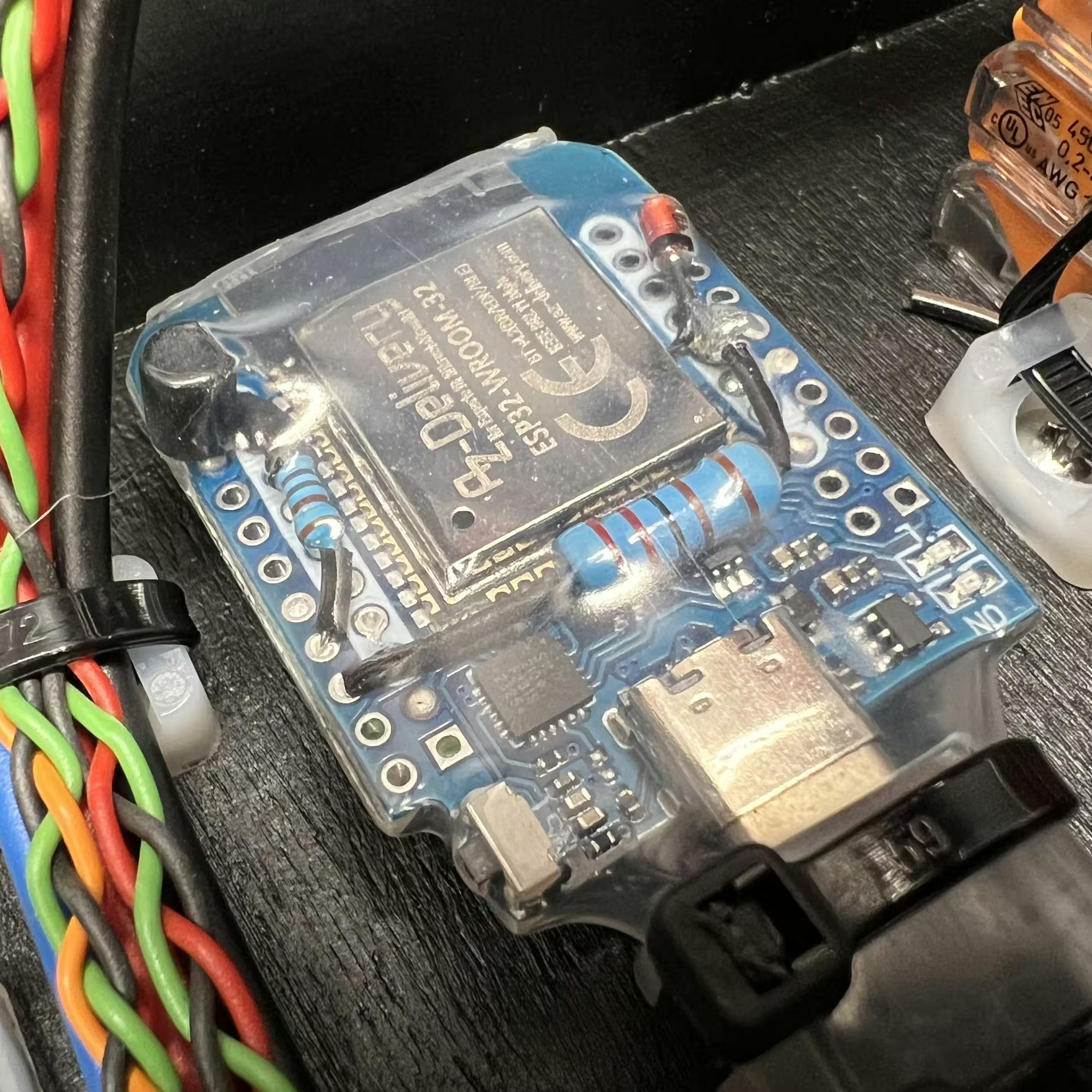
The drive and LED unit of the exhibit are controlled by an ESP32 microcontroller with a clock frequency of 240 MHz. The software is developed in C++ and coordinates motor movements and lighting effects. The sequence starts automatically at an adjustable interval or manually via a push button in the base. First, the granulate is stirred up by a short reverse run and then distributed throughout the cylinder with a fast forward run. After settling, a slow reverse run ensures the mirror at the bottom is cleared and the oil seal becomes visible.
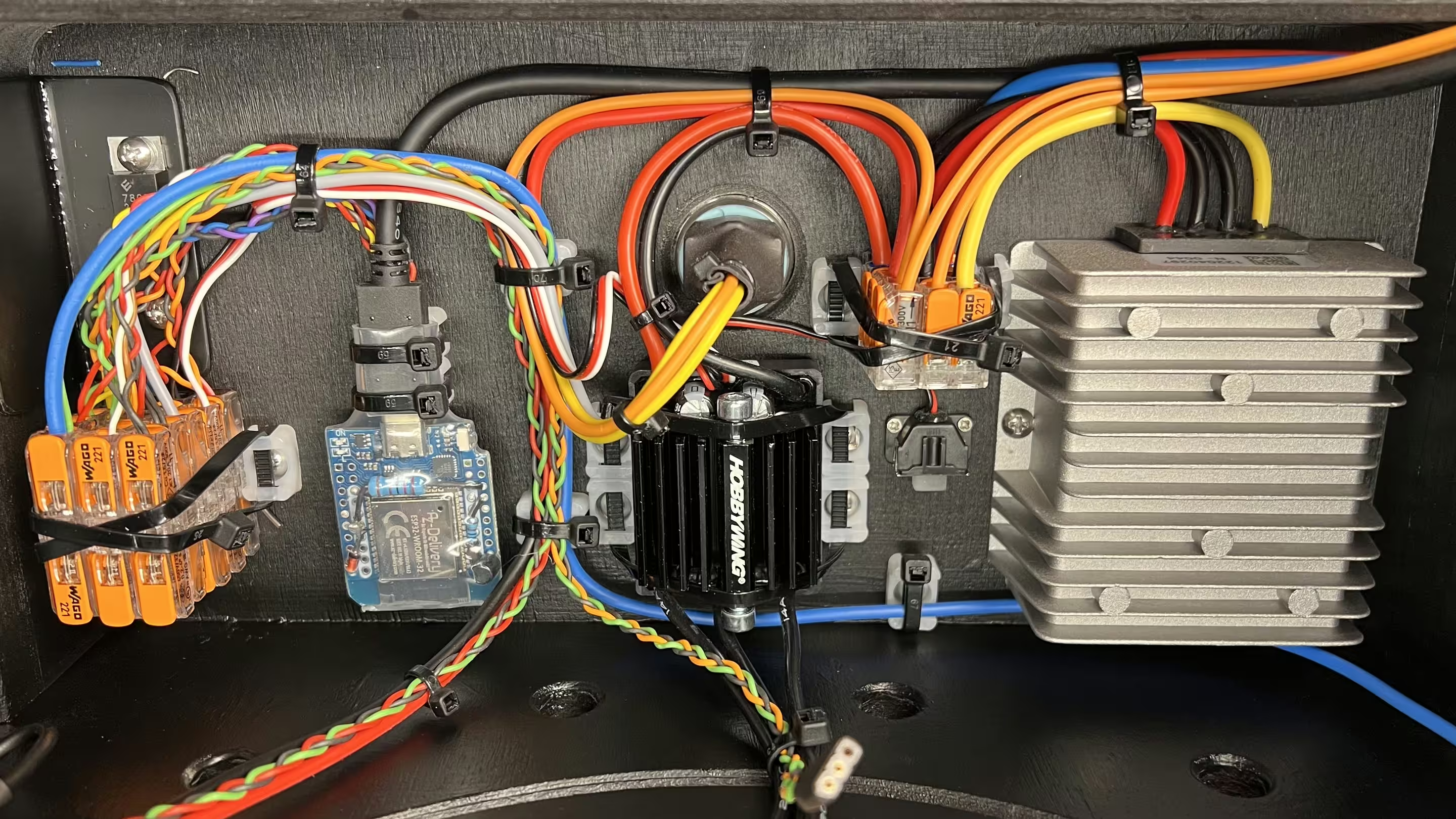
Power electronics and power supply
A high-quality brushless controller from the model hobby sector is used as the power electronics. It converts the 12 volt DC of the power supply into a frequency-controlled three-phase current for the motor. The LED unit is operated with 24 volts, which is generated via a boost converter. An additional voltage regulator provides 5 volts for the LED strips in the base.
Under the hood of the trade fair exhibit
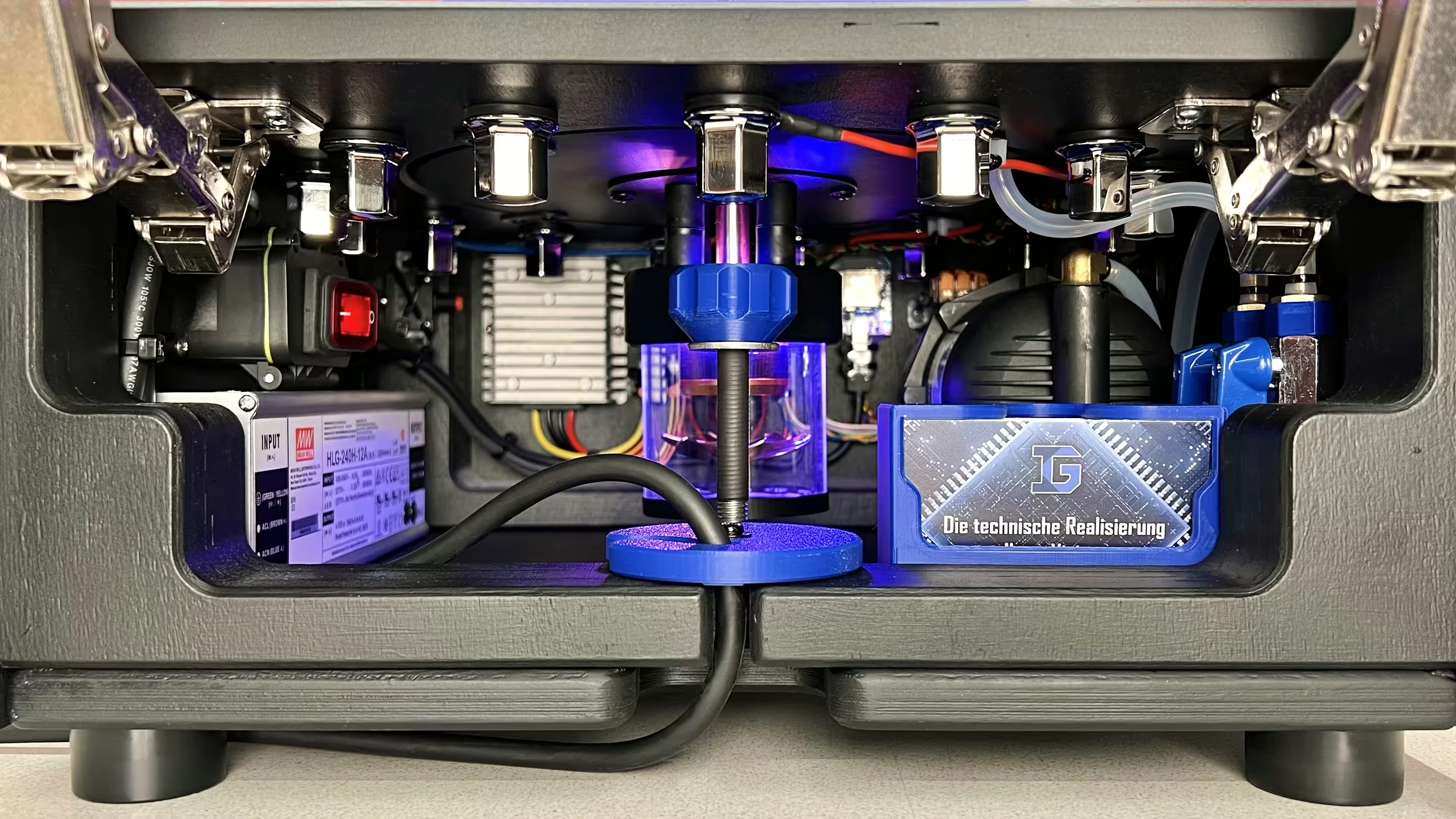
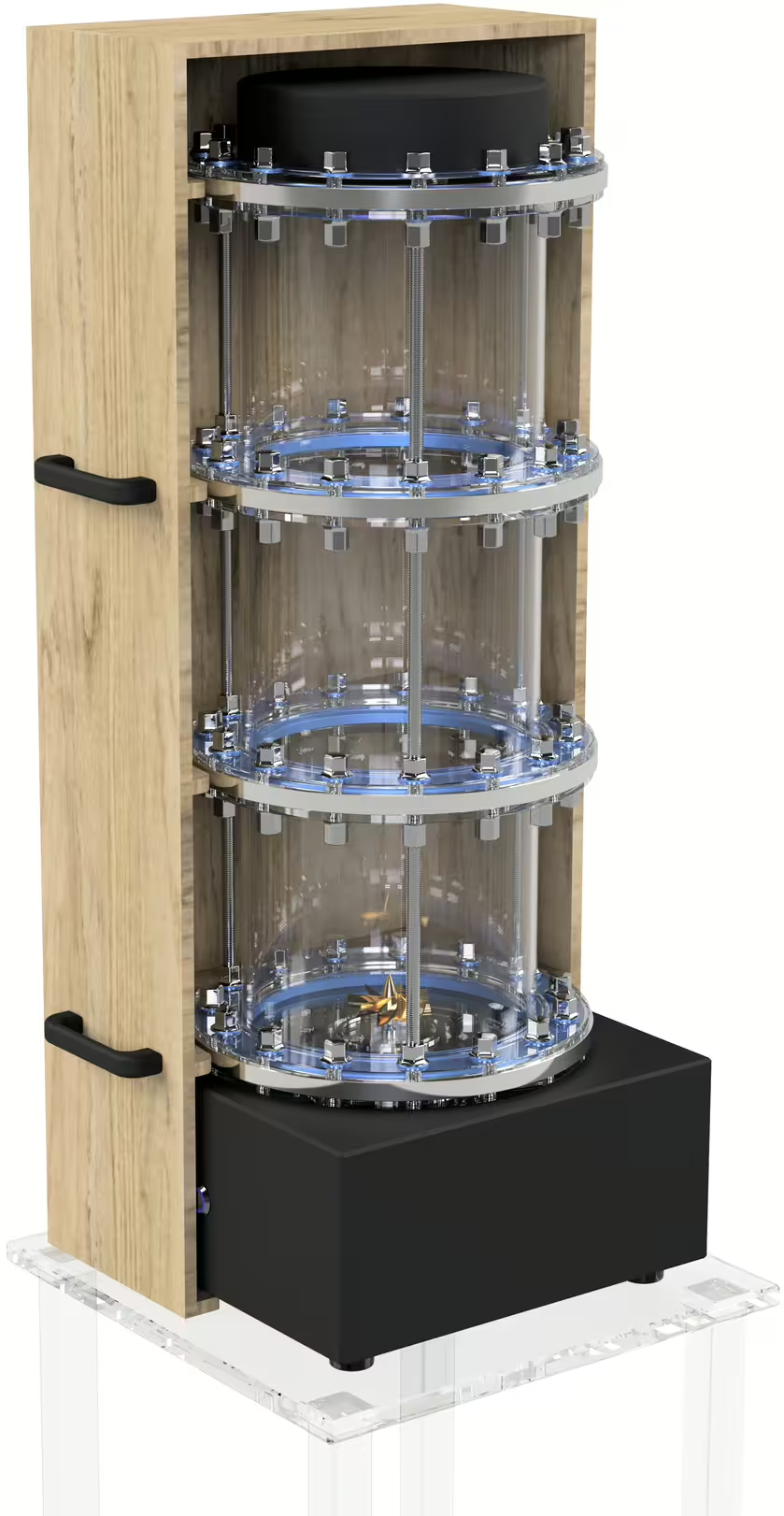
The Hygienic Seal Demonstrator can also be viewed from the inside. Via two hinges the rear panel can be folded up, making the interior freely accessible. There, in addition to the drive and electronics, are accessory components as well as a pressure compensation tank that reliably compensates for volume changes of the water during temperature fluctuations.
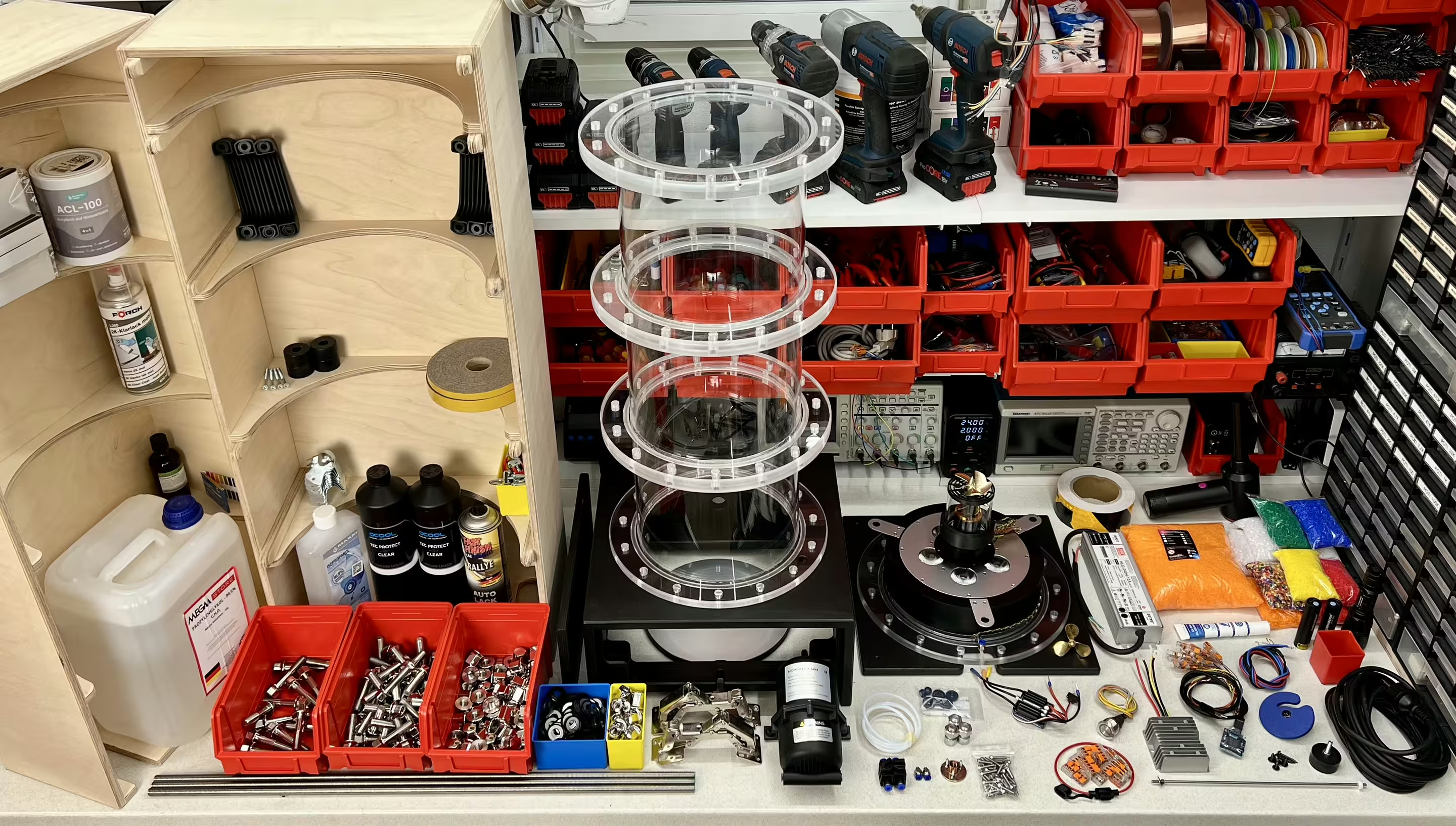
The trade fair model in individual parts
Before assembly, all individual parts of the trade fair exhibit were carefully laid out and counted to detect missing components early.
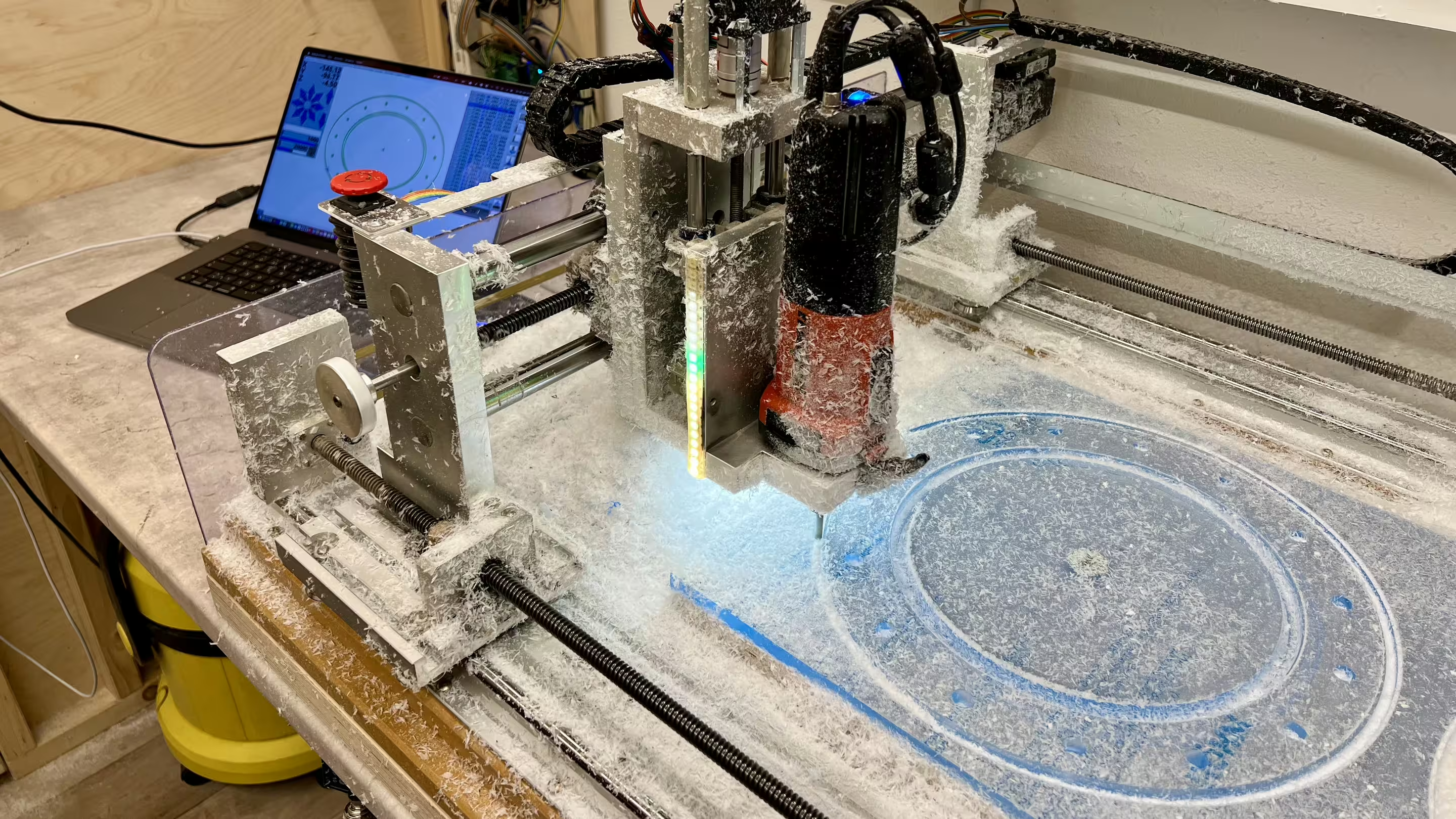
Manufacture of the flanges from acrylic glass
All eight flanges of the trade fair exhibit were precisely CNC-milled from transparent acrylic glass in multiple passes. Despite the simple geometry, the challenge was to achieve the appropriate surface finish for chamfers, grooves, visible surfaces and bonding areas.
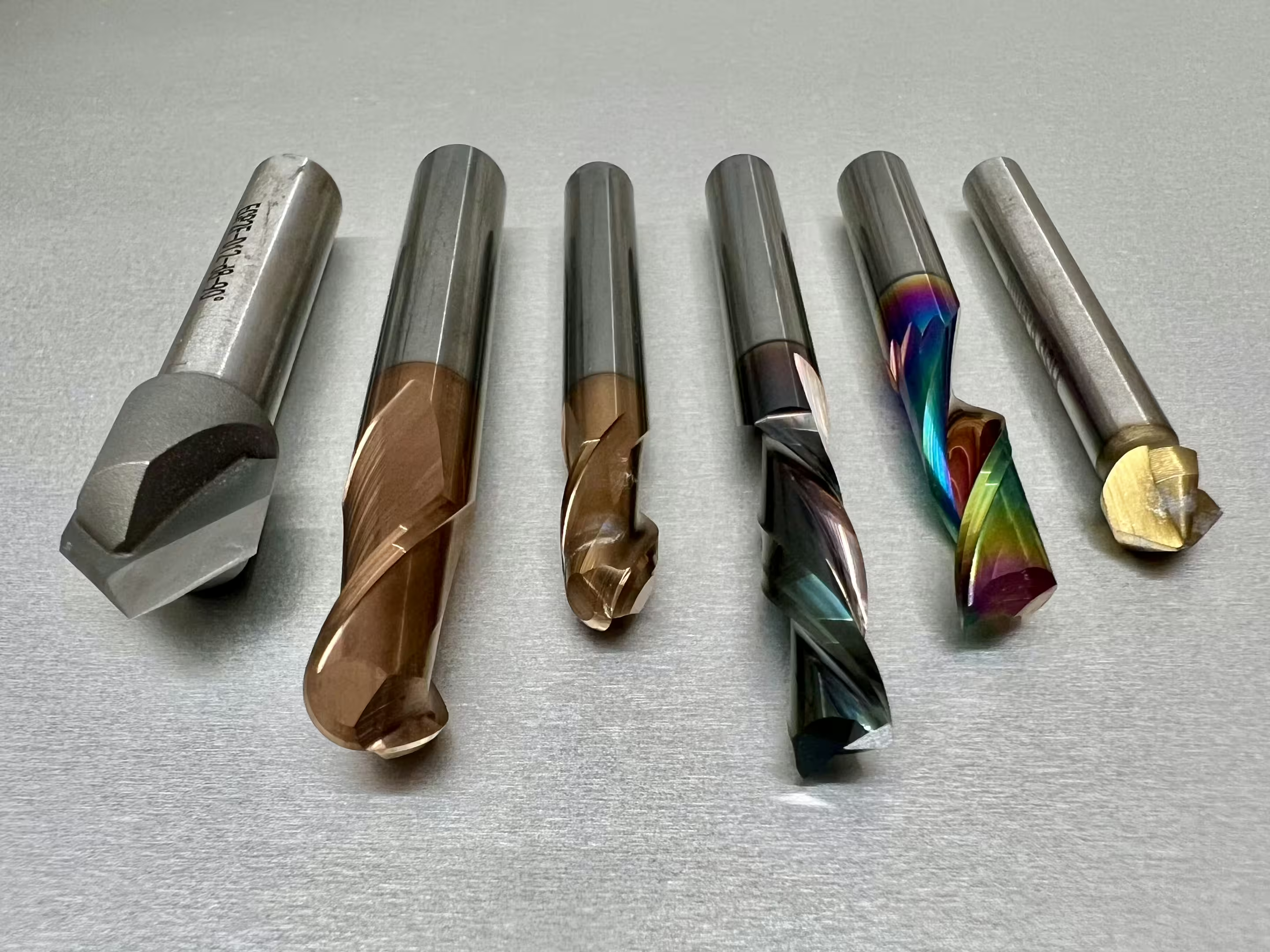
Manufacturing required the use of multiple cutter types. Single-flute, two-flute, conical cutters, countersinks and ball-nose cutters were used to achieve the required contours and surface qualities. The circular groove for the centering bead of the seals was produced by trochoidal milling, in which the cutter moves slowly in small circular motions. This produced a slightly oval geometry that intentionally gives the EPDM seal room for elastic deformation.
Production of the base and transport case from wood
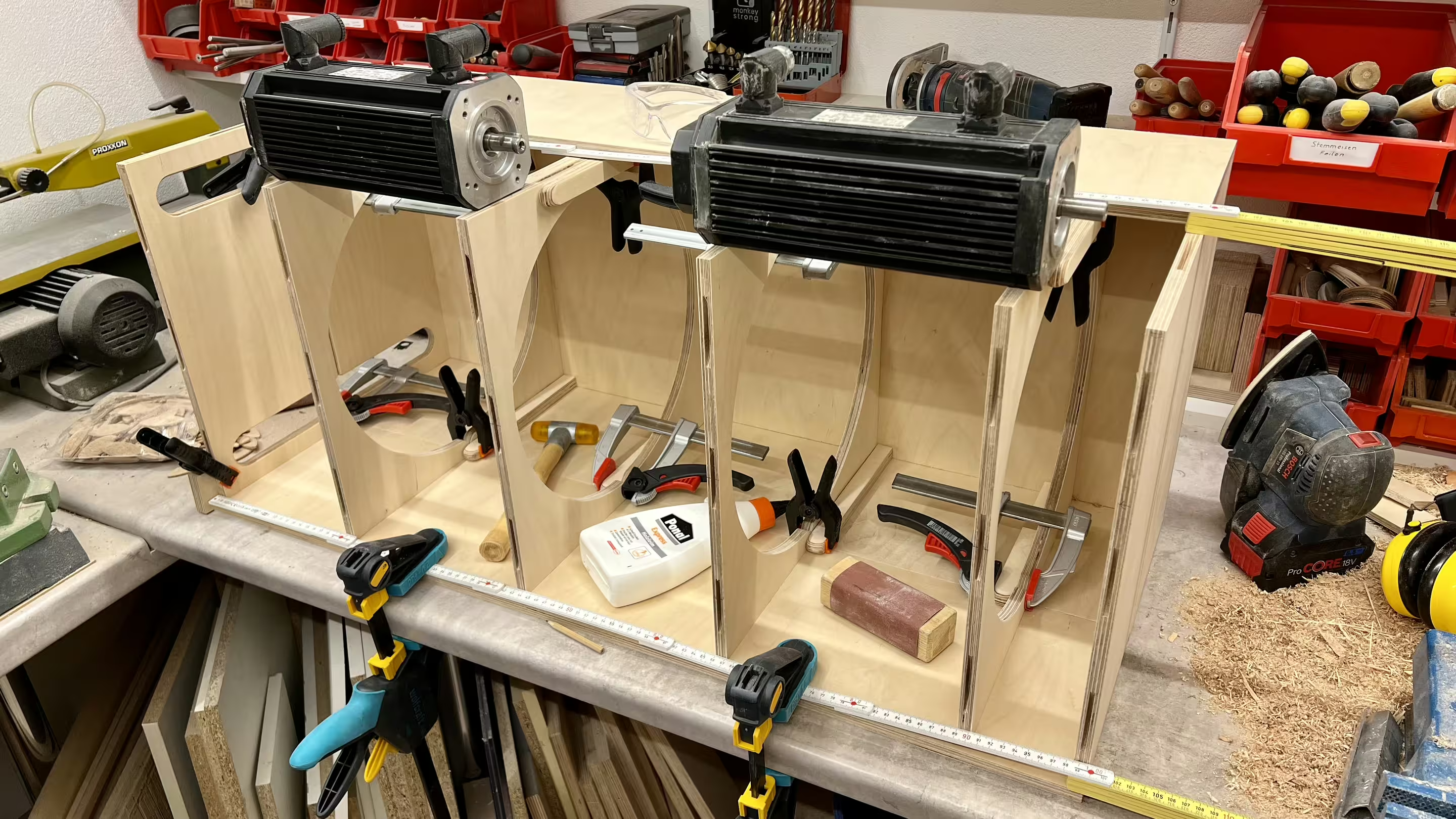
The base of the trade fair exhibit was precisely manufactured from wood on the CNC machine. The 15 mm thick multiplex panels are glued with flat dowels, ensuring a permanently stable connection. The surface is coated with a matte, deep-black two-component paint that looks high-quality while being durable and impact-resistant.
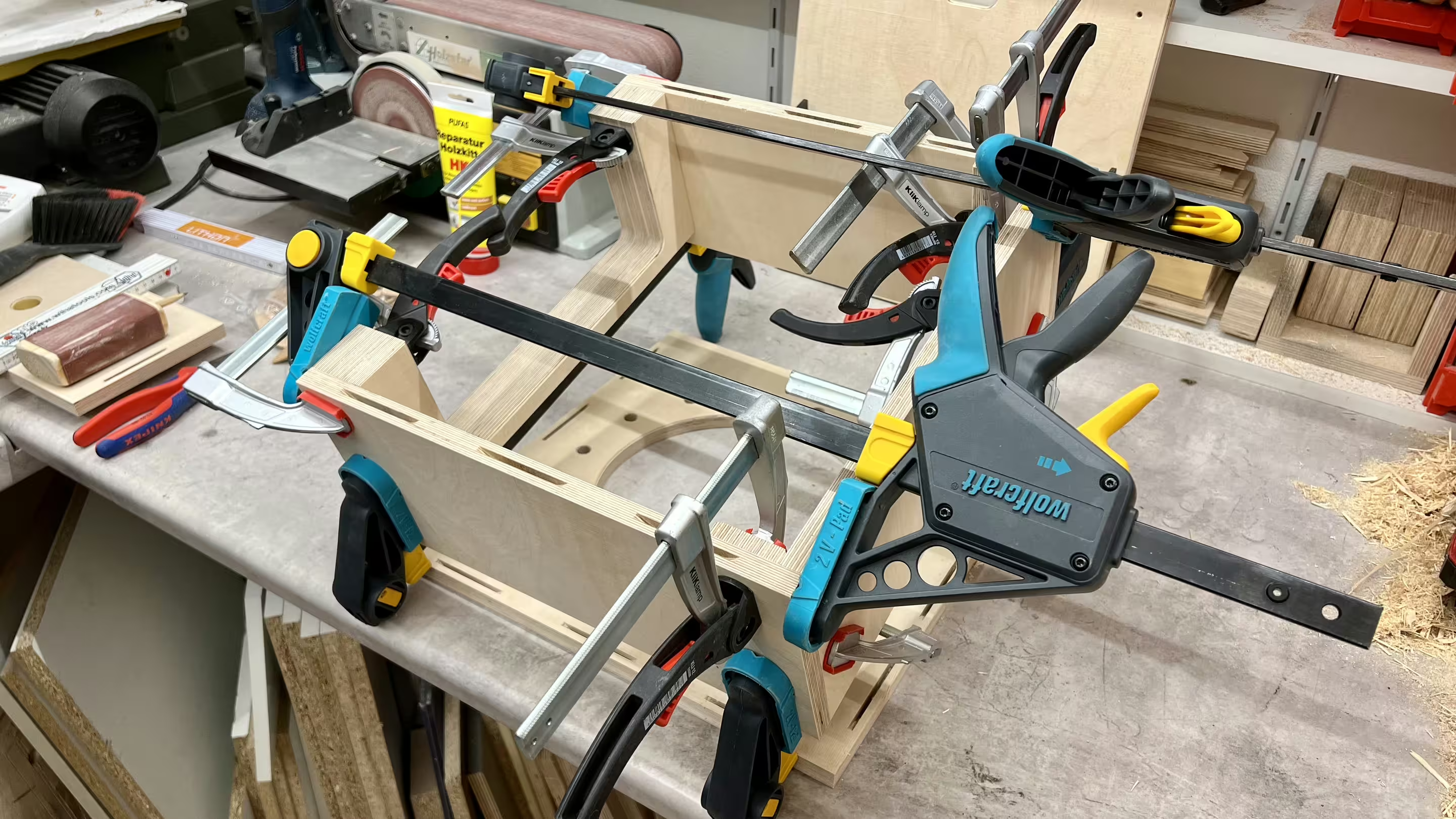
To ensure that the two shells of the transport case fit together precisely, the second shell was aligned exactly to the first during gluing.
Transport case optimized for trade fair use
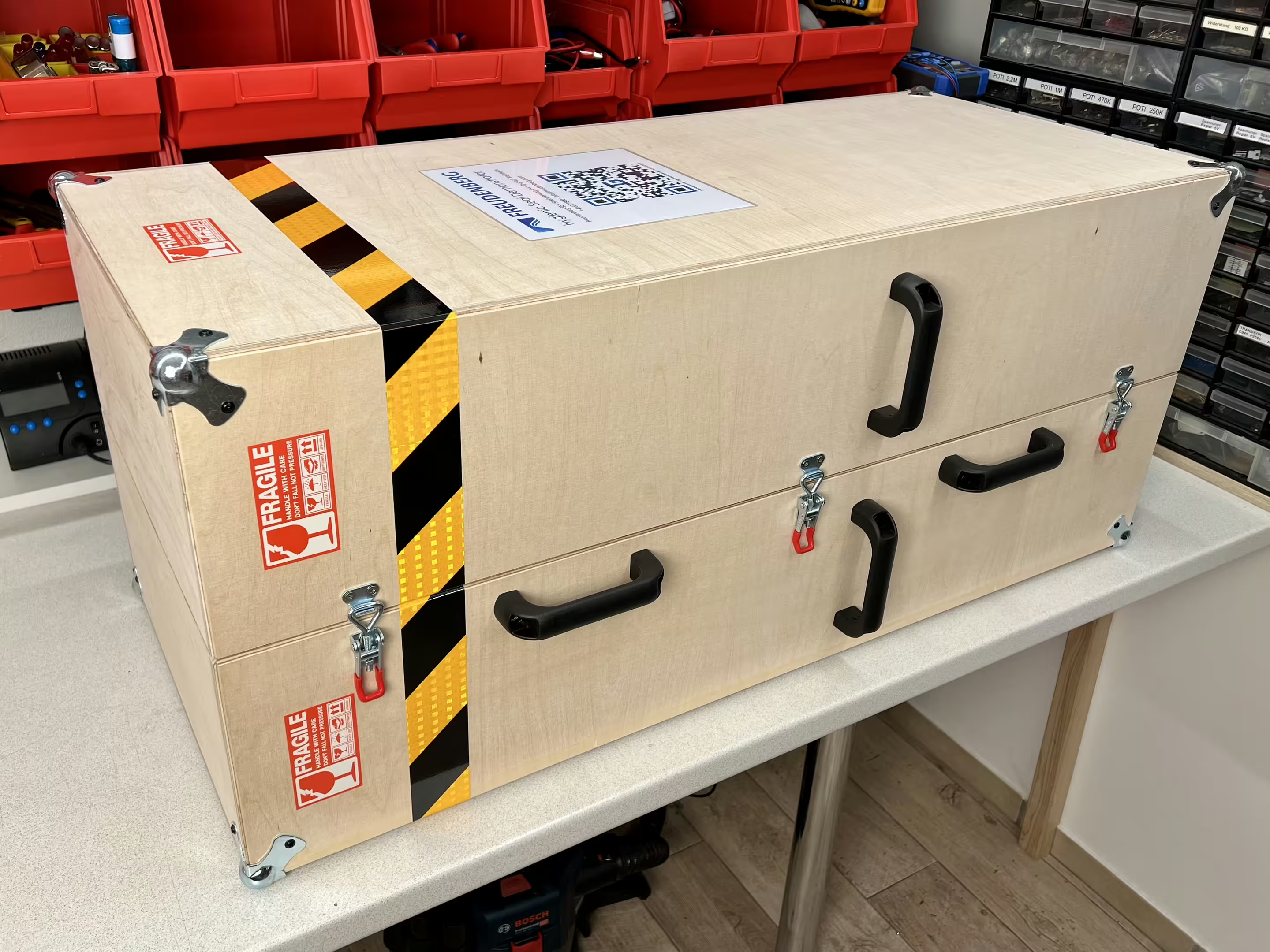
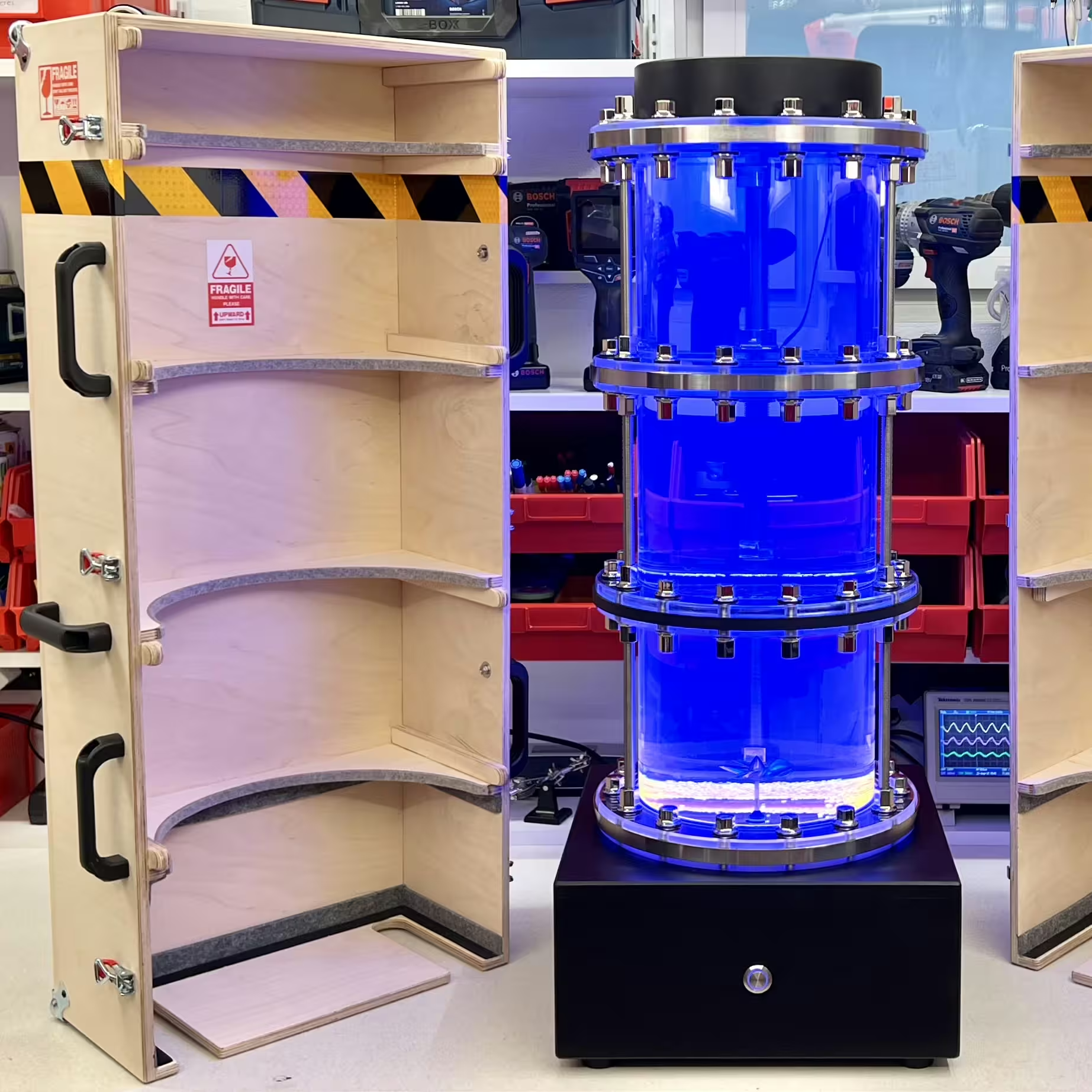
For trade fair use, a robust wooden box made from 12 mm thick multiplex was produced to enable safe transport and quick assembly of the exhibit. Two precisely fitting wooden shells are slid over the demonstrator from both sides and secured with clasp fasteners. This allows the 65 kg exhibit to be lifted directly using ergonomic handles without having to first transfer it into a box.
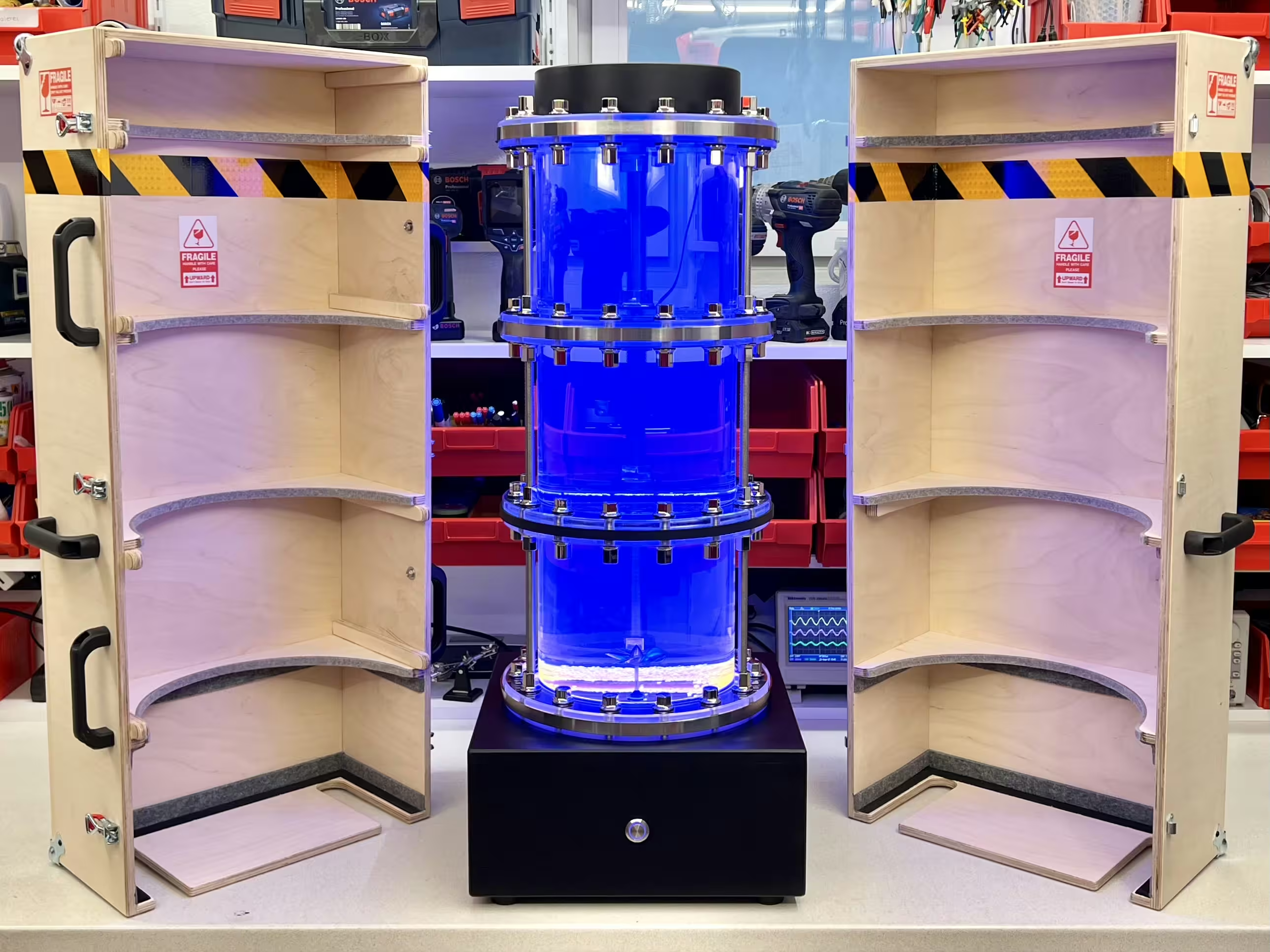
Since each individual pipe segment is supported all around, the exhibit model can be transported both upright and lying down. The fluid remains in the system, so draining is not required for careful transport. For road transport, it is additionally recommended to place a foam padding between the pallet and the box to further cushion shocks.
Real-time demo of the trade fair exhibit
The unedited 3-minute video shows the complete program sequence of the Hygienic Seal demonstrator. From the agitation of the granulate through distribution and settling under UV light to clearing the mirrored floor with a view of the radial shaft seal. The sequence exactly matches the presentation at the trade fair booth.

Ooh, Aah, Wow! Customer magnets for your trade show booth.
The Glaser engineering office develops and manufactures custom trade show exhibits. As eye-catchers they draw visitors' attention to your booth with a curious “Ooh”. The benefits of your product become clear and tangible on the demonstration model with an astonished “Aah”. With a final “Wow!” you, your product and your brand remain in their minds.

Technical details and notes for the trade fair team
The following section describes the technical details of the trade fair exhibit and contains additional notes for the trade fair team on handling.
Dimensions and weight
Exhibit: 390 x 390 x 977 mm
Base: 390 x 390 x 180 mm, Pipe: Ø250 x 722 mm
Transport case raw dimensions: 424 x 424 x 1000 mm
=> Case incl. handles and fittings: 504 x 434 x 1010 mm
Tare weight: 33 kg + Fluid: 32 kg
=> Trade fair exhibit: 65 kg
Trade fair exhibit: 65 kg + transport crate: 21 kg
=> Transport weight: 86 kg
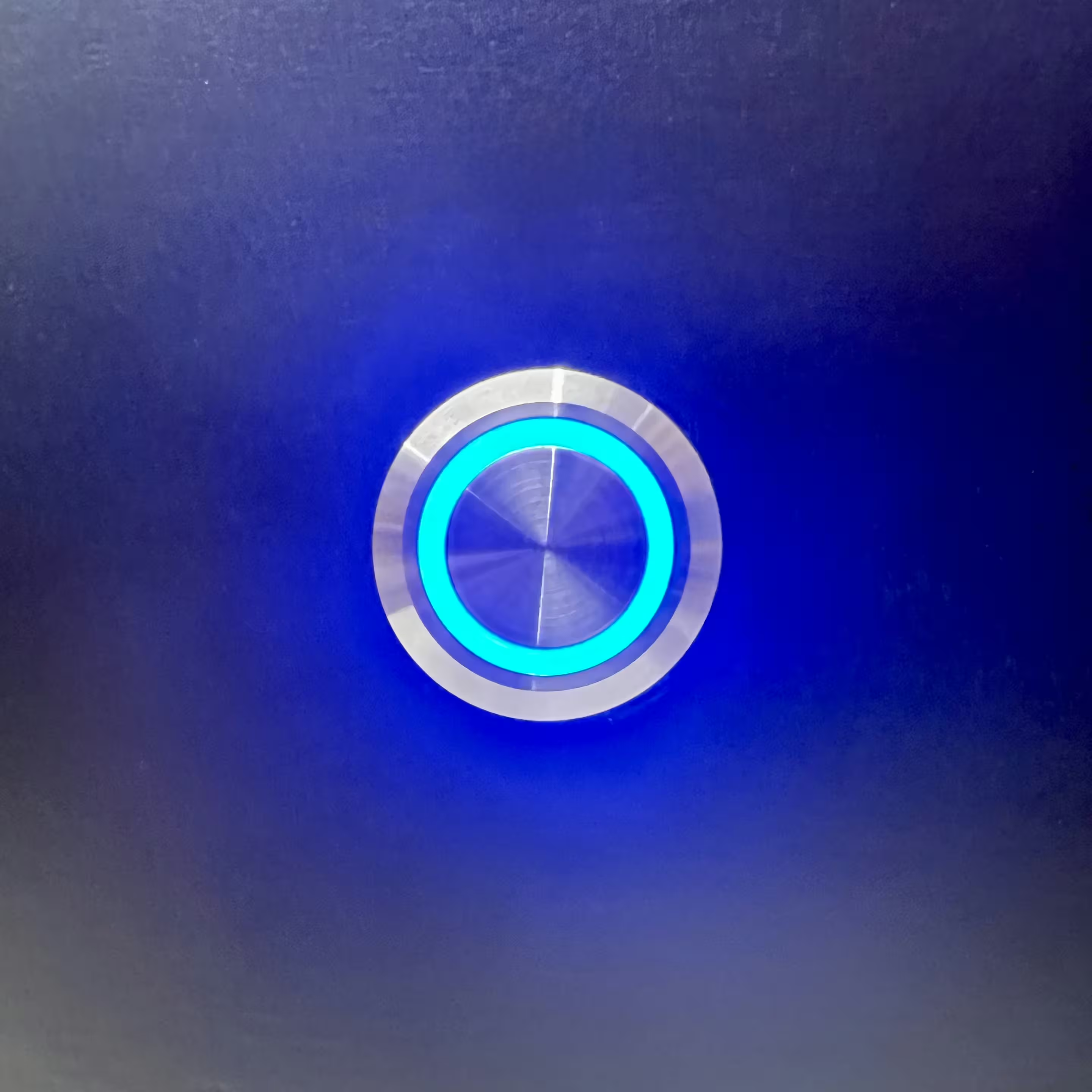
Stainless steel pushbutton with LED ring
When the pushbutton is pressed, the following sequence starts:
- 1s - Bright white flicker of all LEDs to attract attention.
- 5s - Reverse run, to loosen granulate (5s)
- 2s - Short strong forward run, to distribute granulate
- 5s - Reverse run, to prevent swirling
- 77s - Pause to allow the granulate to settle
- 50s - Several short reverse pulses, to clear the mirror floor so the sealing ring becomes visible. (This step is skipped at 2 min interval.)
- Restart by button press or by the timer
(e.g. after 3 min)
If the pushbutton is pressed during a running sequence, bright red light directs focus to the deposited granulate.
Setting the interval
The sequence can be started manually by button press or automatically by a configurable interval. To select the duration, follow these steps:
- Hold stainless steel pushbutton for 20s, until the LED blinks rapidly
→ release - Choose color or the time for the interval
→ briefly press the stainless steel pushbutton - Hold stainless steel pushbutton for 3s until the LED blinks
→ setting accepted
The following settings are possible in item 2:
Red → 2min*, Green → 3min, Blue → 5min, Magenta → 10min, White → 15min, Orange → 30min, UV → 60min, Off → Manual
*When interval "2 min" is selected, the clearing of the shaft seal is skipped in the program sequence
Fluorescent acrylic granulate
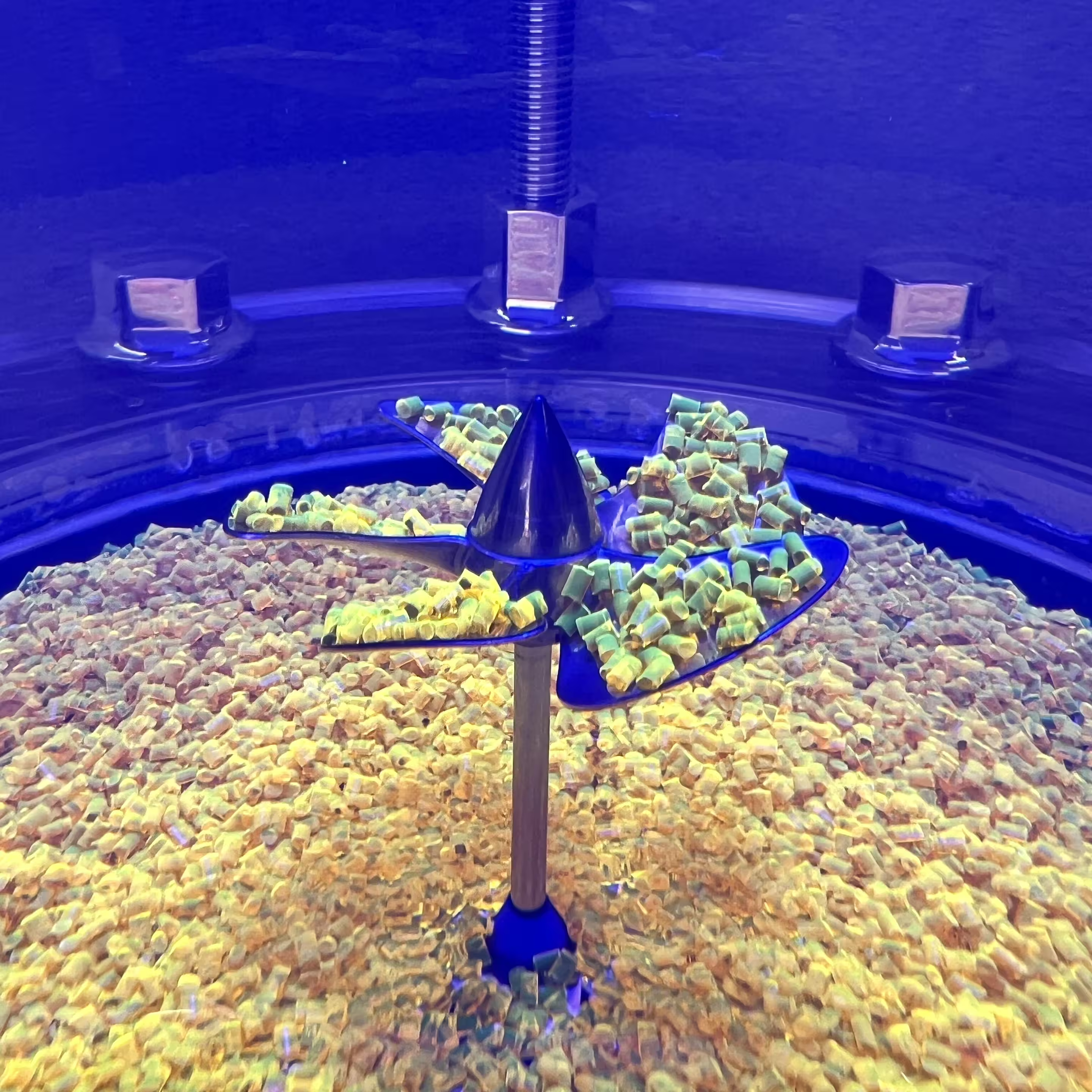
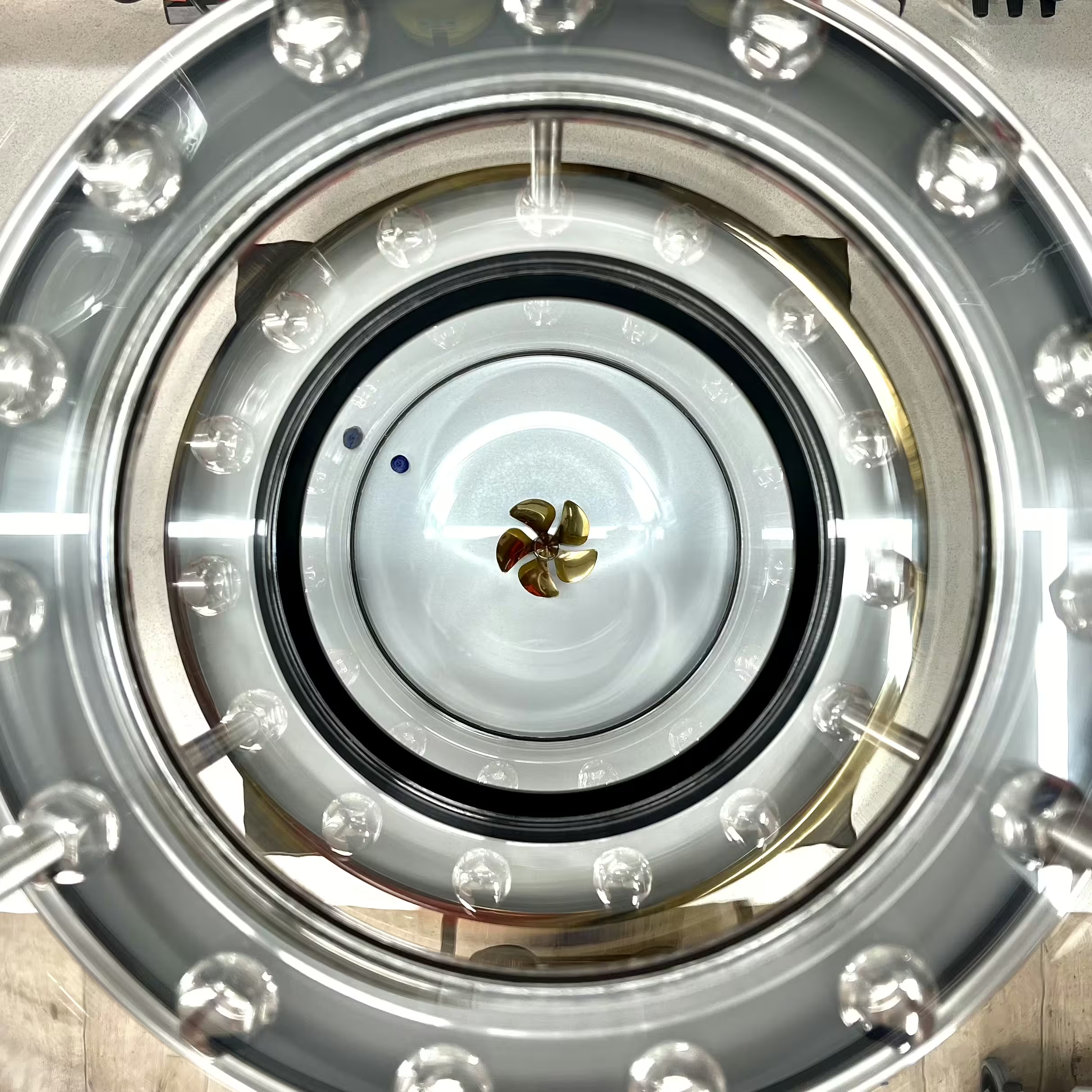
The fluorescent PMMA granulate glows bright orange under UV light, creating a high contrast with the complementary color of the slightly bluish glowing fluid. The cylindrical particles (grain size approx. 3 × 2 mm) are slightly denser than the fluid used, sink at about 1 cm/s and rest on the bottom again after around 80 seconds. Due to their rounded shape, the grains roll off the protruding seal when stirred up and then resettle.
Durable fluid
The fluid consists of the following components to be as durable as possible with minimal maintenance:
- 62.5% distilled water - provides optical clarity and, with low viscosity, good flow properties.
- 31.25% propylene glycol - lowers water activity for natural preservation, reduces evaporation and supports lubrication of the shaft seal.
- 6.25% Alphacool Tec Protect 2 Clear - forms a thin protective film on brass and stainless steel, keeps the pH slightly alkaline and, together with antioxidants, protects against optical aging under light.
- 0.5 ml SpaBalancer AntiFoam - serves as a silicone-based defoamer to prevent the formation of water bubbles on the pipe wall and on the acrylic granulate and thus prevent floating.
Shaft passage with shaft seals
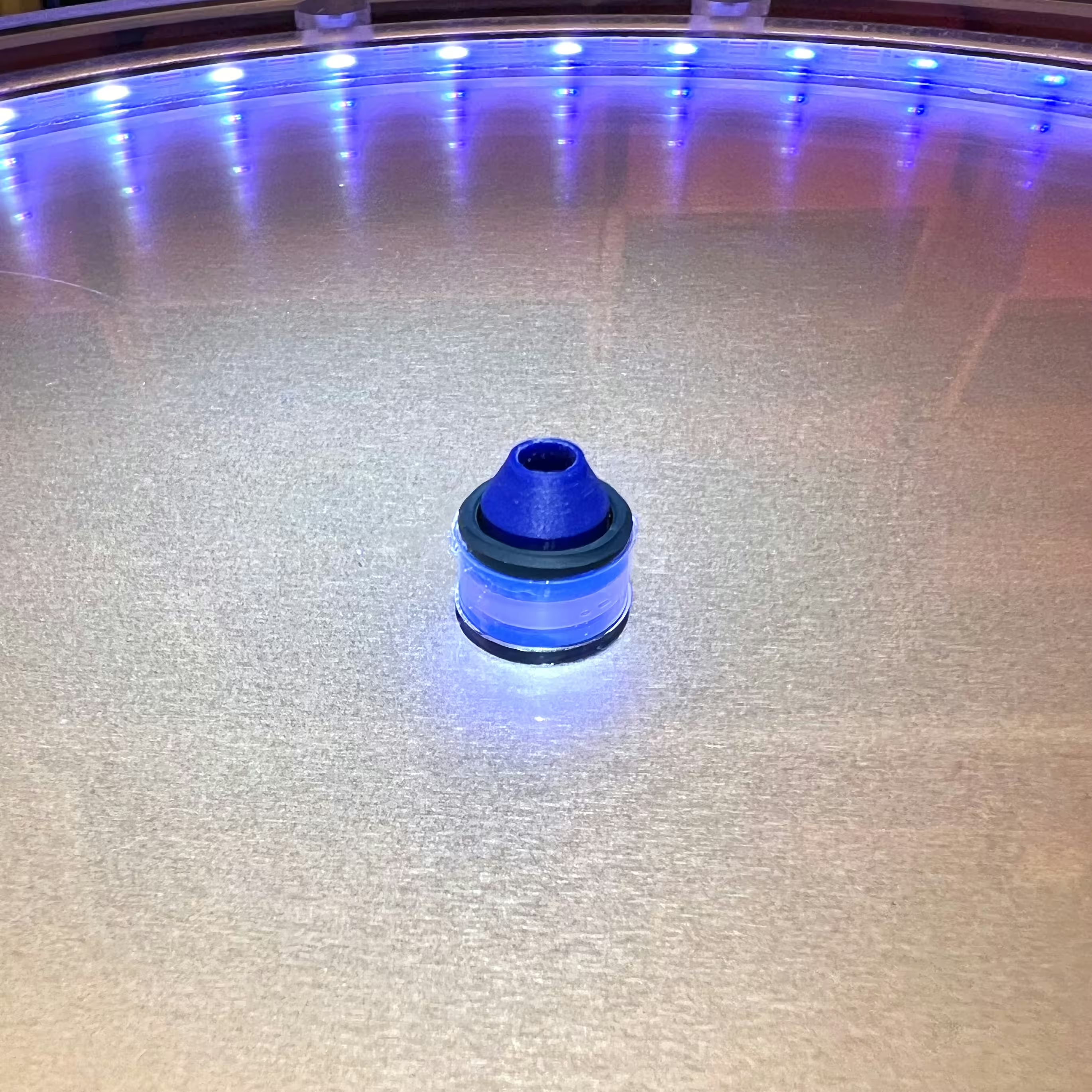
The shaft passage was implemented using two shaft seals (4×12×0 BA – 72 NBR 902 – 4041107) from Freudenberg. Between the radial shaft seals, the 4 mm stainless steel shaft is precisely guided by a full ceramic ball bearing (4×12×4). The space between the two seals is completely filled with silicone grease to ensure reliable lubrication. The spring was removed from the upper seal and it was installed so that the static water pressure increases the radial contact pressure. A small 3D-printed sleeve made of blue PETG protects the seal from incoming granulate or contamination.
At the bottom of the container, behind the lowest acrylic flange, there is a reflective surface that reflects the light coming in from above. This additionally illuminates the suspended granulate from below, which enhances the brightness.
Maintenance-free drive
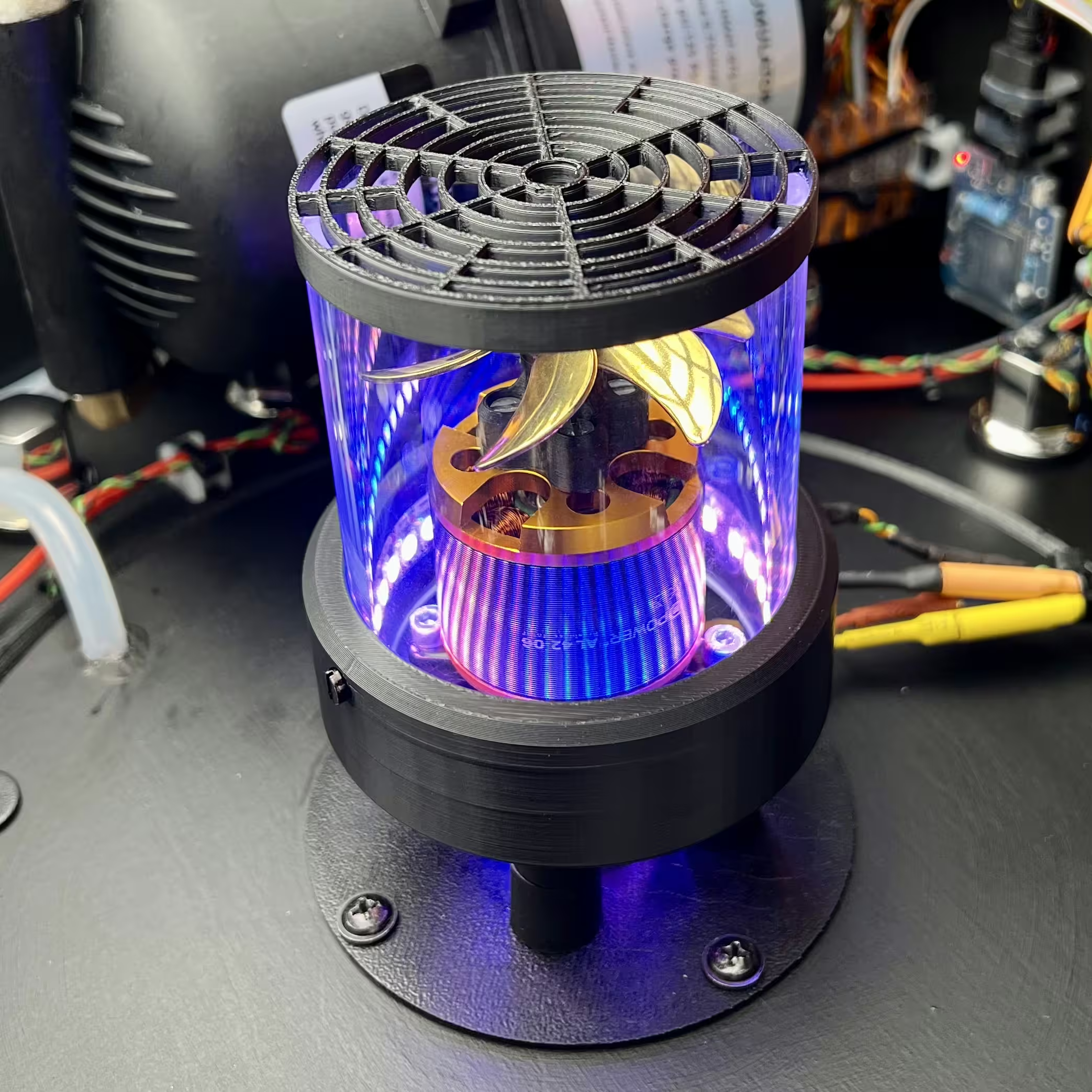
The water screw is driven by a brushless, and therefore maintenance-free, outrunner motor with up to 540 watts peak power at 12 volts. The motor is decoupled using elastic spacers, which effectively reduce vibrations and structure-borne noise. An acrylic tube with a protective grille prevents any contact, while an additional fan propeller handles the cooling. For maintenance on the shaft seals, the entire drive unit can be easily removed.
Waterproof power supply
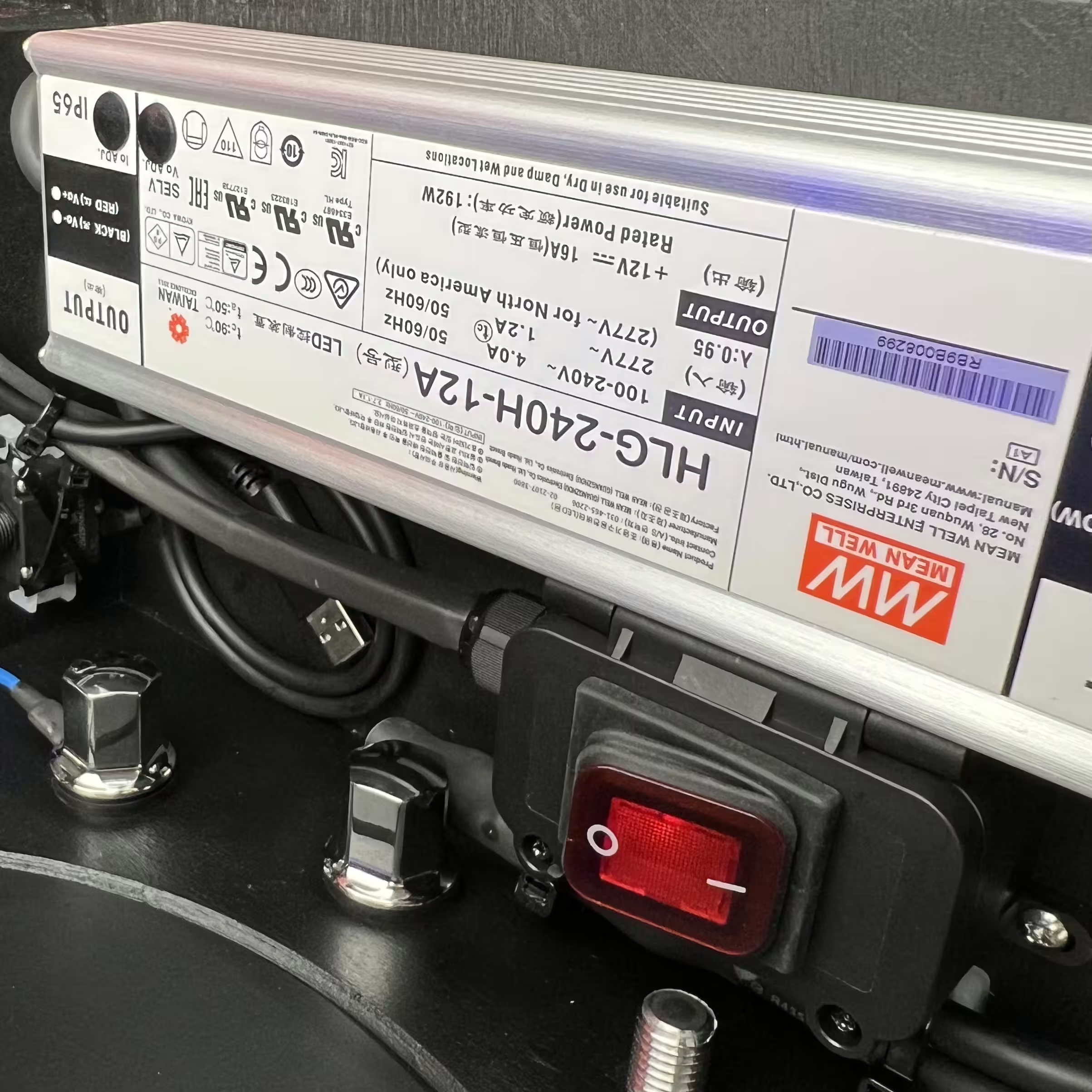
The exhibit's power is supplied by a high-quality 12V switching power supply from Mean Well. With IP65 protection rating, both the power supply and the potting cable are reliably protected against water. The on/off switch with integrated power LED is mounted on the secondary side.
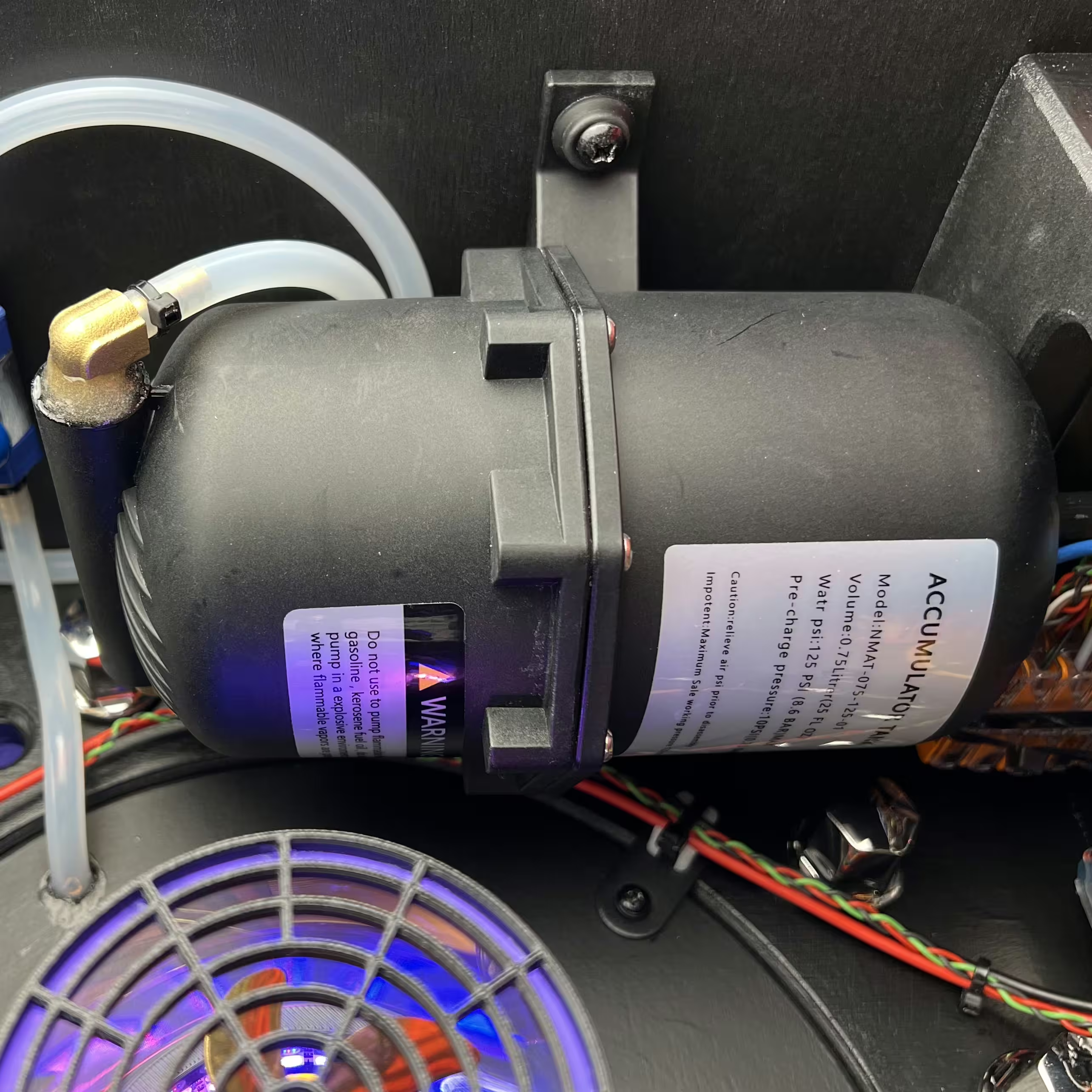
Volume and fluid
The acrylic cylinder has a capacity of 31.6 liters. With a temperature change of 20 kelvin, the fluid expands by 0.66%, which corresponds to a volume of 205 milliliters. This expansion volume is taken up by the compensation tank, which with a capacity of 700 milliliters provides sufficient reserve in both directions. The permanently atmosphere-vented tank was filled with 500 ml of fluid at 20 °C, so it can reliably compensate volume fluctuations. Since the hose connection at the cylinder bottom is the only opening, the water remains in the acrylic cylinder even with the drain valve open. As a result, the static pressure at the shaft seal is almost zero, which is a significant advantage for the sealing of the shaft seals.
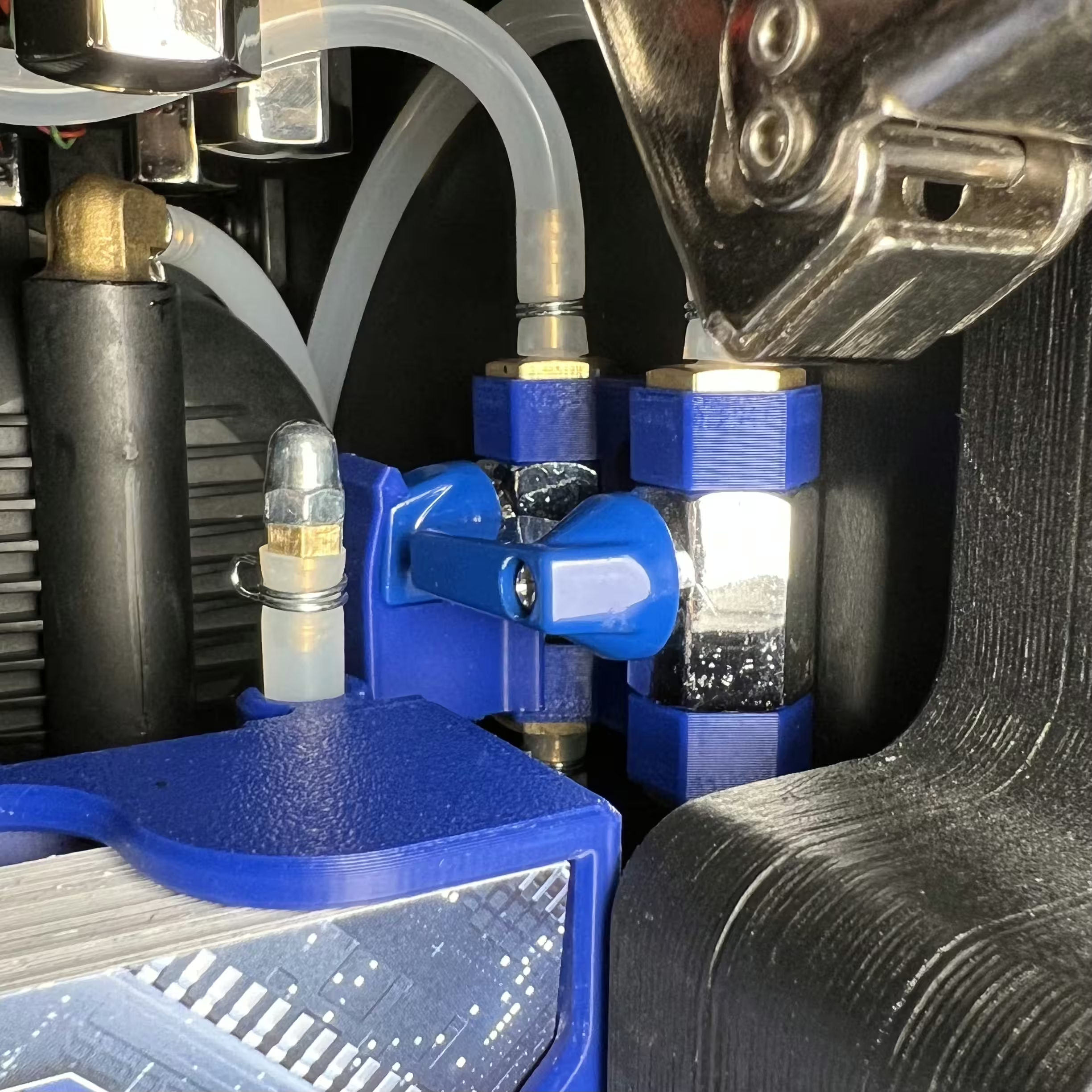
Access and Drain Valve
The two water valves are intended solely for service and maintenance purposes and must not be operated during the exhibit's operation or transport. The access valve on the left connects the pressure-equalization tank to the water reservoir. It is fitted with a safety clip and must remain permanently open to ensure continuous pressure equalization. On the right is the drain valve, which is connected to a drain hose. Its end is secured with a plug and held by a clip.
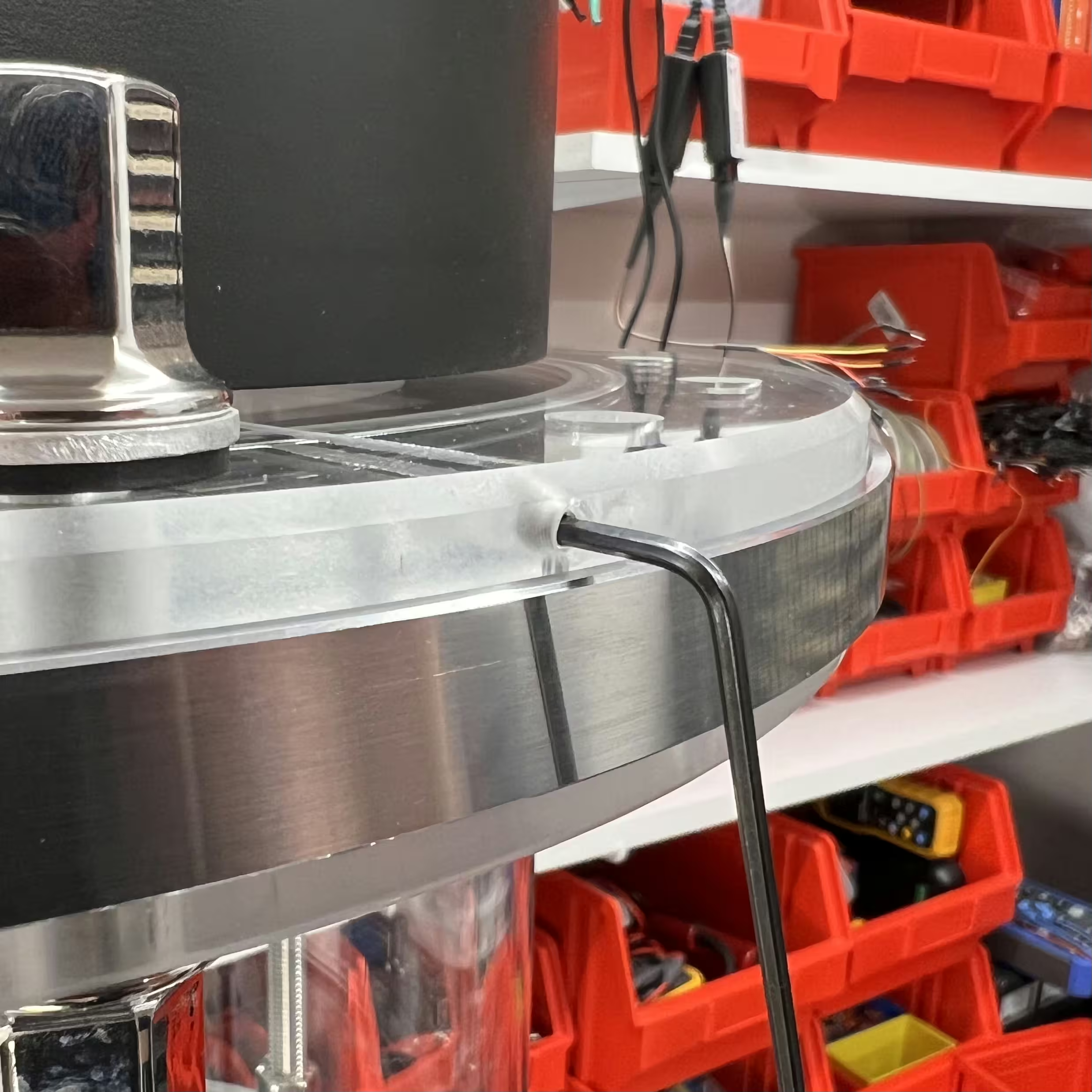
Venting Screw
The venting screw is intended solely for service and maintenance work. There is a bore in the upper full flange of the exhibit that reaches into the interior of the water reservoir. This access can be opened with a grub screw to release remaining air bubbles. It should be noted that the entire system must be set to slight overpressure via the drain hose.
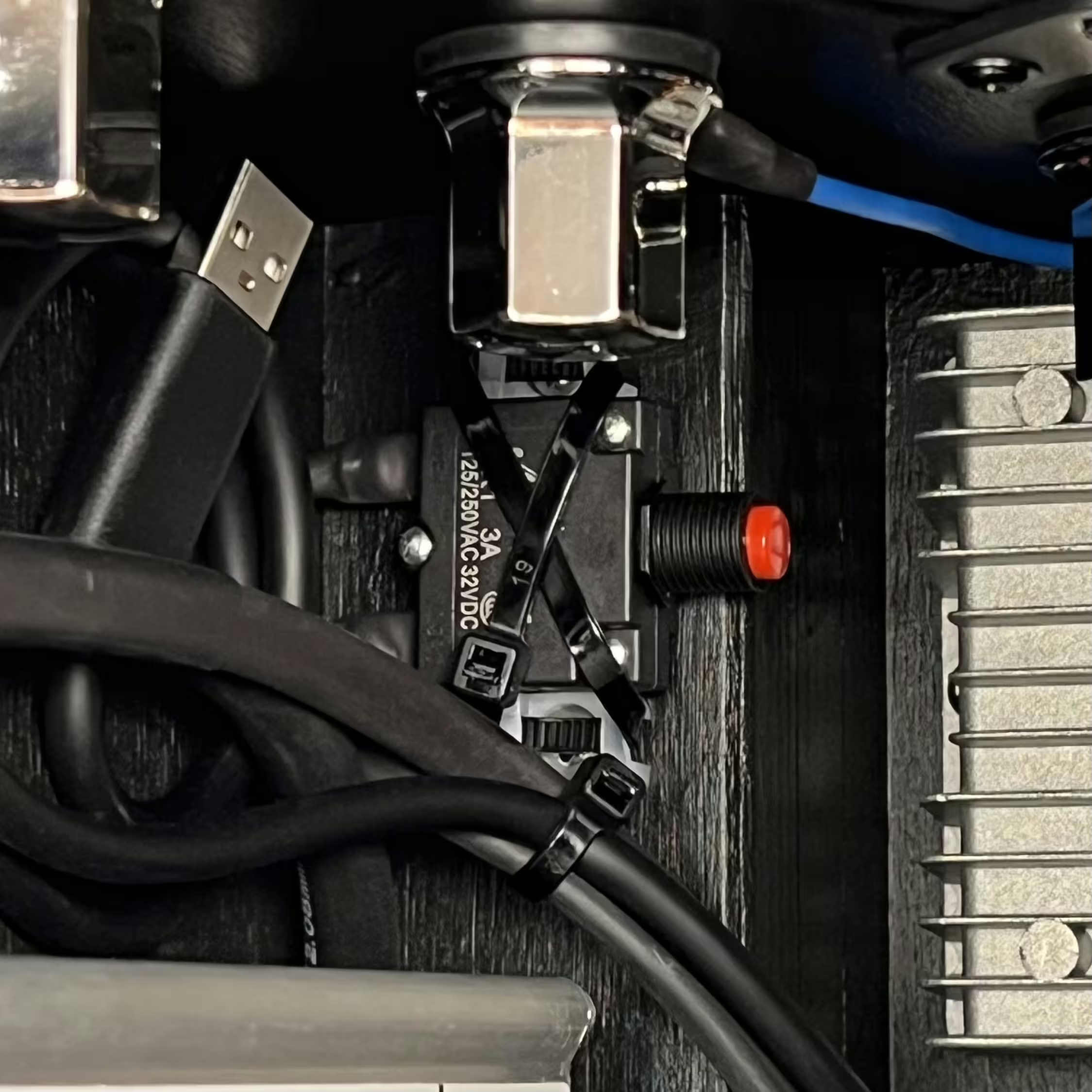
Fuse for the LED Module
The power supply of the LED module above the cylinder is routed via three threaded rods. The front left rod serves as ground (GND), the front right as the DMX data line and the rear for transmitting the 24 V DC supplied by the DC/DC converter. All conductors are circuit-protected against short-to-ground and short circuits, ensuring safe operation. In addition, an integrated fuse switch secures the power supply. If it trips, it can be easily reset by pressing the red button.
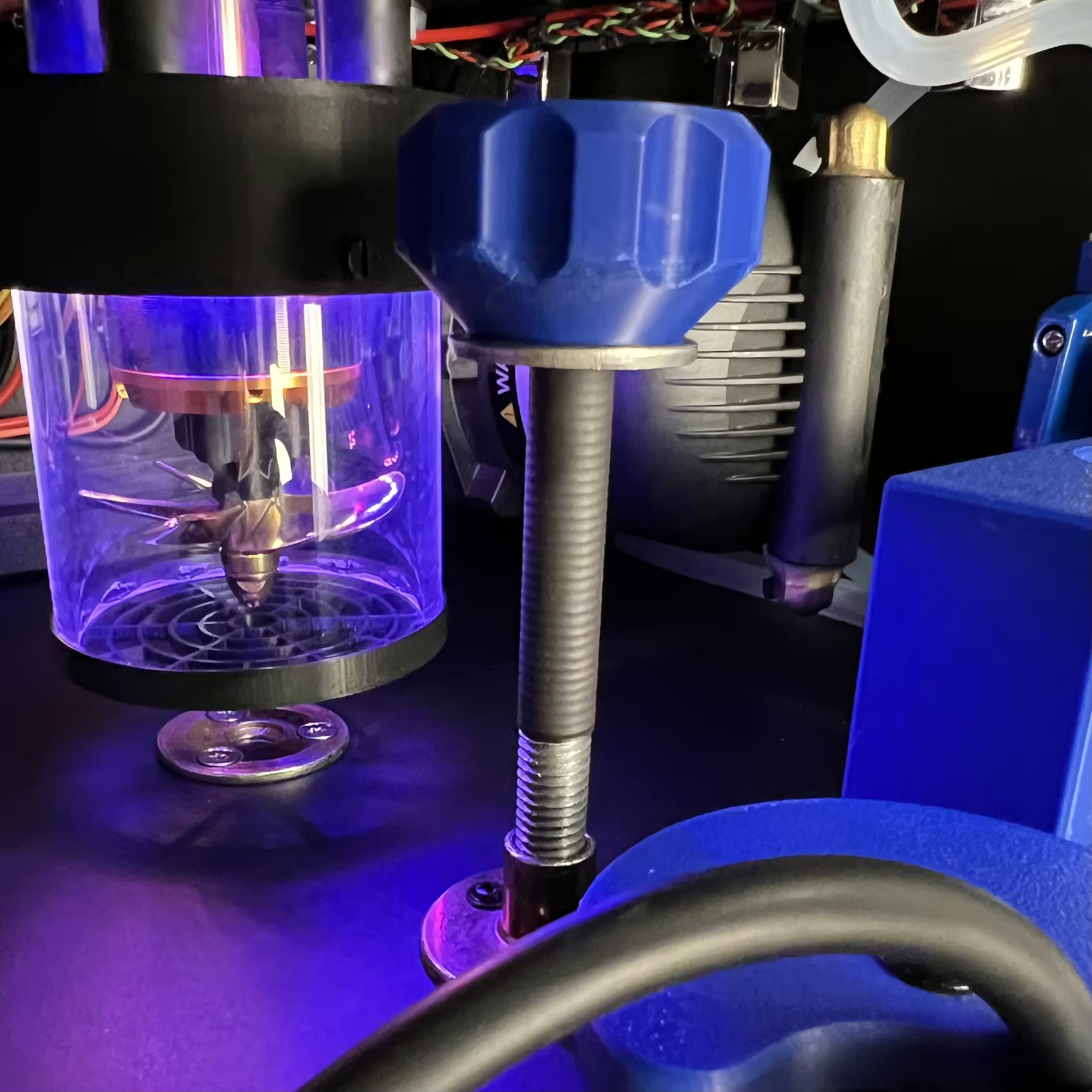
Threaded Flange for Mounting
To securely fix the exhibit to a table, an M10 internal thread is provided in the center of the base plate. The demonstrator can be fastened to the table from below via this thread with a screw. For some positioning tolerance, a 20 mm diameter hole in the table is recommended. A suitable screw with washer and handwheel is designed for table thicknesses of 20 to 45 mm and is stowed in the exhibit's base. It is important that the maximum screwing-in length of 35 mm is not exceeded, to avoid collision with the centrally arranged drive unit.
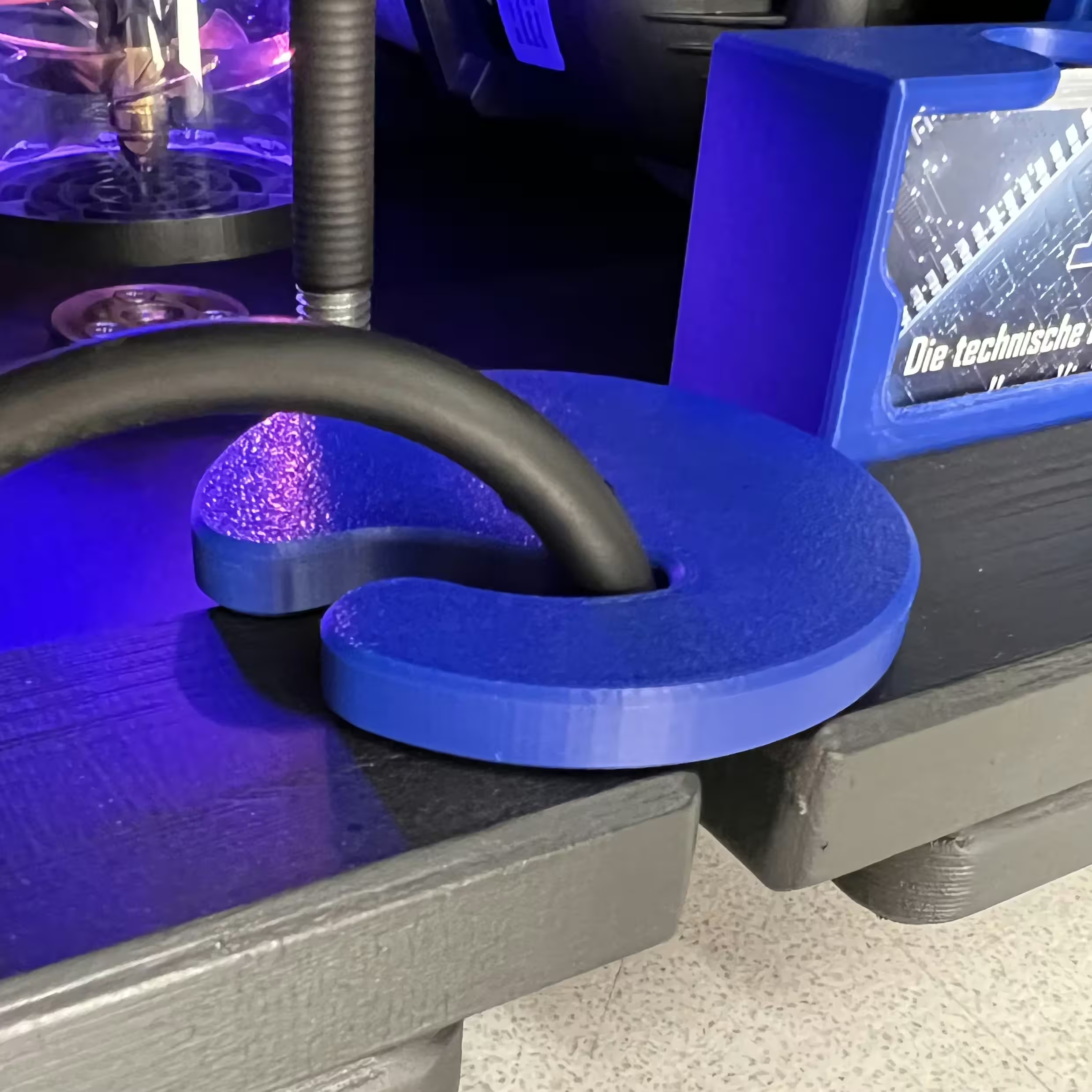
Cable Routing with Strain Relief
The exhibit's cable routing is designed to run hidden under the base. A hole with min. 42 mm diameter is required in the tabletop for routing the Schuko plug. Behind the base flap there is a groove through which the supply cable can be pulled out to the required length. Using a 3D-printed rotary disc the cable can be fixed, so the appropriate length is always available.
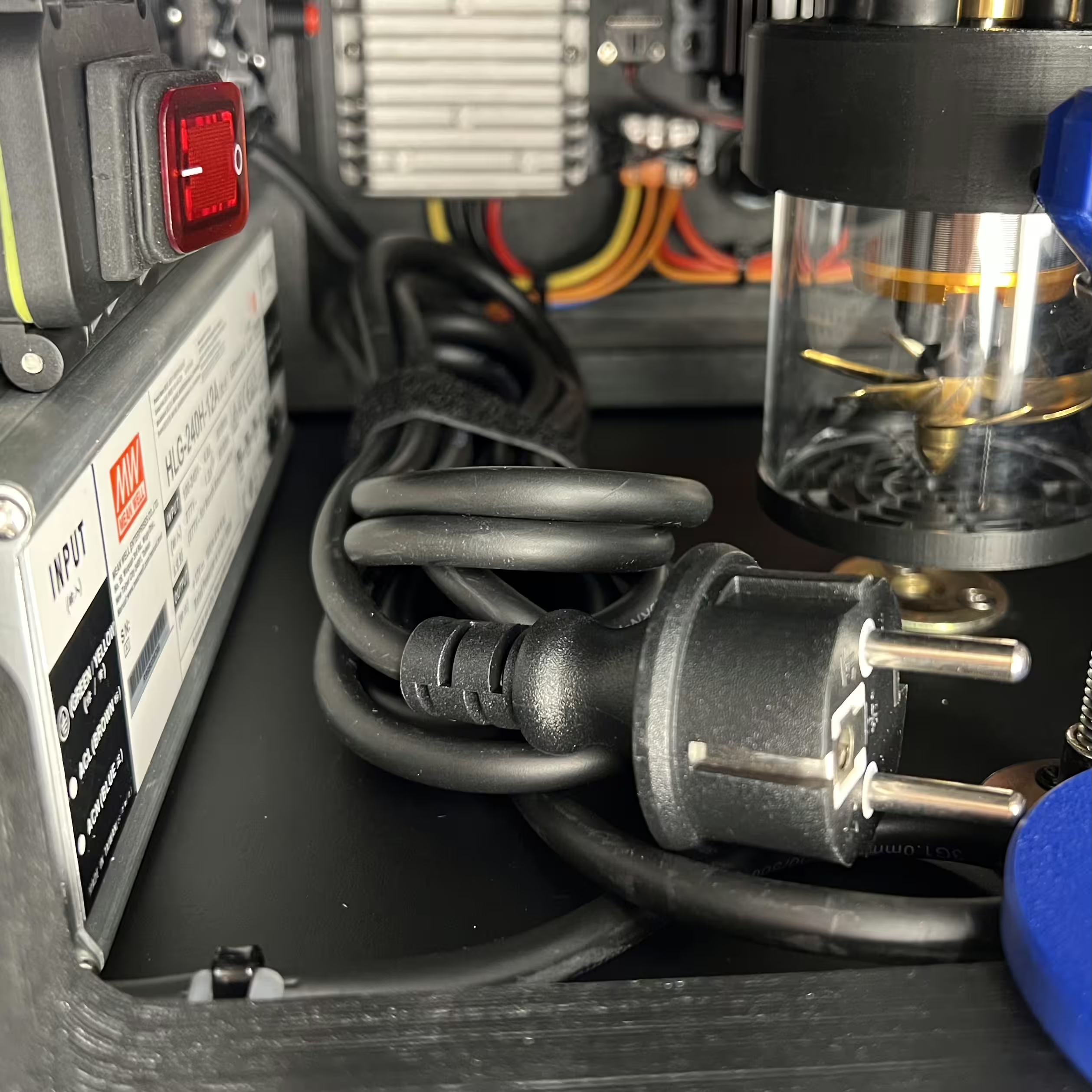
Water-protected Supply Cable
The 3 meter long 230 V supply cable is connected directly to the waterproof IP65 power supply, without an intermediate coupling to provide maximum moisture protection. For transport, the supply cable is stowed in the exhibit base.
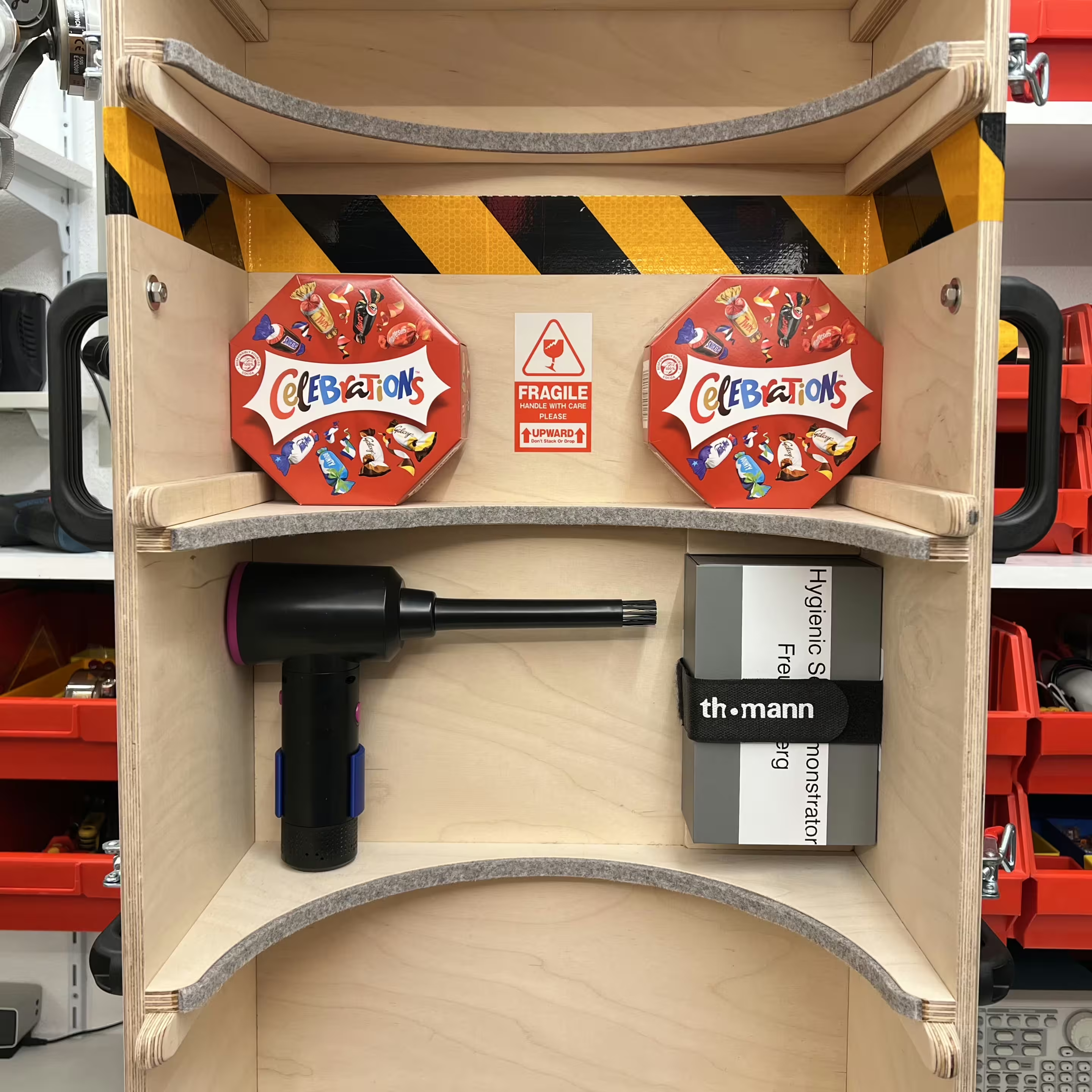
Accessories in the Transport Case
The exhibit's transport case contains an electrically powered air duster gun, which allows dust on the acrylic flanges between the screws to be quickly and easily removed. The box also contains a small toolbox and various accessories that facilitate assembly.
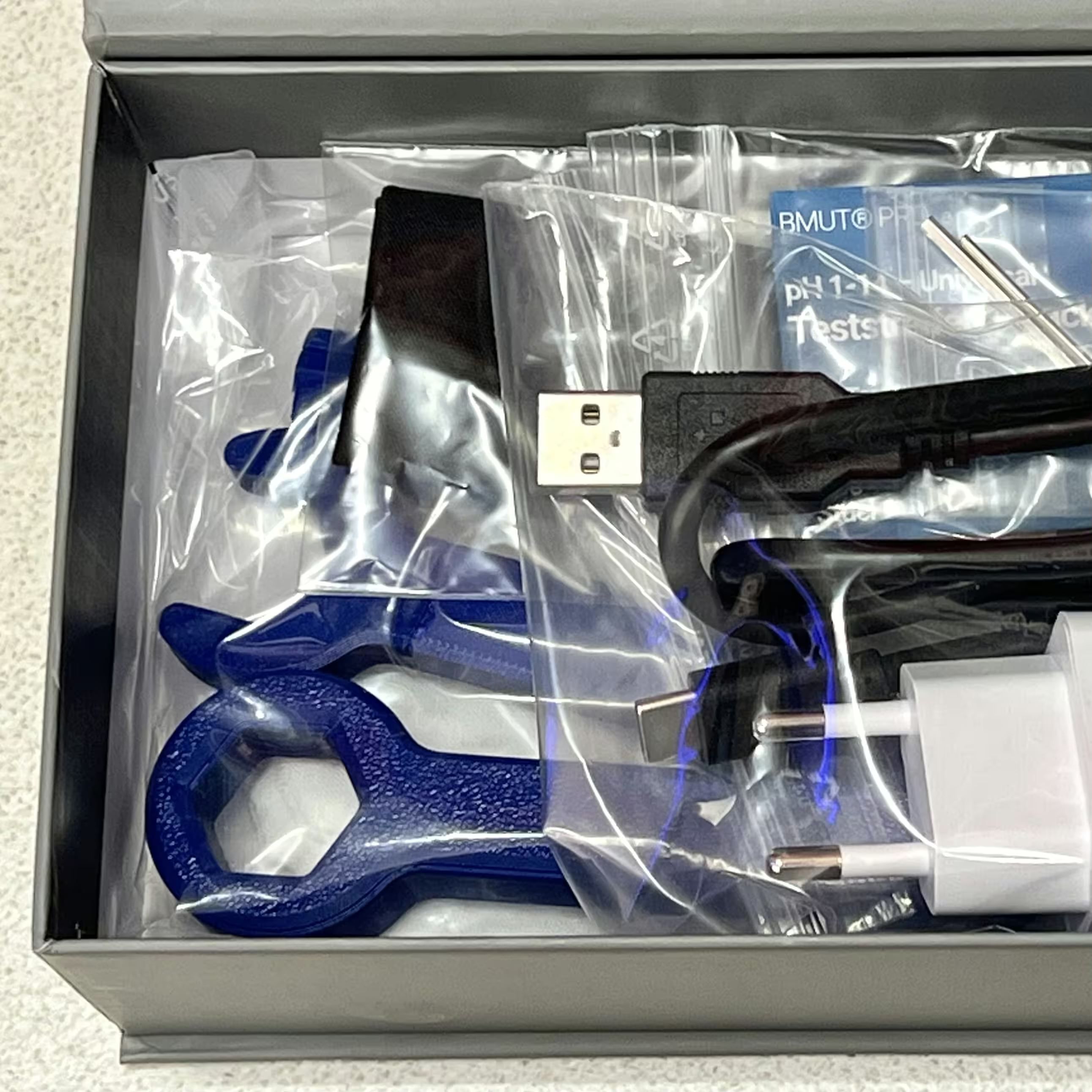
Small Toolbox
As compact as the toolbox is, so low is the maintenance effort. The water remains permanently in the exhibit and is durable for years. For assembly and possible emergencies, the following items are nevertheless included:
- 18 mm socket and ring wrench made of plastic to protect the stainless steel screws
- USB plug power supply with USB-C cable for charging the electric air pressure gun
- Microfiber cloths for cleaning the transparent acrylic segments
- Hex key for the bleed valve and for tightening the set screw of the shaft coupling
- Test strips for checking pH value
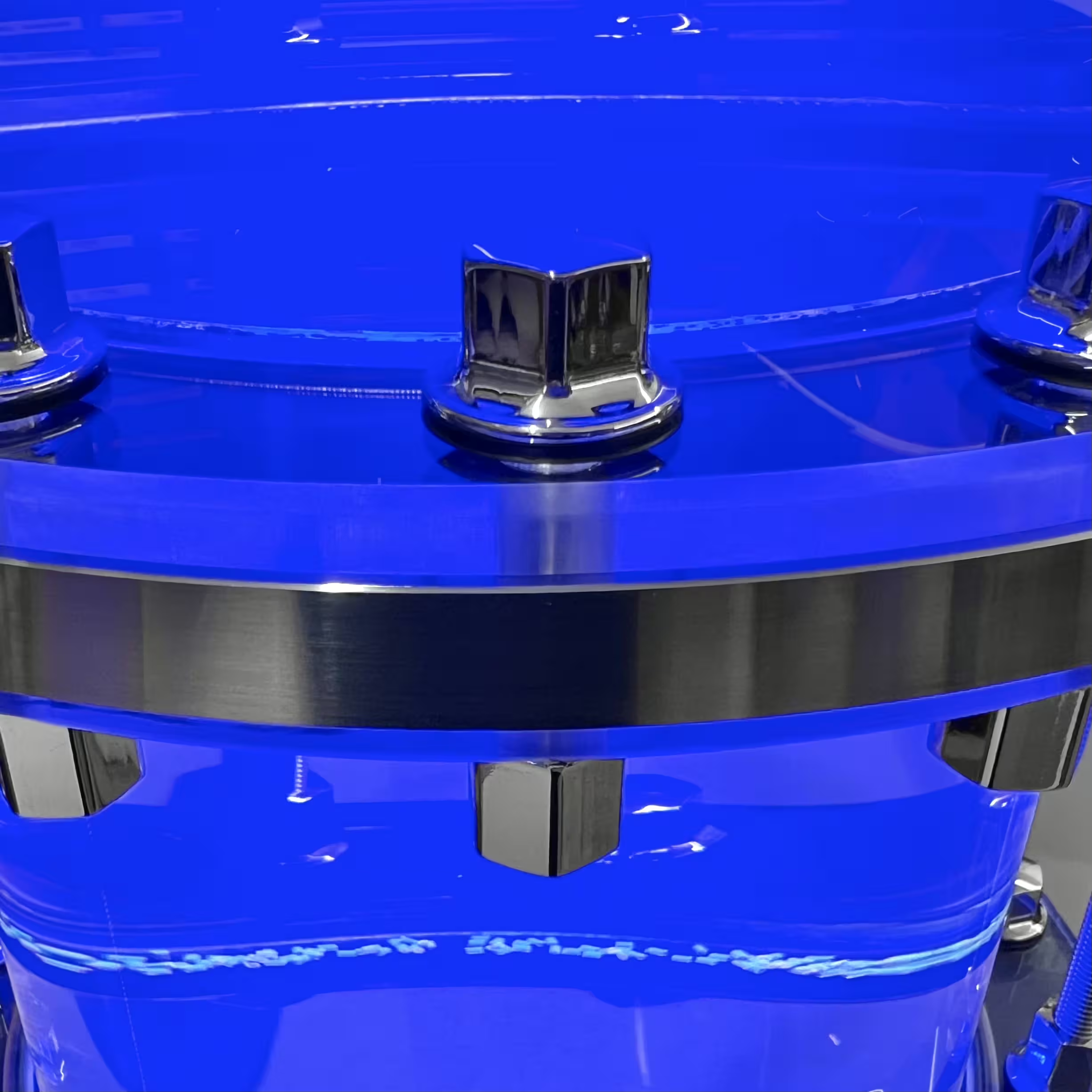
Torques of the fittings
The screws and nuts of the flanges were alternately and crosswise tightened with the following torques.
- Lid: 3.6 Nm
- Top: 3.6 Nm
- Bottom: 3.8 Nm
- Base: 4.5 Nm
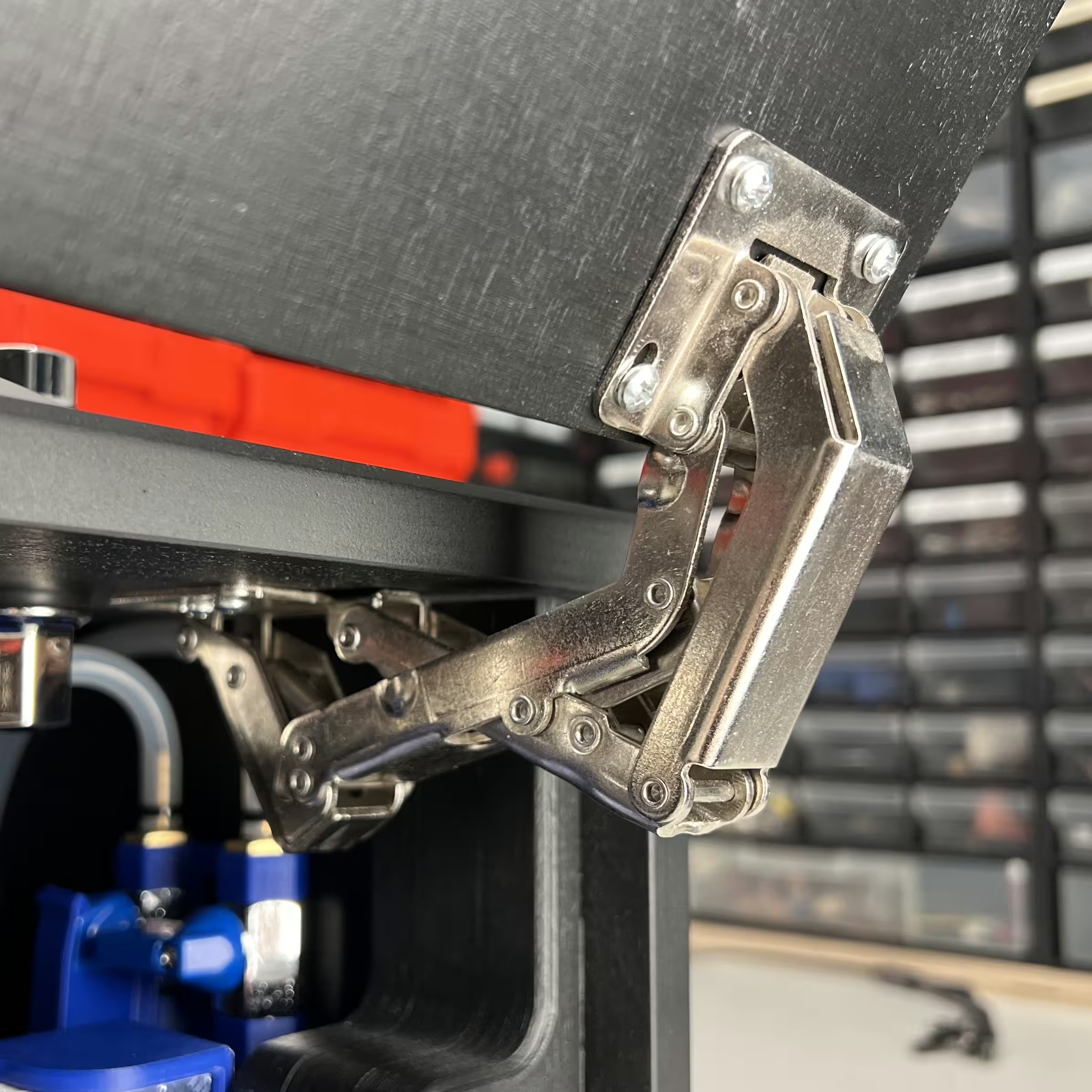
Flip lid with lift hinges
Via two internal surface-mounted hinges the lid of the base rear wall can be swung up 170°. This makes the interior with the exhibit's technology and accessories comfortably accessible. For possible repair and maintenance work, the entire base plate of the pedestal can also be removed.
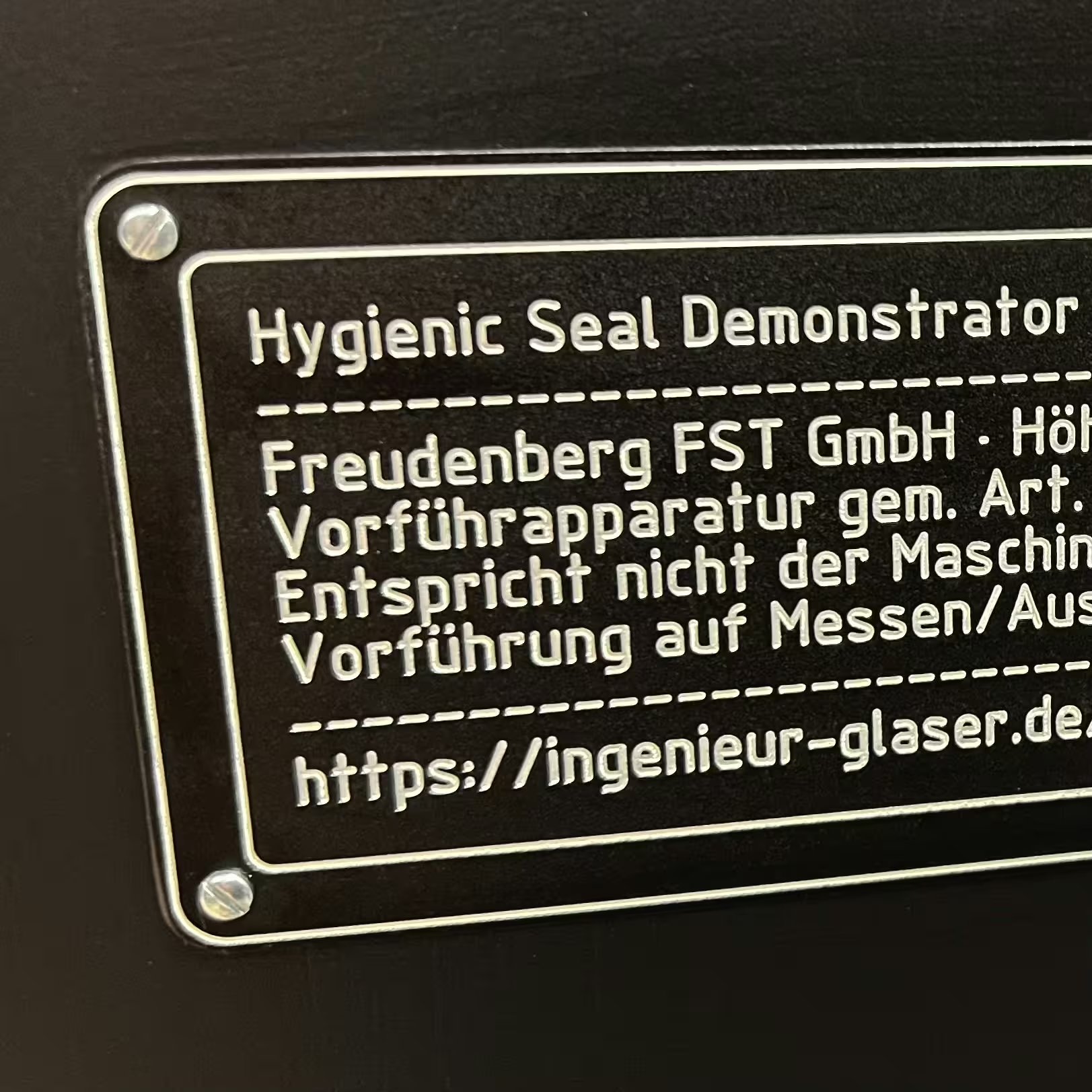
CNC-engraved nameplate
The permanently attached nameplate defines the purpose of the exhibit and contains the relevant information on year of construction, project and operator. It clearly indicates that this is a demonstration device for use at trade shows and exhibitions and governs the conditions for proper operation. The URL given below points to this project page.
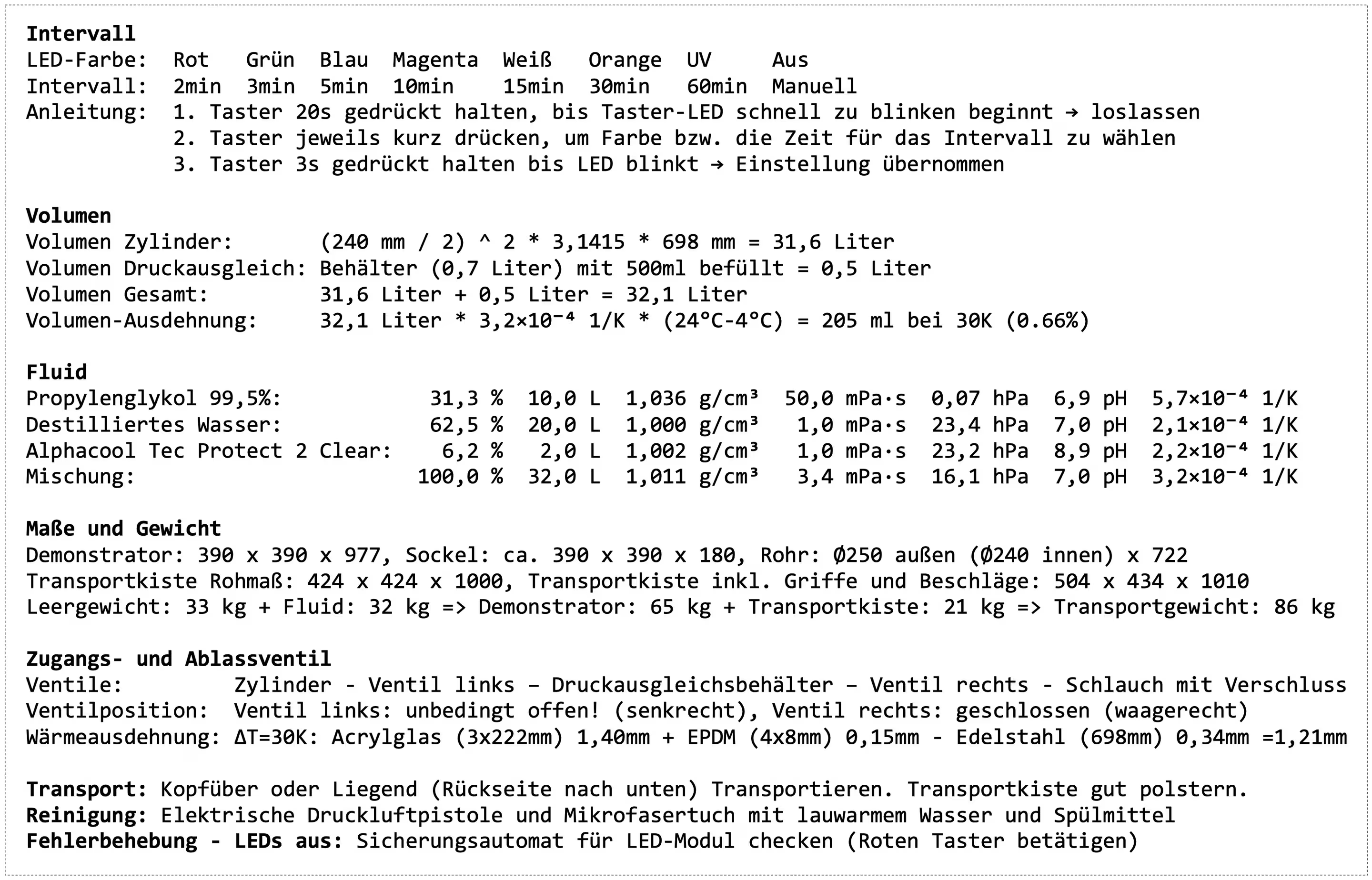
All technical data on the exhibit
Inside the base of the exhibit a notice plate is attached to the back of the flap that provides the trade show team with all important technical information at a glance. It contains information on interval control, volume, fluid composition, dimensions and weights as well as valves, transport and cleaning.
The exhibit in augmented reality (AR)
The Hygienic Seal Demonstrator can not only be experienced live at the trade show but also presented virtually in augmented reality. With a smartphone the model can be placed in the room and viewed from all perspectives without an additional app.

Virtual exhibit
-
Scan the QR code with the camera app
-
Open the displayed link
-
Select the cube icon in the top right
-
Point the camera at the floor
-
Tap to place

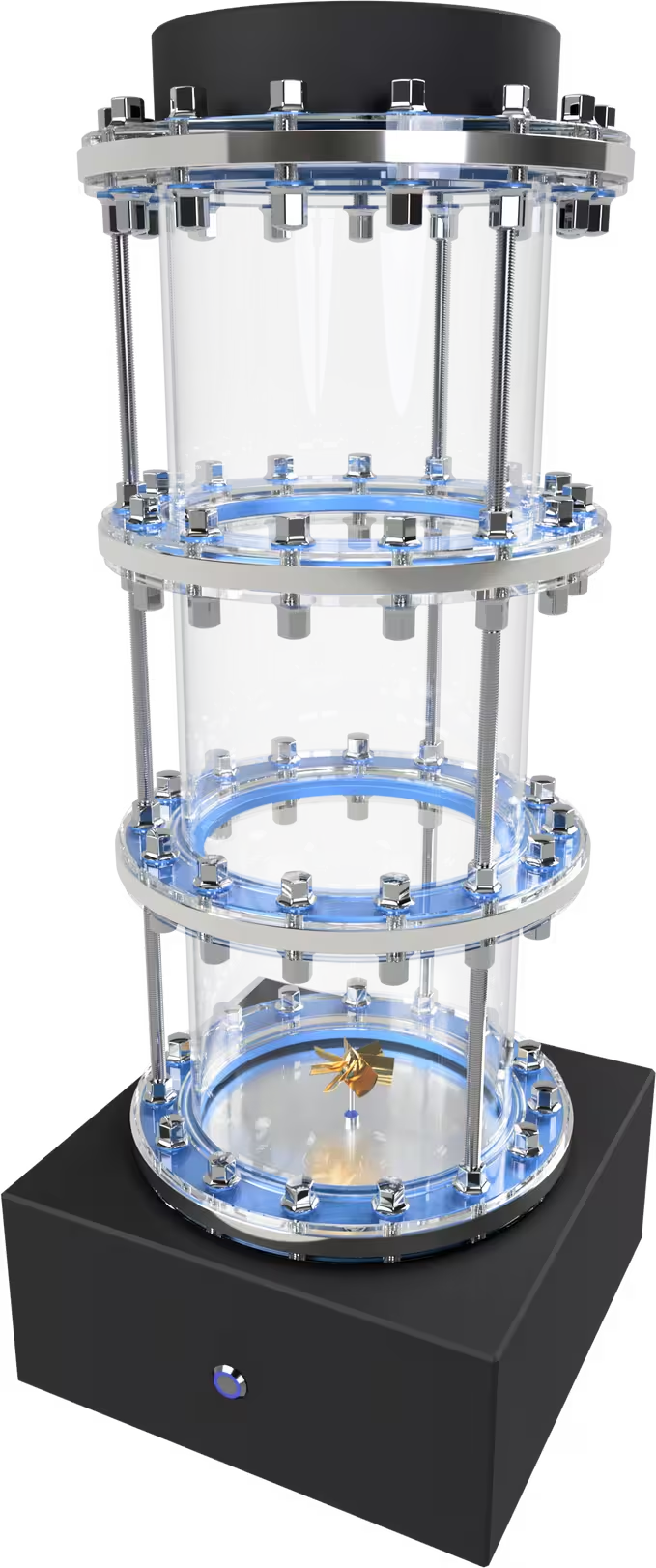
More 3D models and renderings
The following are renderings of the trade fair exhibit in large format. They were calculated over several hours to reproduce reflections, shadows and light refractions especially realistically.

THANK YOU!
A big thank you to the Hygienic Seal team from Freudenberg for the trusting and appreciative cooperation. The close exchange and strong collaboration made this project a real success in a short time. Thank you for the refreshing meetings, the personal visits to the workshop and the warm welcome at the booth.
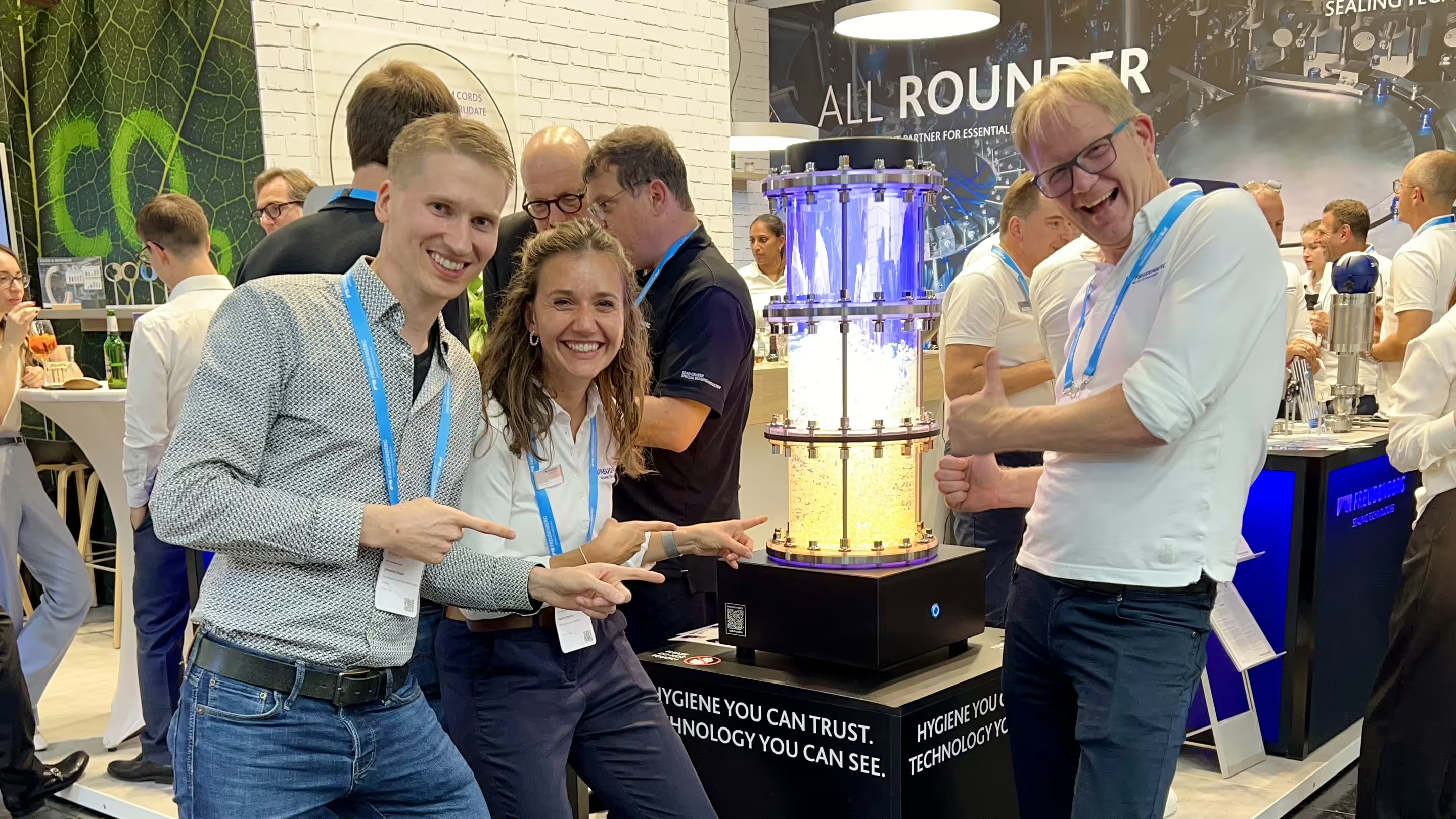
Exhibition model for hygienic seals - Freudenberg booth at the drinktec trade fair in Munich
🥳️ At the drinktec trade fair in Munich, the Hygienic Seal Demonstrator attracts visitors to the Freudenberg booth. Under UV light it becomes visible how crucial hygienic seals are for cleanliness and process safety.
🙏️ A big thank you to the Hygienic Seal team at Freudenberg for the trusting and appreciative collaboration. The close exchange and strong teamwork made this project a success in a very short time. Thank you for the refreshing meetings, the personal visits to my workshop, and the warm welcome at the booth.
🌊 Freudenberg – Manufacturer of Hygienic Seals
https://www.fst.com/
🎬 Behind the Scenes – Exhibition Model Production
https://ingenieur-glaser.de/hygienic-seal-demonstrator/
🧲 Customer magnets for your trade fair booth – Ooh, Aah, Wow!
Ooh – attracts visitors
Aah – clarifies benefits
Wow! – anchors brand & product
https://ingenieur-glaser.de/messebau/
#Drinktec #Freudenberg #HygienicSeals #ExhibitDesign #ExhibitionStandDesign #ExhibitionBoothDesign #ExhibitionBooth #TradeFair
#Drinktec #Freudenberg #HygienicSeals #ExhibitDesign #ExhibitionStandDesign #ExhibitionBoothDesign #ExhibitionBooth #TradeFair


Sophie Platzer
Marketing Manager
"Johannes combines creativity, design and technical know-how in one person. From planning to fabrication to the practical transport case, he executed everything with great commitment and a lot of attention to detail. Many thanks for the extremely professional collaboration!"
The trade fair exhibit at the drinktec trade show in Munich
At the drinktec trade show in Munich, the Hygienic Seal Demonstrator attracts visitors to the Freudenberg booth. Under UV light it becomes visible how crucial hygienic seals are for purity and process safety.