Develop and build winding drives
A workpiece must rotate evenly during winding, coating, or machining - while also being safe and easy to operate. For that, we develop winding drives that fit the shape, material, and workflow. Mechanics, electrical engineering, and software are considered together from the start.
A drive specifically designed for your process
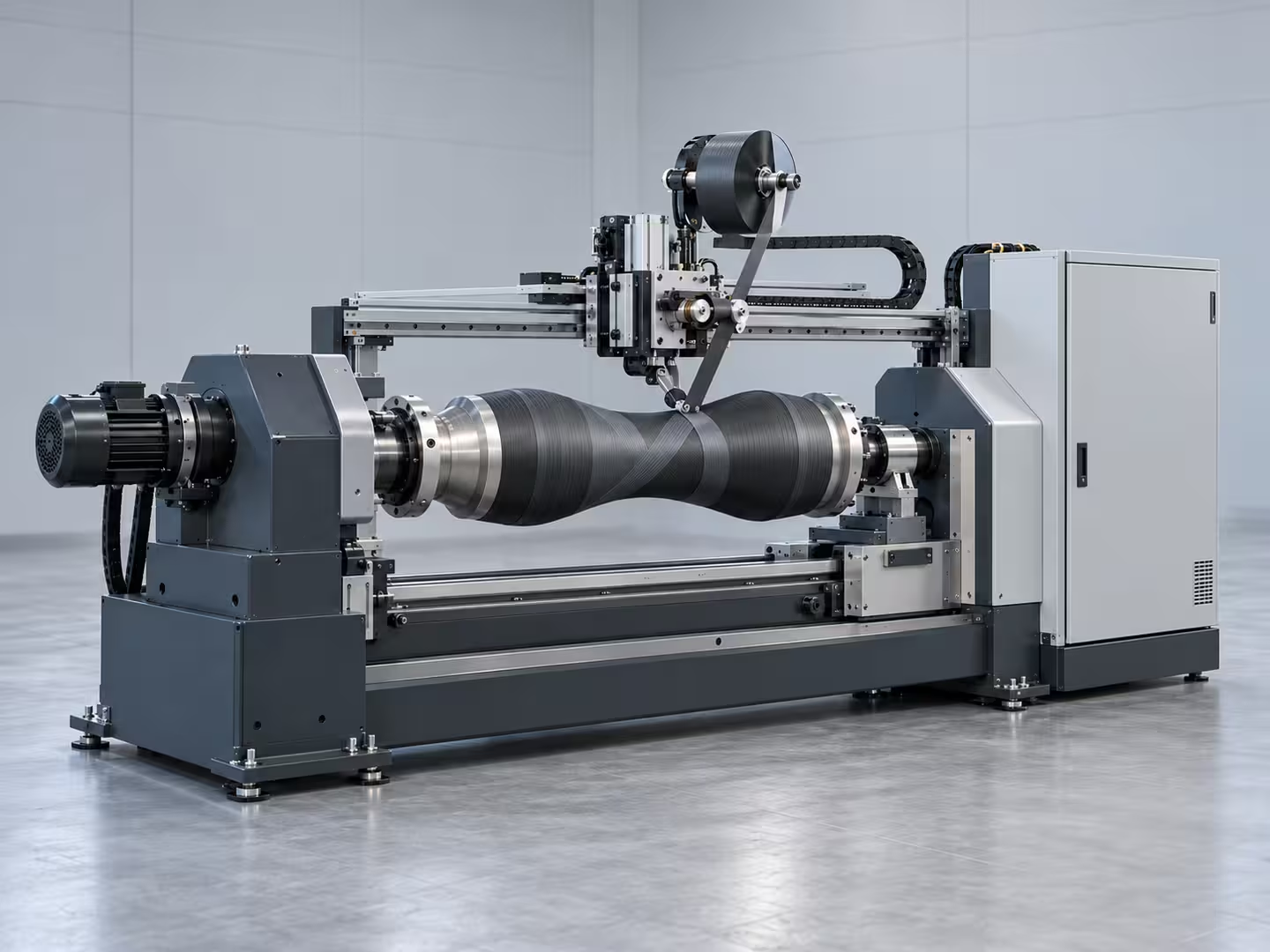
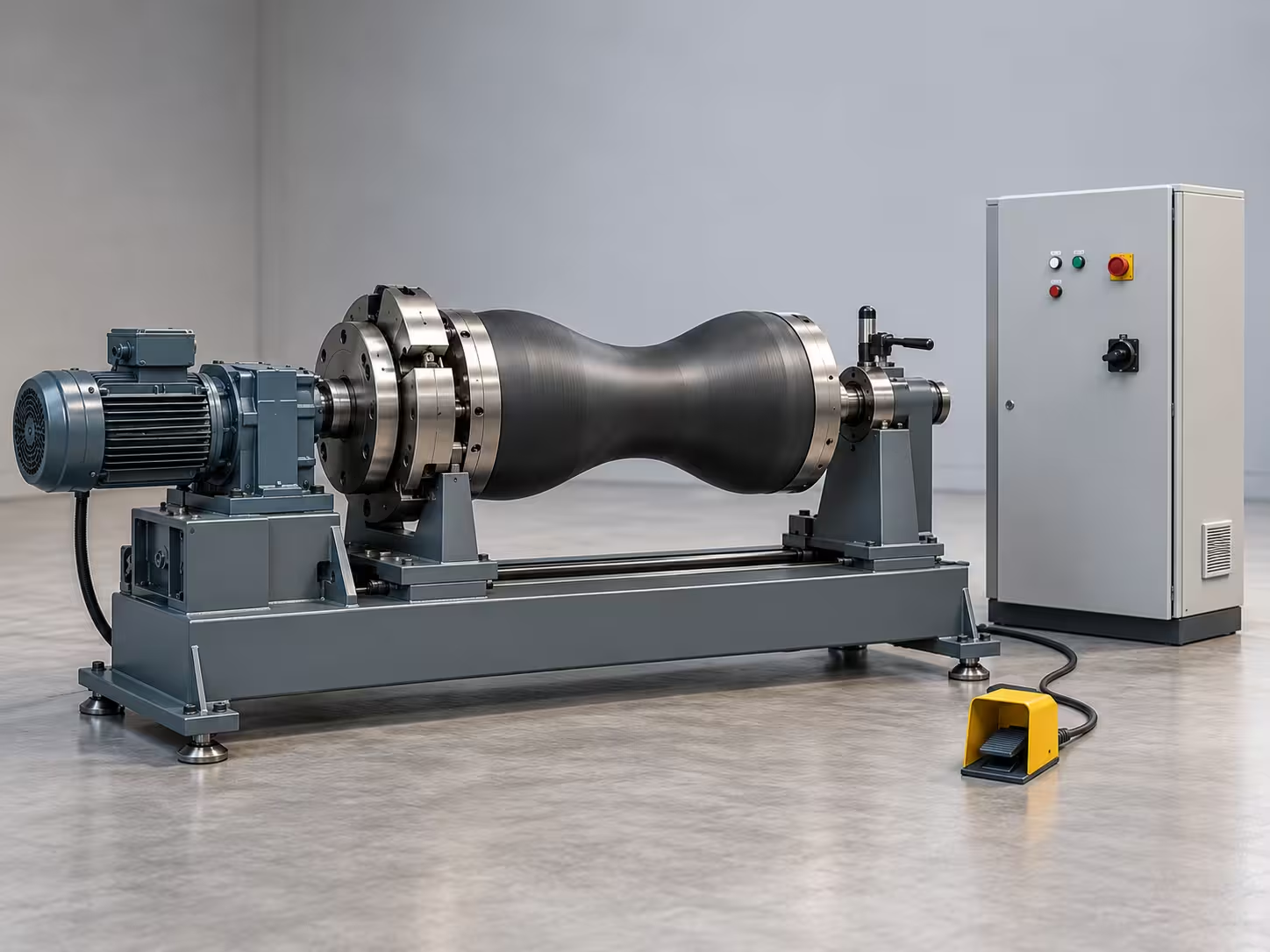
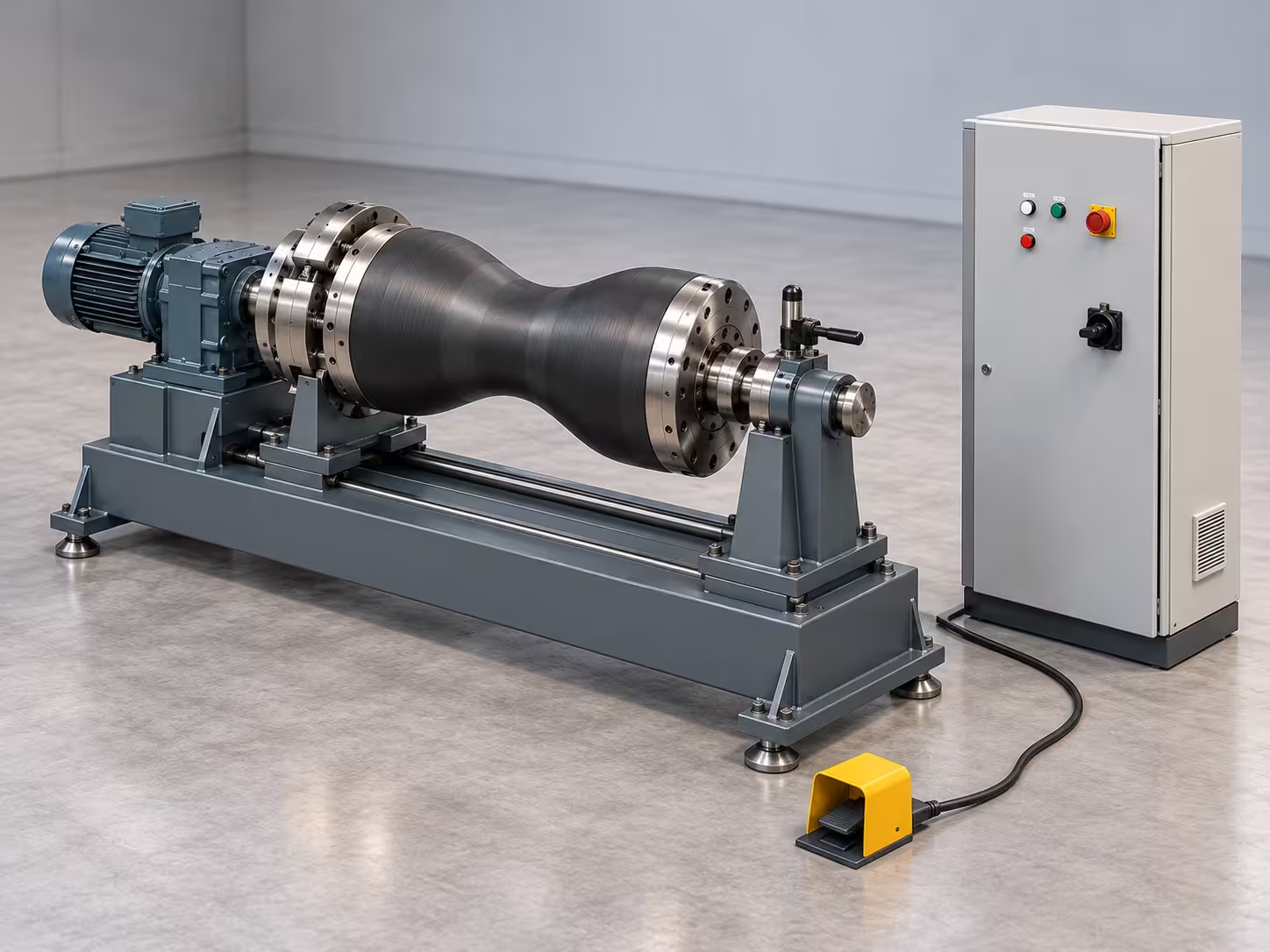
The winding drive provides controlled rotation of a workpiece or tool. An operator guides and works the material at the workstation themselves; the drive supports this with the appropriate rotational motion and controls. If the machine should autonomously coordinate workpiece and material handling and execute the winding process automatically, a complete winding machine is the more suitable solution.
Whether a compact test setup, the addition to a workstation, or a permanently used production tool is required: what matters are the specific requirements for workpiece holding, motion profile, and operation. These are clarified together before selecting components.
Services for your winding drive
- Sizing of speed, torque, gear ratio, and drive components based on process requirements
- Mechanical arrangement of drive, mounting, and bearings for your workpiece or mold
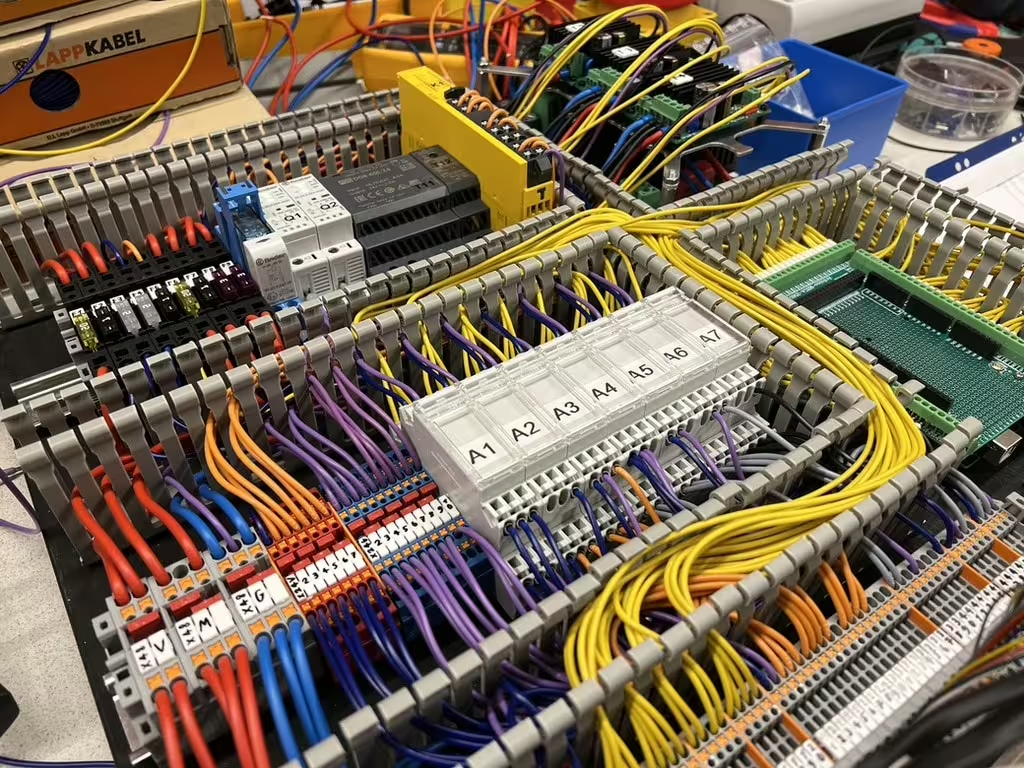
- Electrical design, control cabinet construction, and integration of sensors and controls
- Control software for reproducible motion sequences and appropriate operation, e.g., via footswitch
- Assembly, setup, testing, and commissioning in coordination with your site
What functions can be useful?
A drive can be designed for constant speed or for variable motion profiles. Depending on the task, an adjustable rotation direction, smooth start and stop, or stopping at a defined position may be desirable. For hand-guided work, a footswitch can free the hands for the workpiece and material.
The specific control comes from the process: which steps must be repeatable? When should rotation start or stop? What feedback does the operator need? From this follow the appropriate control, sensors, and electrical design.
Possible applications
Rubber compensators
A controllable rotary drive can move a form evenly during a winding or machining step. Speed, rotation direction, and controls are adapted to the material and workflow.
Tubes and sleeves
When applying tapes, films, or fabrics to tubes and sleeves, a controllable drive can rotate the workpiece while the material is guided by hand.
Shafts and rollers
For wrapping or machining elongated, rotationally symmetric components, the mounting can be adapted to diameter, length, and required rotational movement.
Test and inspection setups
Where different workpieces need to be rotated, observed, or machined at defined speeds, a standalone rotary drive can also be useful.
Winding drive or winding machine?
The crucial question is who guides the material during winding and determines the process:
| Winding drive | Winding machine |
|---|---|
| The drive rotates the workpiece in a controlled way; an operator guides the material and works on the workpiece. | The machine coordinates workpiece rotation and material guidance and executes the programmed winding sequence automatically. |
| Suitable for hand-guided work, changing grips, and supplementing a workstation. | Suitable for repeatable winding patterns, guided material placement, and varying shapes. Geometry capture can be integrated into the process if needed. |
The appropriate option depends on the workpiece, material, quantity, and desired level of automation.
From idea to operational setup
- Gather requirements: discuss workpiece, clamping options, required motion, and working environment.
- Develop concept: coordinate drive, mechanics, electrical components, and operation.
- Build and test: verify the solution using the intended process and derive necessary adjustments.
- Commissioning: Coordinate functions and operation at the place of use; scope and documentation are defined in the order.
Frequently asked questions about winding drives
Can an existing workstation be supplemented with a winding drive?
Yes, that can be a sensible solution. This involves checking, among other things, space, workpiece holding, electrical supply, operation, and the requirements for safe collaboration with the operator.
Is operation by foot switch possible?
A foot switch can be suitable for hand-held work because both hands remain on the workpiece. Whether and how it is used depends on the specific work process and the safety concept.
Do you also take on the control cabinet, software, and installation?
Depending on the project, our offer includes electrical design, control cabinet construction, control software, as well as installation, testing, and commissioning. The exact scope of delivery is agreed upon together.
This is how a project begins
For a start, information about the workpiece and dimensions, desired speed or cycle time, material feed, and operating environment is sufficient. Sketches of a planned workstation are also helpful. Open points can be narrowed down in the initial discussion.