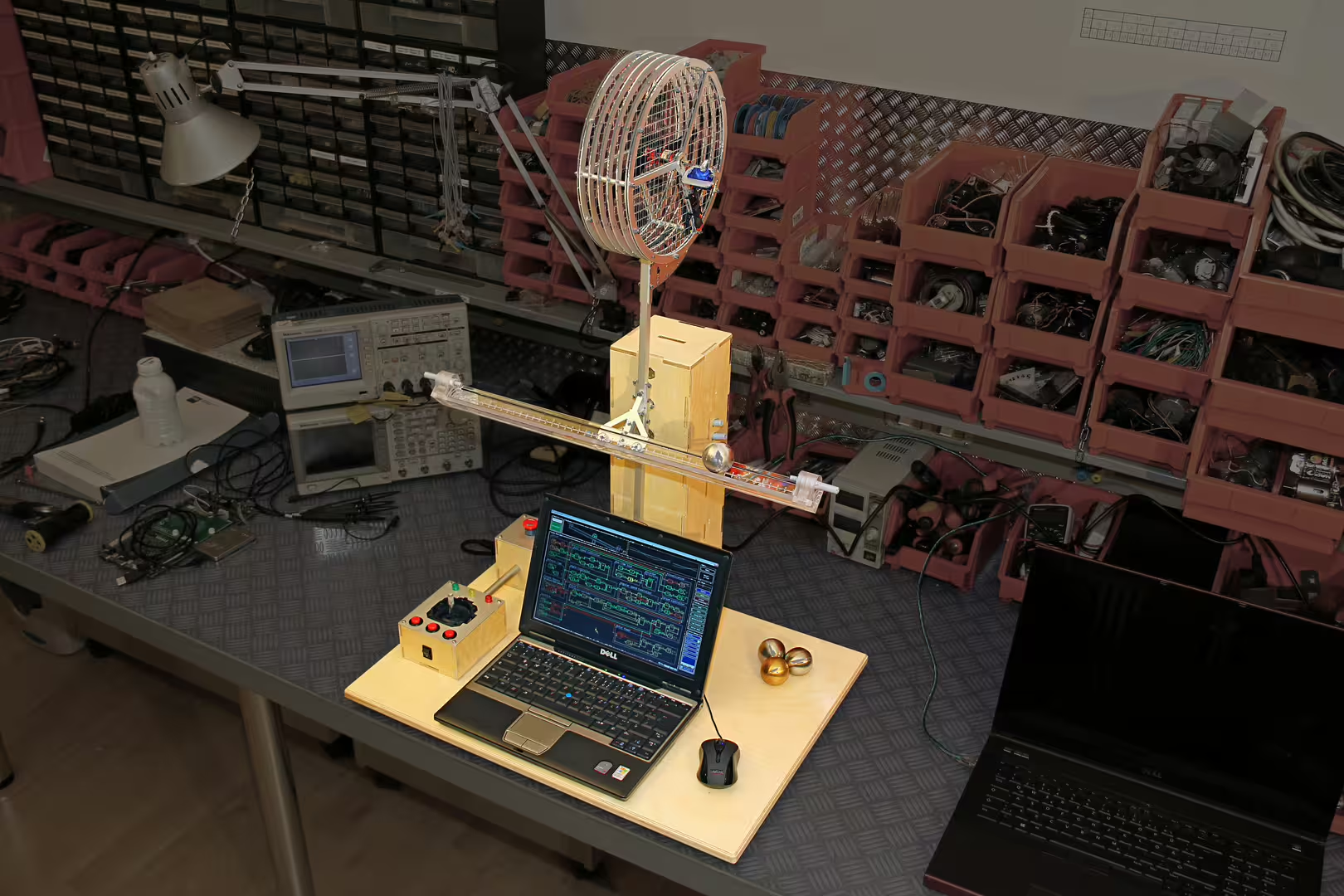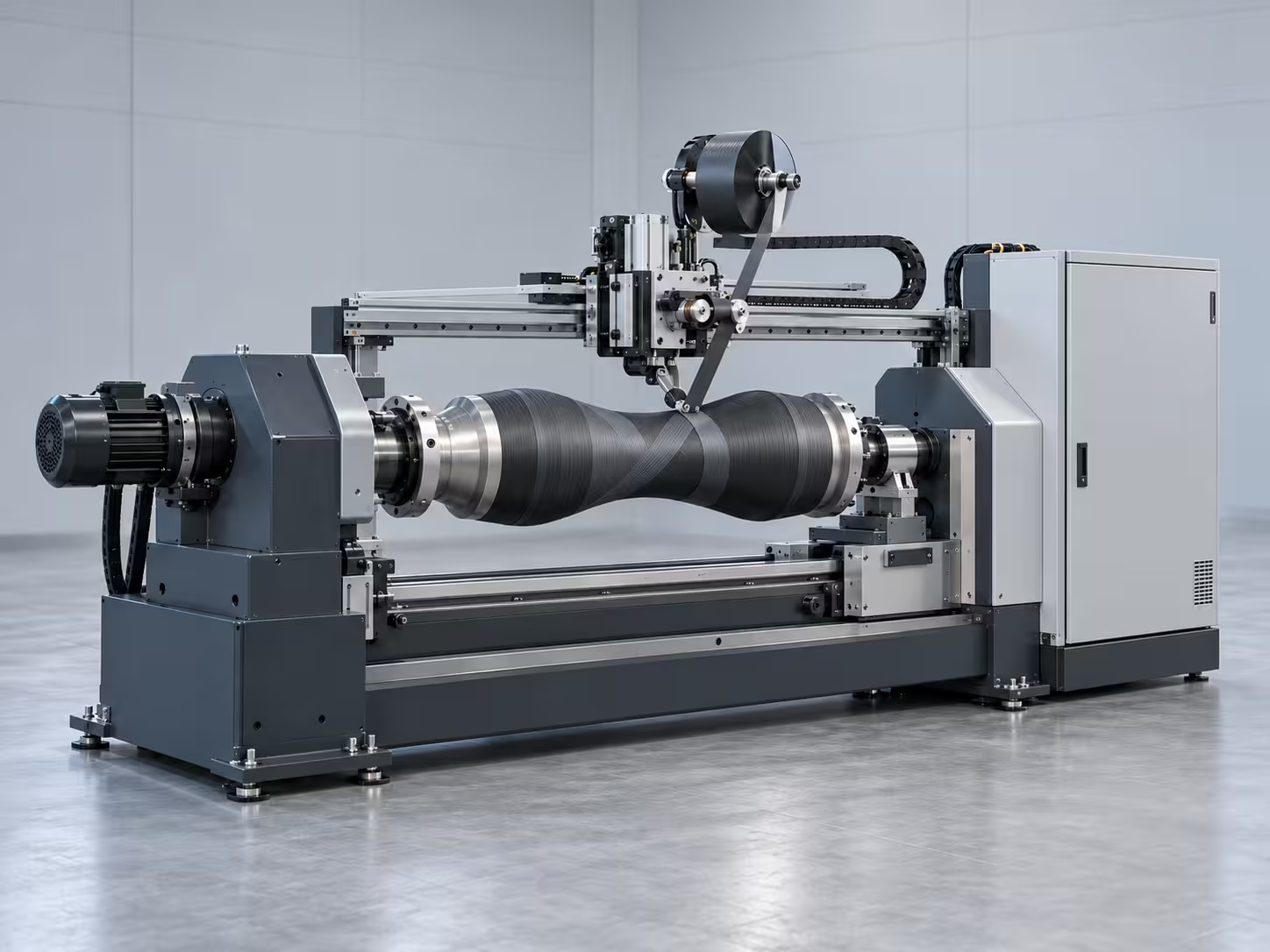
Develop and build winding machines
If a winding process is to run reproducibly, rotation, material feed and operation must fit together. We develop winding machines for your production task: from the functional concept through mechanics and electrical engineering to controls, testing and commissioning.
More than a rotating workpiece fixture
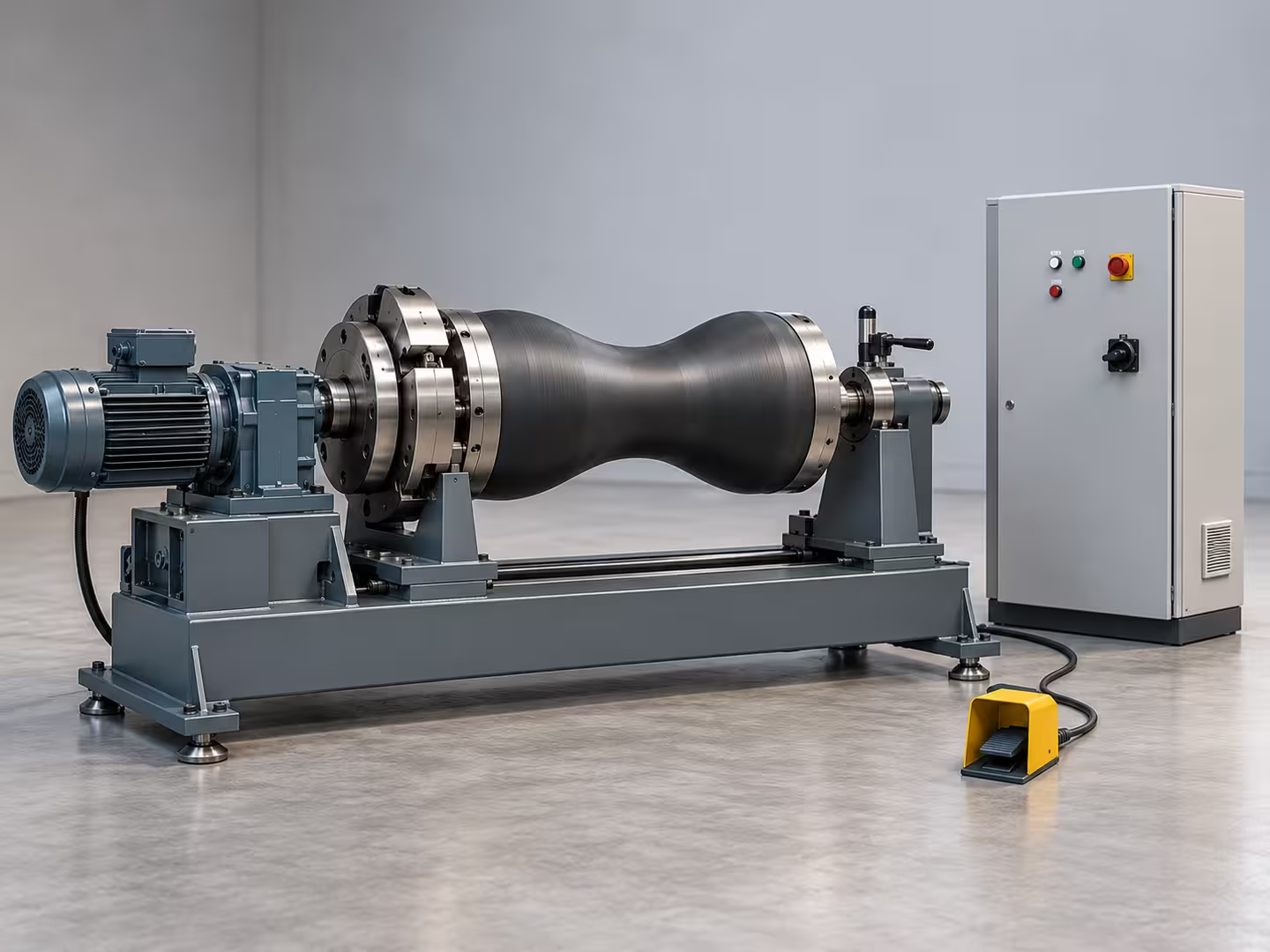
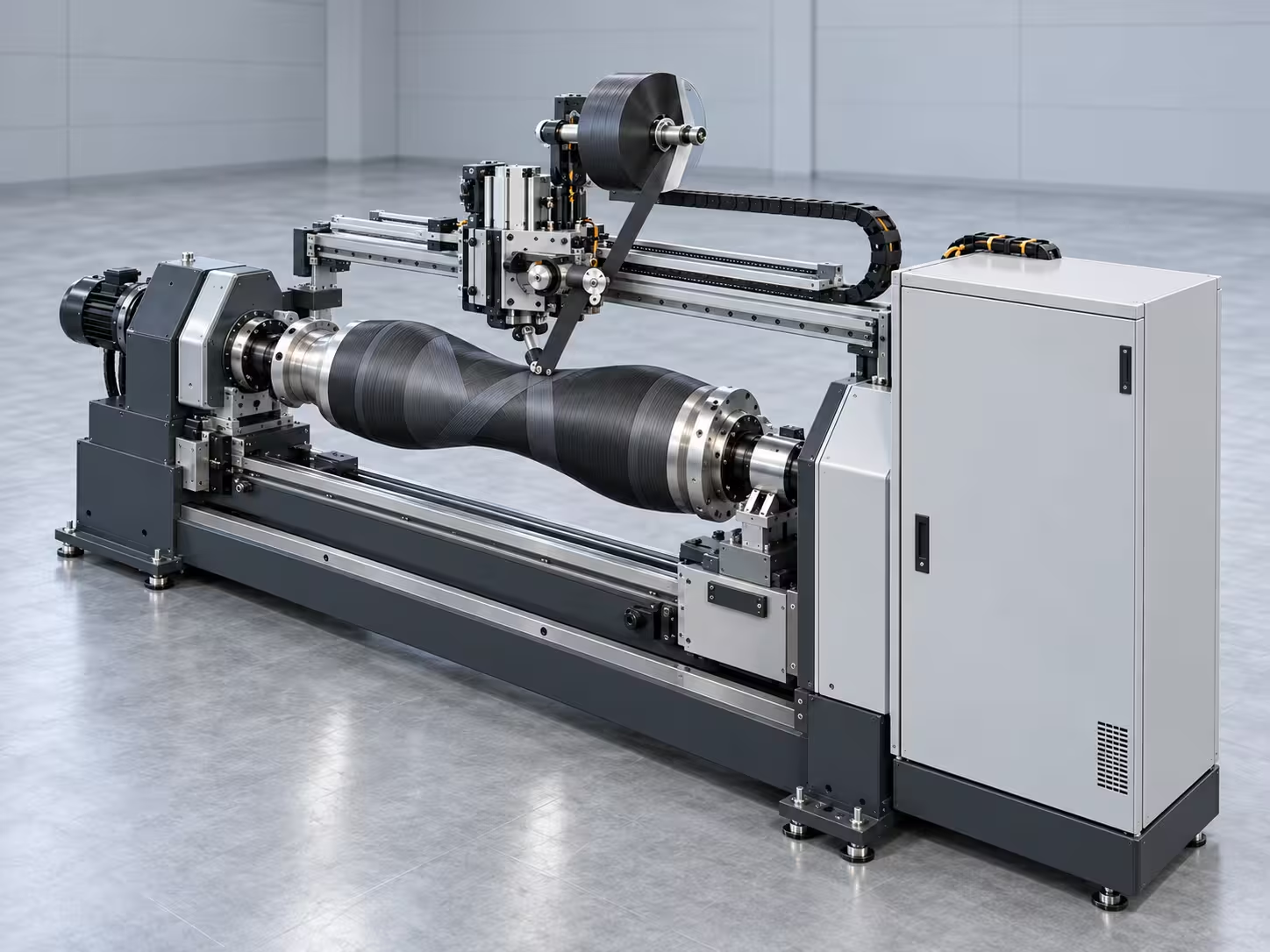
A winding machine links the movement of the workpiece with the guidance of the material to be applied. Once set up, it can execute the winding process automatically: shape and material guidance are recorded or specified, movements calculated, and rotation and feed coordinated. For varying shapes, a geometry detection can measure the form before winding; a suitable motion sequence can be derived from that. Whether such detection is necessary depends on the part and the process.
The machine can move the material laterally, apply layers with a defined overlap, and coordinate individual steps repeatably. An operator remains responsible for setup, loading and monitoring; the machine takes over the actual material guidance during winding.
If only a controlled rotational movement is required and the material can be guided by hand, a winding drive. may suffice. This distinction belongs to the concept phase and helps choose effort and functions appropriately.
From the task to the appropriate machine
The starting points are workpiece geometry, material, winding pattern and desired level of automation. From these arise a suitable concept for workpiece holding, drive, material guidance and motion sequence as well as the required electrical engineering and software. Our scope of services can range from design through control cabinet construction and software development to assembly, testing and commissioning.
- Concept and design of mechanical movements and fixtures
- Sizing and control of drives as well as integration of sensors
- Development of user interface and control sequences for reproducible processes
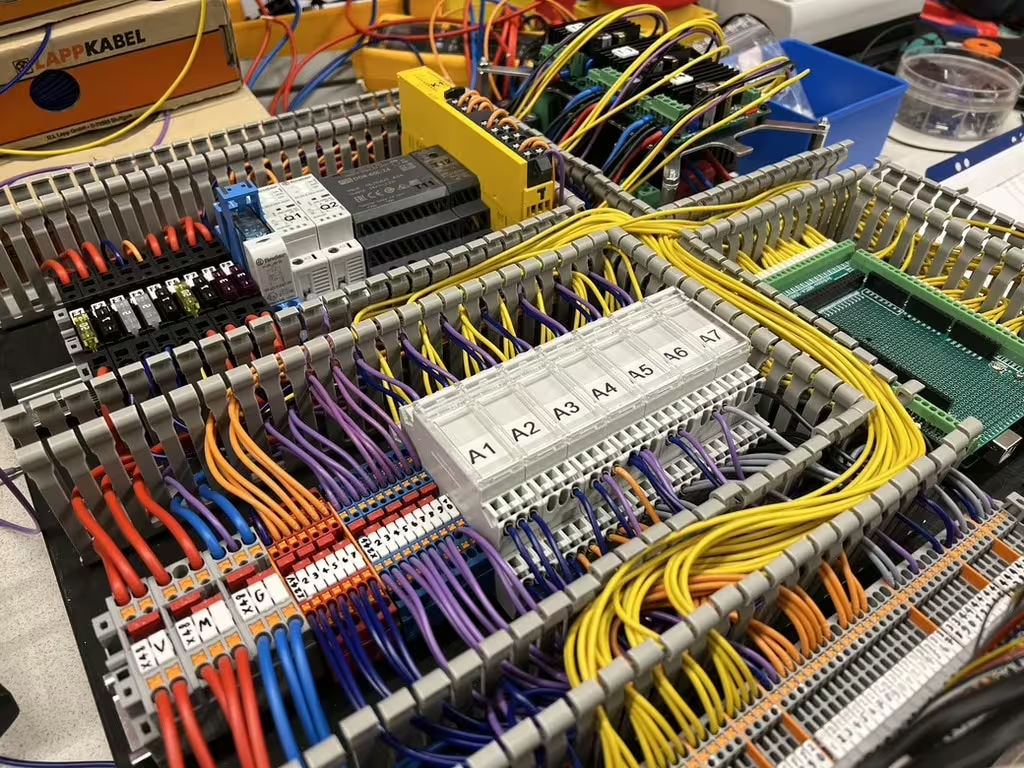
- Electrical design, control cabinet construction and wiring
- Assembly, testing and commissioning
What must be coordinated in the winding process
The quality of a winding process does not depend on a single speed alone. Workpiece holding, feed, material guidance, start and end points and interventions by the operator also influence the result. These factors produce a comprehensible motion and operation sequence.
Depending on the process, a solution can start as a test setup and then be expanded step by step. Likewise, an existing working method can serve as a starting point to mechanize or automate individual steps. Which variant is sensible is decided based on the actual production goal.
Possible applications
Rubber compensators
In shape-forming winding processes, the rotation of a mold can be coordinated with the guidance of tapes or plies. Which movements and interventions are sensible follow from the material, geometry and production process.
Fiber composite pipes and vessels
For fiber-reinforced pipes or vessels, rotation, fiber guidance and layer build-up must be coordinated. The specific machine depends on part shape, material and desired production process.
Shafts and other rotationally symmetric parts
Shafts or rollers can also be wrapped with fibers, tapes or other layers. Guided material placement helps implement the intended winding path repeatably.
Sleeves and molded bodies with tape or film layers
For cylindrical or contoured shapes, a machine can coordinate the movement of the workpiece with the feed of tape or foil – for example when producing multilayer assemblies.
Winding drive or winding machine?
The crucial question is who guides the material during winding and determines the process:
| Winding drive | Winding machine |
|---|---|
| The drive rotates the workpiece in a controlled way; an operator guides the material and works on the workpiece. | The machine coordinates workpiece rotation and material guidance and executes the programmed winding sequence automatically. |
| Suitable for hand-guided work, changing grips, and supplementing a workstation. | Suitable for repeatable winding patterns, guided material placement, and varying shapes. Geometry capture can be integrated into the process if needed. |
The appropriate option depends on the workpiece, material, quantity, and desired level of automation.
Development and implementation from a single source
- Understand the manufacturing task: Capture workpiece shapes, materials, layer structure, quantities, and desired interventions.
- Develop the machine concept: Define motions, fixtures, material guidance, and the operator concept together.
- Connect mechanics, electrics and software: Elaborate components and control sequences for the intended process.
- Test and adjust: Check the process with suitable samples and incorporate identified requirements into further development.
- Commissioning: Coordinate setup and operation at the intended site; the exact scope of delivery is agreed per project.
Frequently asked questions about winding machines
What does the machine handle automatically?
It can coordinate the rotation of the workpiece, the movement of the material guide, and the sequence of individual winding steps. The specific level of automation is defined for each process.
Can the machine process different shapes?
Yes, if the fixture, motion axes and control are designed for it. For varying shapes, capturing the workpiece geometry before winding can be useful so the software can adapt the motion sequence accordingly.
Can a previously manual process be automated step by step?
Often the existing workflow can first be examined and a suitable test setup planned. Based on that, material guidance, control and further functions can be developed incrementally.
Do you take over implementation through commissioning?
Depending on the order, we handle design, control cabinet construction, control software, assembly, testing and commissioning. The exact scope of services is agreed in the project.
This is how a project begins
For an initial assessment, information about the material, part shape and dimensions, desired layup, previous workflow, and planned quantity is often sufficient. Photos or sketches of a neutral sample part can clarify the task. Afterwards it can be determined whether a semi-automated solution or a fully automated winding machine suits your goal.